
How to Choose the Right AVR for Your Refrigerator?
Frequent voltage fluctuations damage refrigerators, causing compressor failure and costly repairs. The right AVR stabilizes power and protects appliances.
An Automatic Voltage Regulator (AVR) stabilizes unstable electricity by maintaining a consistent output voltage for appliances like refrigerators. Choosing the correct AVR depends on power capacity, input voltage range, response speed, and build quality. A properly selected AVR prevents compressor damage, extends appliance lifespan, and ensures reliable operation in regions with unstable power supply.
Let’s explore the key factors to consider when choosing the right AVR for your refrigerator.
Table of Contents
ToggleWhy Refrigerators Need an AVR
In many regions such as Africa, Latin America, and parts of Southeast Asia, unstable electricity is a daily problem. Voltage may suddenly drop or spike, especially during peak power demand hours.
Refrigerators are particularly sensitive to voltage fluctuations because they rely on compressors and electronic control systems. When voltage becomes too high or too low, the compressor motor may overheat or fail to start.
This is why an Automatic Voltage Regulator (AVR) is widely used to maintain stable voltage. An AVR automatically adjusts the incoming power and ensures that your refrigerator always receives a safe operating voltage.
Without proper voltage stabilization, refrigerators may suffer from:
-
Compressor burnout
-
Reduced cooling performance
-
Higher electricity consumption
-
Frequent maintenance or replacement
A reliable AVR acts as the first line of defense against unstable electricity.
Understand Your Refrigerator’s Power Requirement
Before buying an AVR, the most important step is determining the power rating of your refrigerator.
Most refrigerators display their rated power on the nameplate or specification label. The power is usually expressed in watts (W) or volt-amperes (VA).
However, compressors require extra starting power, typically 3–5 times higher than the running power.
For example:
| Refrigerator Type | Running Power | Recommended AVR |
|---|---|---|
| Small fridge | 100–150W | 500VA AVR |
| Medium refrigerator | 150–300W | 1000VA AVR |
| Large refrigerator | 300–600W | 1500–2000VA AVR |
Choosing an AVR that is too small may cause overload problems. It is always recommended to select an AVR with at least 30–50% higher capacity than the appliance’s rated power.
Check the Input Voltage Range
In areas with unstable power supply, voltage can fluctuate dramatically. A good AVR should support a wide input voltage range.
High-quality stabilizers typically support ranges such as:
-
90V – 260V (for 220V systems)
-
140V – 260V (for moderate fluctuation regions)
A wider input range means the AVR can continue stabilizing electricity even when voltage drops significantly.
Many professional stabilizers manufactured for international markets are designed with wide voltage tolerance to adapt to different countries’ power conditions.
If voltage in your region frequently drops below 150V, choosing a wide-range AVR becomes extremely important.
Consider Delay Protection for Compressors
Refrigerators use compressors that must not restart immediately after a power outage.
If the compressor restarts too quickly, it can suffer internal pressure damage.
This is why modern AVR designs include a delay restart function.
Typical delay times include:
-
3 minutes delay — suitable for refrigerators and freezers
-
5 minutes delay — recommended for air conditioners
The delay function allows pressure inside the compressor to stabilize before restarting, greatly extending the life of the appliance.
Look for Reliable Protection Features
A high-quality AVR should provide multiple protection mechanisms to ensure long-term safety.
Key features include:
Over-voltage Protection
Cuts off power when voltage becomes dangerously high.
Under-voltage Protection
Prevents appliances from operating under extremely low voltage.
Surge Protection
Protects electronics from sudden spikes caused by lightning or grid switching.
Thermal Protection
Prevents overheating inside the AVR.
Advanced protection systems help minimize appliance failure, especially in regions where electricity supply is unpredictable.
Build Quality and Manufacturing Matters
Not all voltage stabilizers are built with the same reliability. For importers and distributors, manufacturing capability and quality control are critical factors.
Professional manufacturers integrate multiple production stages including SMT assembly, reflow soldering, injection molding, and full product testing to ensure consistent product quality.
Reliable factories also provide:
-
CE and ISO-certified production
-
100% product testing before shipment
-
Stable mass production capacity
-
OEM and plug-type customization (US, EU, UK, AR)
These factors are particularly important for wholesalers and distributors who require stable supply and consistent product performance.
Choose the Right Plug and Voltage Standard
Different countries use different plug types and voltage systems.
Common plug types include:
-
EU plug
-
UK plug
-
US plug
-
AR plug
When sourcing AVRs for resale or distribution, it is essential to select models that match the local electrical standard.
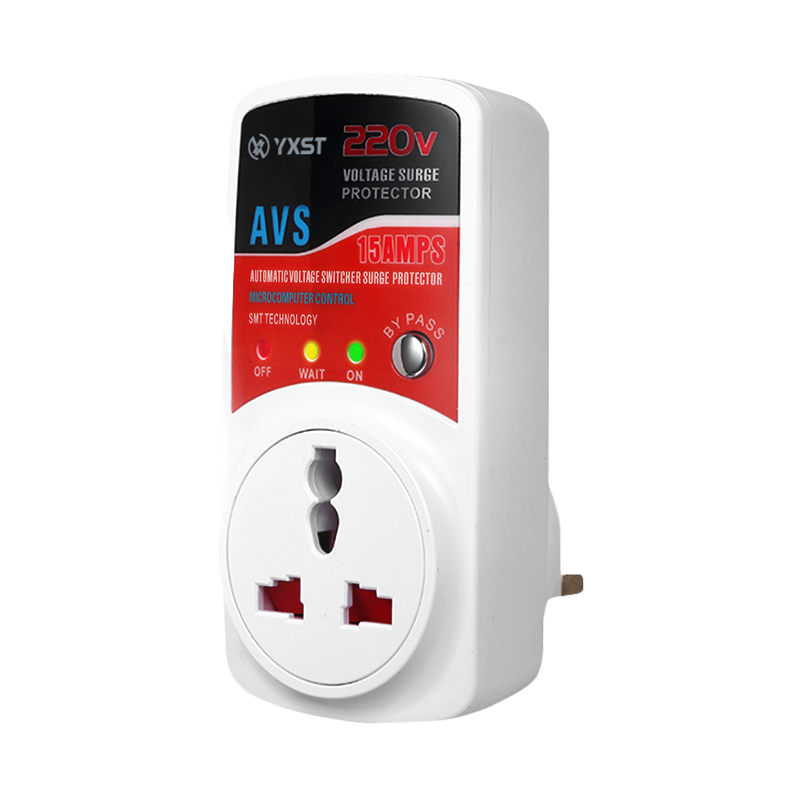
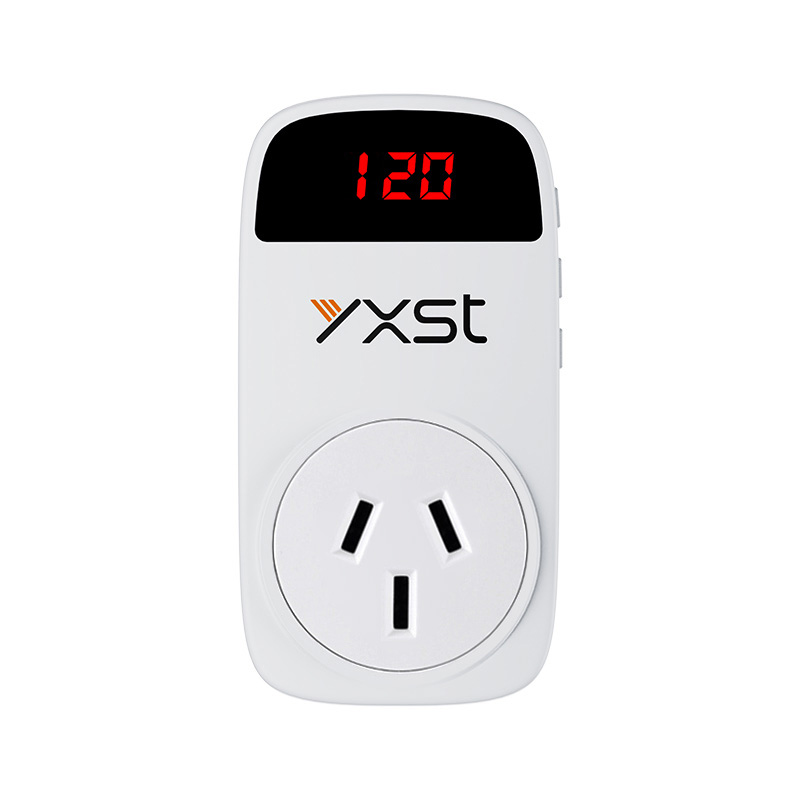
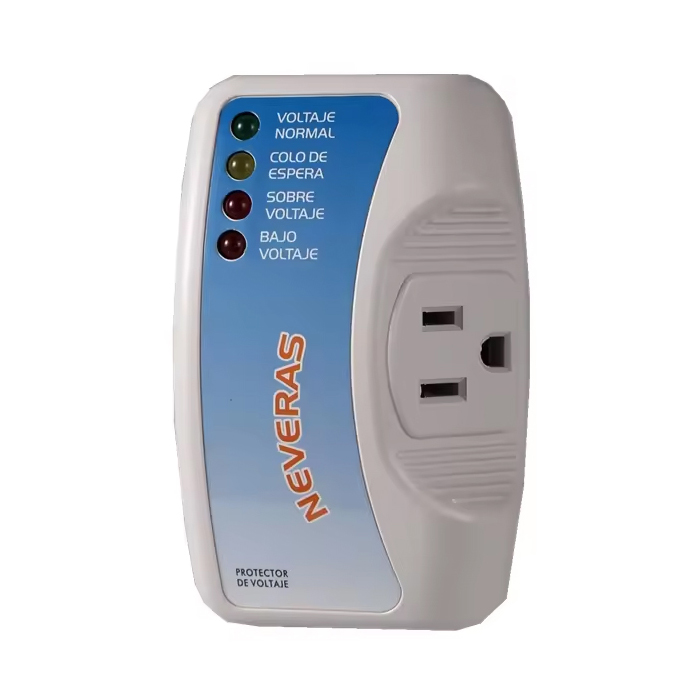
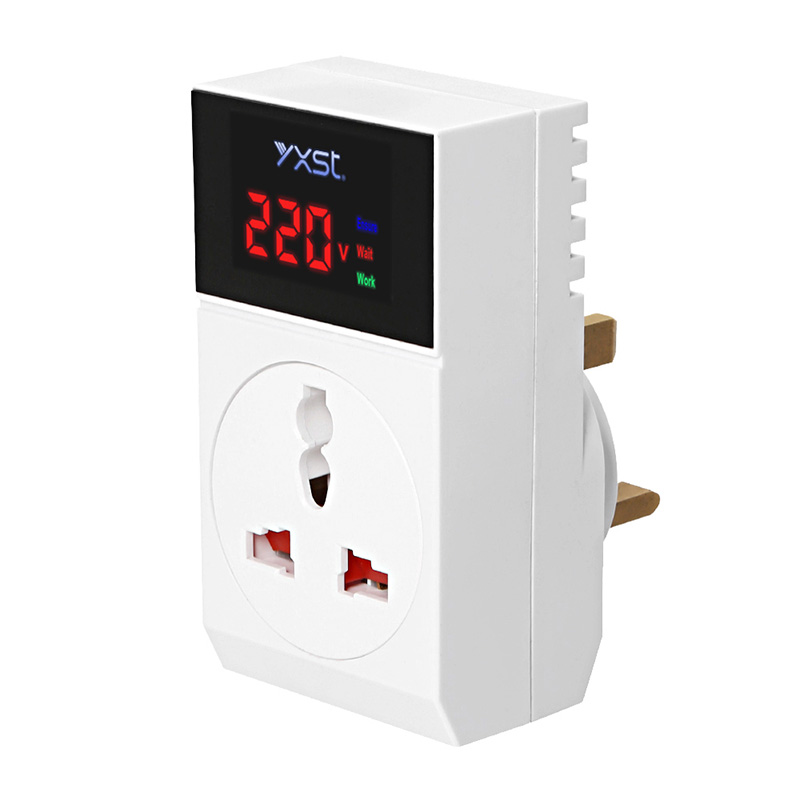
Many manufacturers provide customizable plug types to meet international market requirements.
Final Buying Checklist
Before purchasing an AVR for your refrigerator, confirm the following:
✔ AVR capacity is at least 30–50% higher than refrigerator power
✔ Wide input voltage range for unstable electricity
✔ 3-minute delay restart for compressor protection
✔ Built-in over-voltage and surge protection
✔ Reliable manufacturer with strong quality control
A carefully selected AVR will protect your refrigerator for years while reducing repair costs.
Choosing the right AVR ensures stable voltage, protects compressors, and significantly extends refrigerator lifespan in unstable power environments.
 English
  Español
  Deutsch
  Français
  Italiano
  Português