
Home Surge Protectors: Essential Safety Barriers
As household appliances become more intelligent and integrated, tiny fluctuations in the power system, especially transient surges, are quietly threatening equipment safety. Surges can be caused by lightning strikes, grid switching, or the start and stop of high-power appliances. Their instantaneous high voltage is enough to break down precision chips, burn circuit boards, and even cause chain damage. This article systematically analyzes how to reduce risks through scientific protection, from technology types, installation specifications to typical equipment tolerance thresholds, and clarifies common misunderstandings, providing a practical guide for household electricity safety.
Potential Threats of Power Surges to Home Electronic Devices
Invisible destructive mechanisms of daily power surges
Studies show that an average home may experience dozens of micro-surge events each year. These voltage fluctuations are caused by:
● Startup and shutdown of high-power equipment such as air conditioners/refrigerators (accounting for 63% of internal surge events)
● Grid load switching (23% transient overvoltage caused by substation operations)
● Static electricity accumulation (up to 15kV discharge in a dry environment)
Typical cases show:
The average life of an unprotected refrigerator is shortened by 40% (5 years → 3 years)
The repair cost of a damaged smart TV motherboard exceeds the original value of the device by 35%
Extreme risks of lightning events
Although lightning strikes only account for 17% of surges, the energy of a single strike can reach 10kA (10/350μs waveform). Its destructive paths include:
● Direct lightning strikes (the probability of building lightning strikes is 0.03%/year)
● Induced lightning (electromagnetic pulses within a range of 2km)
● Ground potential strikes (caused by differences in grounding systems)
Technology Types of Home Surge Protectors
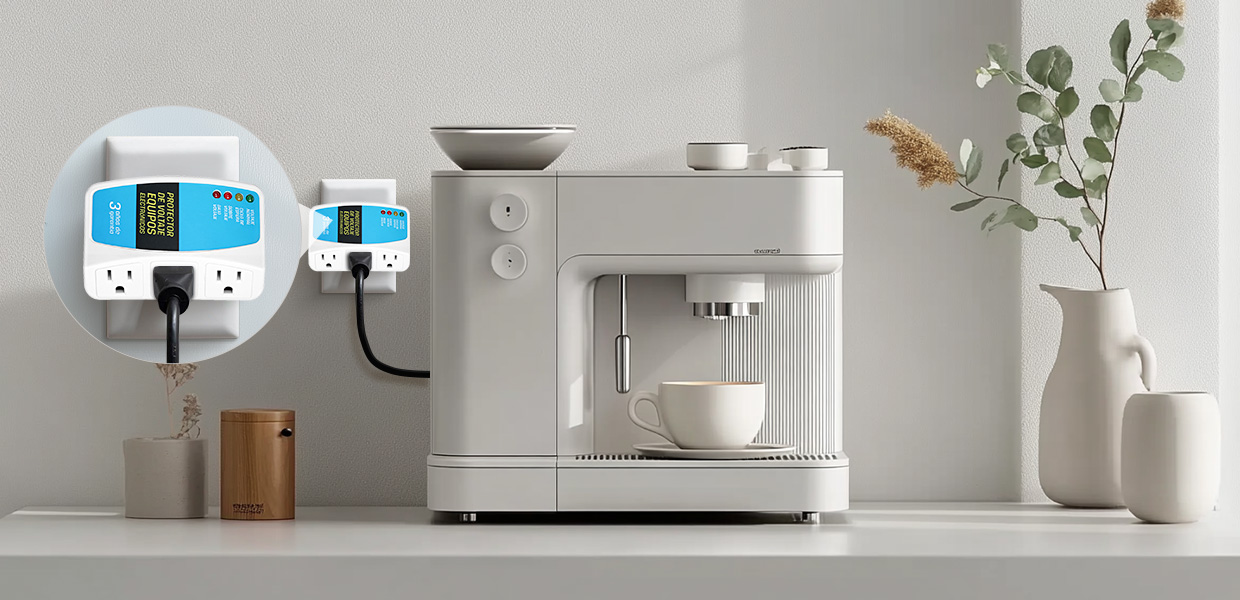
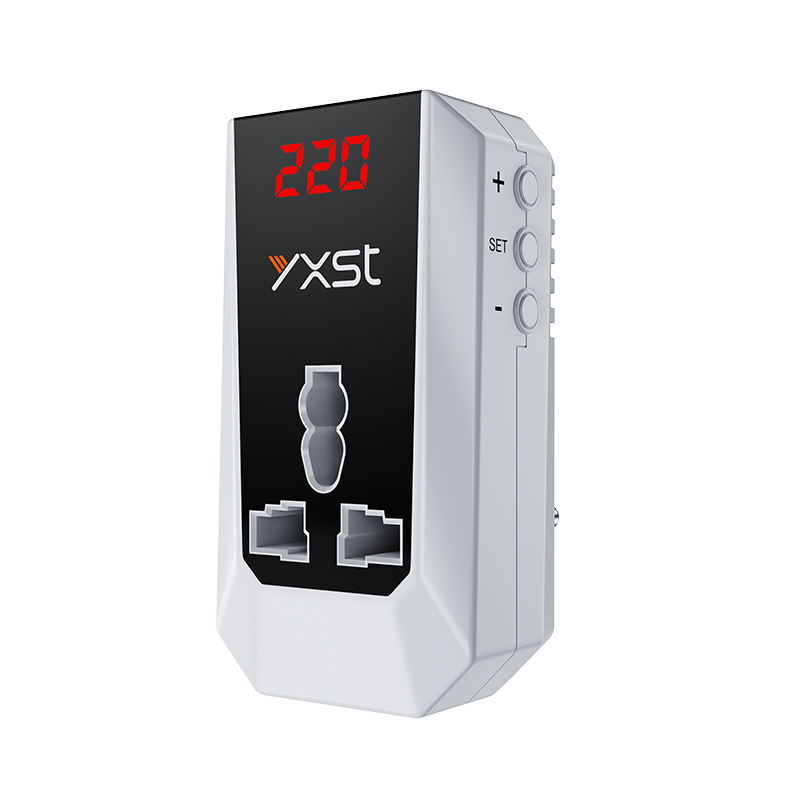
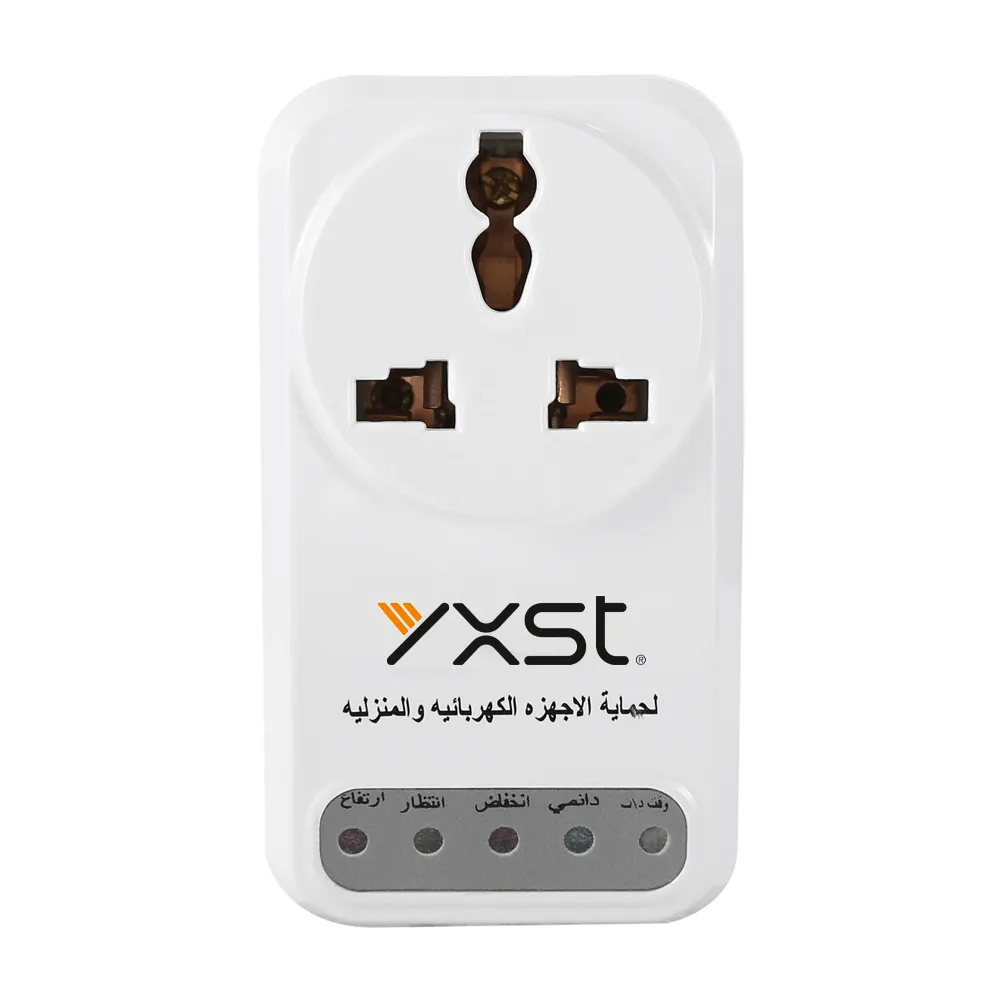
Power Socket Voltage Protector
Features: Plug-and-play design, suitable for local equipment protection such as computers and audio equipment. Its advantages are low cost and easy installation, but limited coverage, and each set of key equipment needs to be configured separately.
Applicable scenarios: renters, short-term office equipment protection or families with limited budgets.
Whole-house Surge Protector
Features: Installed in the home distribution box, blocking surges from invading all circuit loops from the source. It has stronger protection capabilities (can withstand instantaneous currents of more than 50kA) and does not require frequent intervention, but requires professional electrician installation, and the initial investment is high.
Technical Principle: Through metal oxide varistor (MOV) or gas discharge tube (GDT) components, the excess voltage is guided to the ground wire to achieve millisecond response.
Installation Specifications and Key Points
Installation of Wiring Type Home Surge Protectors
Series wiring: The backup protector is connected in series with the main circuit, and the backup protector is located at the front end of the protector to prevent short circuit faults. For example, a 100~125A fuse is required.
Parallel wiring: The protector is connected in parallel to the front end of the protected device, and both L (live wire) and N (neutral wire) in the single-phase system must be connected.
Grounding requirements: Grounding resistance ≤5Ω, wiring length ≤0.5m, wire diameter ≥6mm² (copper) to reduce residual pressure.
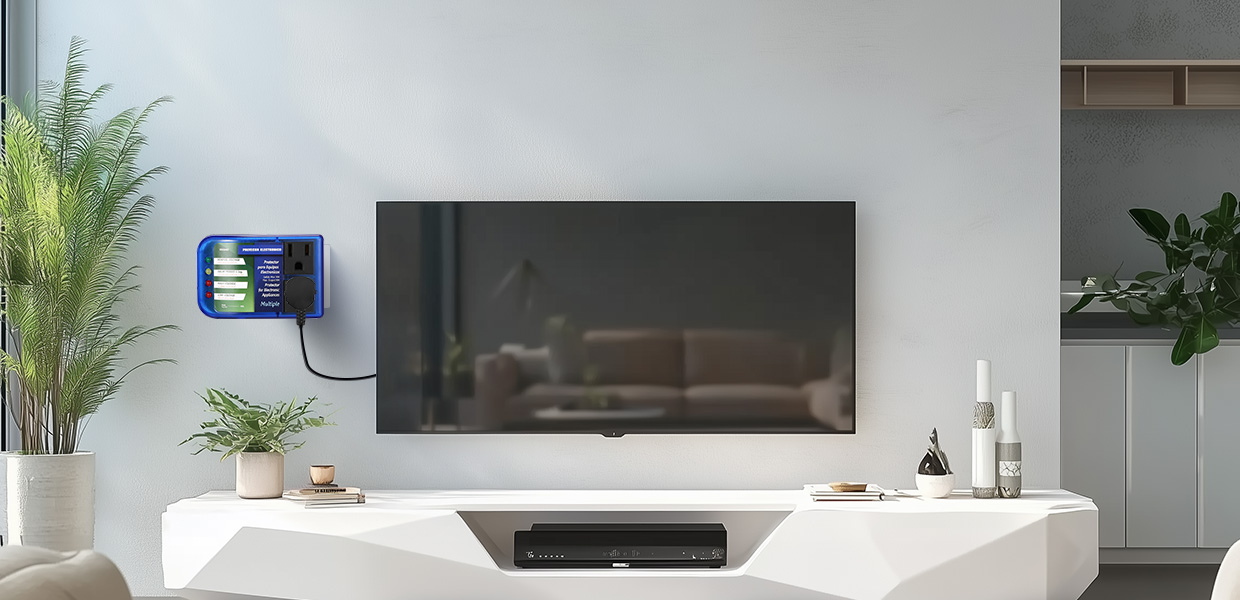
Installation of plug-and-play protectors
Plug-in design: Directly connected to the socket, suitable for terminal devices such as computers and TVs, ensure that the socket is reliably grounded
Cable management: Avoid long-distance parallel wiring to reduce induced voltage interference.
Protection range: A single protector only protects plug-in devices, and multiple devices need to be configured independently.
Tolerance thresholds for typical household devices
According to relevant industry standards and equipment electrical characteristics, the voltage tolerance threshold of typical household equipment can be divided into insulation withstand voltage value (insulation tolerance of the overall circuit of the equipment) and sensitive circuit threshold (working safety range of microelectronic components). The following is a detailed parameter analysis of five common types of equipment.
Smart TV
→ Insulation withstand voltage value: ≥1500V (AC)
The power input line needs to pass the withstand voltage test to verify its insulation performance under high voltage impact (such as CE certification requirements).
→ Sensitive circuit threshold: 12-24V (DC)
Core components such as the motherboard chipset and display driver circuit are sensitive to voltage fluctuations. If the threshold is exceeded, it may cause image abnormalities or motherboard damage.
Inverter air conditioner
→ Insulation withstand voltage value: ≥2500V (AC)
The outdoor unit controller involves high-voltage components such as PFC circuits and IPM inverter modules, which need to withstand instantaneous fluctuations in the power grid.
→ Sensitive circuit threshold: 5-15V (DC)
Microelectronic components such as temperature sensors and MCU control chips rely on stable low-voltage power supply. Voltage abnormalities may trigger compressor protection shutdown.
Computer (desktop)
→ Insulation withstand voltage value: ≥1500V (AC)
The power input terminal must meet the input voltage range of 180-250V, and the surge interference is suppressed by the filter circuit.
→ Sensitive circuit threshold:
◆ Motherboard power supply: 3.3V/5V/12V (DC), fluctuation range ≤±5%
◆ CPU core voltage: 0.7-1.5V (DC), overvoltage may cause silicon chip breakdown.

Microwave oven
→ Insulation withstand voltage value: ≥3000V (AC)
The output end of the high-voltage transformer needs to withstand -4000V DC pulse (magnetron working voltage), and the internal insulation material needs to pass the withstand voltage and temperature rise test.
→ Sensitive circuit threshold:
◆ Control panel circuit: 5V (DC)
◆ Microprocessor: 3.3V (DC), voltage abnormality may cause program disorder or timing failure.
Washing machine
→ Insulation withstand voltage: ≥1500V (AC)
The motor drive circuit and power module must pass the grounding continuity test to ensure that the leakage current is lower than the safety threshold.
→ Sensitive circuit threshold:
◆ Variable frequency motor controller: 12-24V (DC)
◆ Water level sensor: 5V (DC), unstable voltage may cause misjudgment or drainage failure.
Clarification of safety cognition misunderstandings
Analysis of common misconceptions
● “Lightning protection socket is universal”:
Single-level protection can only handle surges <6kA, and the complete system requires multi-level coordination
● “One-time installation is effective forever”:
MOV devices have cumulative damage effects and need to be regularly inspected and replaced
● “Power off is safe”:
Inductive lightning can invade through signal lines, and physical isolation is the fundamental
Establishment of correct protection concepts
Systematic thinking: Build a complete protection chain of “external introduction and internal sparseness”
Dynamic management: Cooperate with home equipment to update and iterate protection solutions
Tiered investment: Core equipment is equipped with a protection budget of 5%-15% of the cost
Summary
Home Surge Protectors are not only a “safety valve” for dealing with sudden power crises, but also a core component to protect the digital life of modern families. With the iteration of technology and the improvement of policies, the shift from passive defense to active intelligent management will become the mainstream. Only by choosing an adaptation solution and regularly maintaining equipment can the most stable power defense line be built at the lowest cost.
 English
  Español
  Deutsch
  Français
  Italiano
  Português