
Automatic Voltage Regulator (AVR) Function,Working Principle
This article explains automatic voltage regulators (AVRs), including features, how digital AVRs work, home applications, maintenance best practices, key considerations, and the core differences between AVR and UPS.
Function of Automatic Voltage Regulator (AVR)
Automatic Voltage Regulators (AVRs) ensure stable AC voltage output for connected devices.
Key functions include:
Voltage Stabilization: Maintains a constant 220V AC output despite input fluctuations, protecting home appliances like refrigerators or computers from damage caused by over/under-voltage conditions.
Surge Protection: Safeguards against electrical surges and spikes by adjusting voltages to safe levels, critical for sensitive electronics in residential settings.
Load Management: Balances reactive loads in multi-generator setups and prevents overloads by adjusting excitation currents dynamically.

Working Principle of Digital AVR
A digital AVR operates through a closed-loop control system:
Voltage Detection: Sensors measure input AC voltage (e.g., 220V) and compare it to a preset reference value.
Error Adjustment: If deviations occur, the digital controller calculates required corrections using algorithms (e.g., PID or H∞ control) to minimize voltage error.
Output Regulation: Adjusts the excitation current via semiconductor devices (e.g., thyristors) to stabilize the generator’s output voltage with ±1%–5% accuracy.
Application in Home Environments
AVRs are vital for residential power stability:
Compatibility: Designed for single-phase AC systems (90–350V input range), ideal for home appliances requiring 220V.
Noise Reduction: Built-in EMI filters minimize interference from generators, ensuring clean power for TVs, routers, and lighting systems.
Safety Features: Automatic bypass mode activates during faults, allowing power to flow directly to devices without AVR intervention.
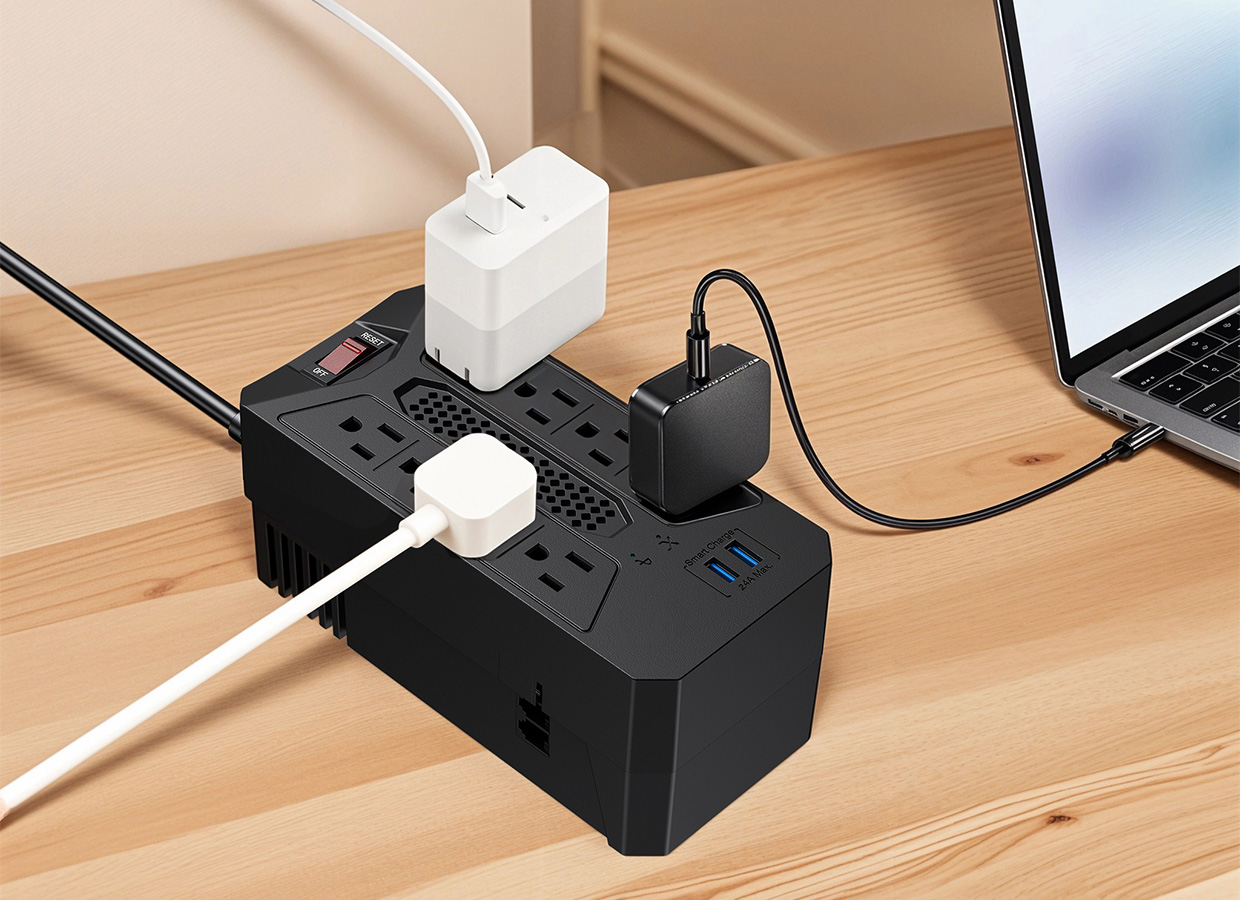
How to Use an AVR for Home Systems
Installation :
→ Connect the AVR between the generator and home circuit, ensuring proper ventilation and avoiding heat sources.
→ Verify wiring matches terminal labels.
Configuration :
→ Adjust the voltage knob (VOLT) to set the output to 220V. Use a multimeter to validate accuracy.
→ Enable frequency protection (e.g., 50/60Hz) to prevent under-voltage during generator speed drops.
Maintenance Best Practices
Routine Checks: Inspect for dust buildup, loose connections, or corroded terminals monthly.
Performance Testing: Use a voltage tester to ensure the AVR maintains stable 220V output under varying loads.
Component Care: Replace blown fuses promptly to avoid system failures.

Key Considerations for Digital AVRs
Power Rating: Select a model with 20–30% higher capacity than the total home load to handle surges.
Digital Advantages: Control algorithm optimization and dynamic response performance, hardware platform performance and reliability, system compatibility and communication interface
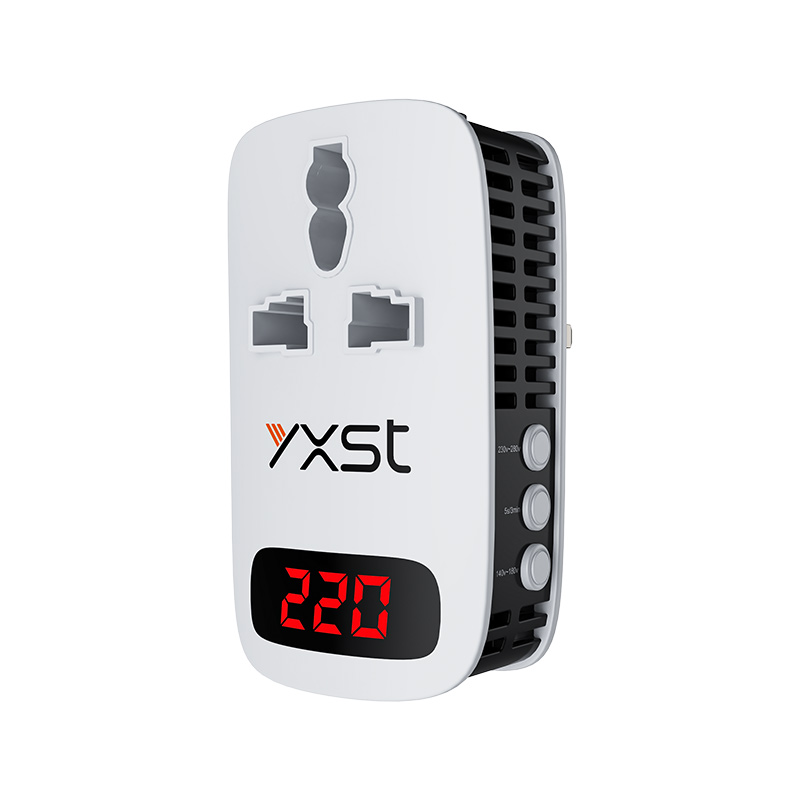
User-Friendly Features: Opt for AVRs with USB interfaces or LED indicators (e.g., low-frequency warnings) for easier monitoring.
Core difference between automatic voltage regulator (AVR) and uninterruptible power supply (UPS)
Although both automatic voltage regulator (AVR) and uninterruptible power supply (UPS) are power management devices, their functions, principles, and application scenarios are significantly different. The following is a specific comparison between the two:
● Core function difference
→ AVR: Mainly used to stabilize input voltage fluctuations, by adjusting the coil turns ratio or controlling the excitation current, the output voltage is maintained within the set range (such as 220V±5%). Typical functions include voltage overload/underload protection, delayed start to avoid surge impact, etc.
→ UPS: It has both voltage stabilization and backup power supply functions. During normal power supply, the rectifier is used to stabilize the voltage, and when the mains power is interrupted, the battery and inverter are used to provide continuous power (switching time ≤10ms) to ensure that the equipment is not disconnected.
● Working principle comparison
→ AVR: A closed-loop control system is used to adjust the voltage in real-time through a servo motor or a digital controller (such as a PID algorithm). For example, when the input voltage fluctuates, the AVR dynamically adjusts the output by changing the position of the transformer carbon brush or adjusting the thyristor trigger angle.
→ UPS: Contains modules such as rectifier, battery, inverter, etc. When the mains power is normal, the rectifier supplies power to the load and charges it; when the power is off, the inverter converts the battery’s DC power into AC power and switches the power supply seamlessly.
● Application scenarios and applicability
→ AVR: Suitable for scenarios where the voltage is unstable but short power outages are allowed, such as household appliances (refrigerators, TVs) and non-critical industrial equipment. The typical input voltage range is wide (such as 125V-275V), which can cope with low voltage/high voltage problems in rural or old power grids.
→ UPS: Designed for equipment with high requirements for power continuity, such as servers, medical equipment, and data centers. Even if the mains power is interrupted, UPS can still provide backup power for minutes to hours to prevent data loss or system crashes.
● Technical characteristics and cost
→ Response speed: AVR voltage regulation accuracy can reach ±1%-5%, but the response time may be longer (milliseconds); UPS conversion time ≤10ms, and supports dynamic load adjustment (such as step load compensation).
→ Cost and maintenance: AVR has a simple structure and low cost, and maintenance is mainly cleaning and line inspection; UPS contains battery packs and complex inverter circuits, so it is expensive and requires regular replacement of batteries and monitoring of charging and discharging status.
● Key design differences
→ Energy storage device: AVR has no energy storage function and only relies on dynamic adjustment; UPS must be equipped with batteries as backup energy.
→ Voltage stabilization method: AVR directly corrects the voltage through physical voltage regulation or digital control; UPS voltage stabilization relies on the dual processing of rectifiers and inverters. Some low-end UPS use relay shifting, and the voltage stabilization effect is poor.
Summary
The essential difference between AVR and UPS is that AVR focuses on voltage stability, while UPS provides a power continuity guarantee based on voltage stabilization. Users need to choose according to actual needs – if they only need to deal with voltage fluctuations (such as household appliance protection), AVR is economical and efficient; if they need to ensure the continuous operation of key equipment (such as servers or medical equipment), they must use UPS.

 English
  Español
  Deutsch
  Français
  Italiano
  Português