
Which is better, refrigerator guard or voltage regulator?
Choosing a refrigerator guard or voltage regulator depends on your specific needs and power environment. Here is a brief guide:
Core difference
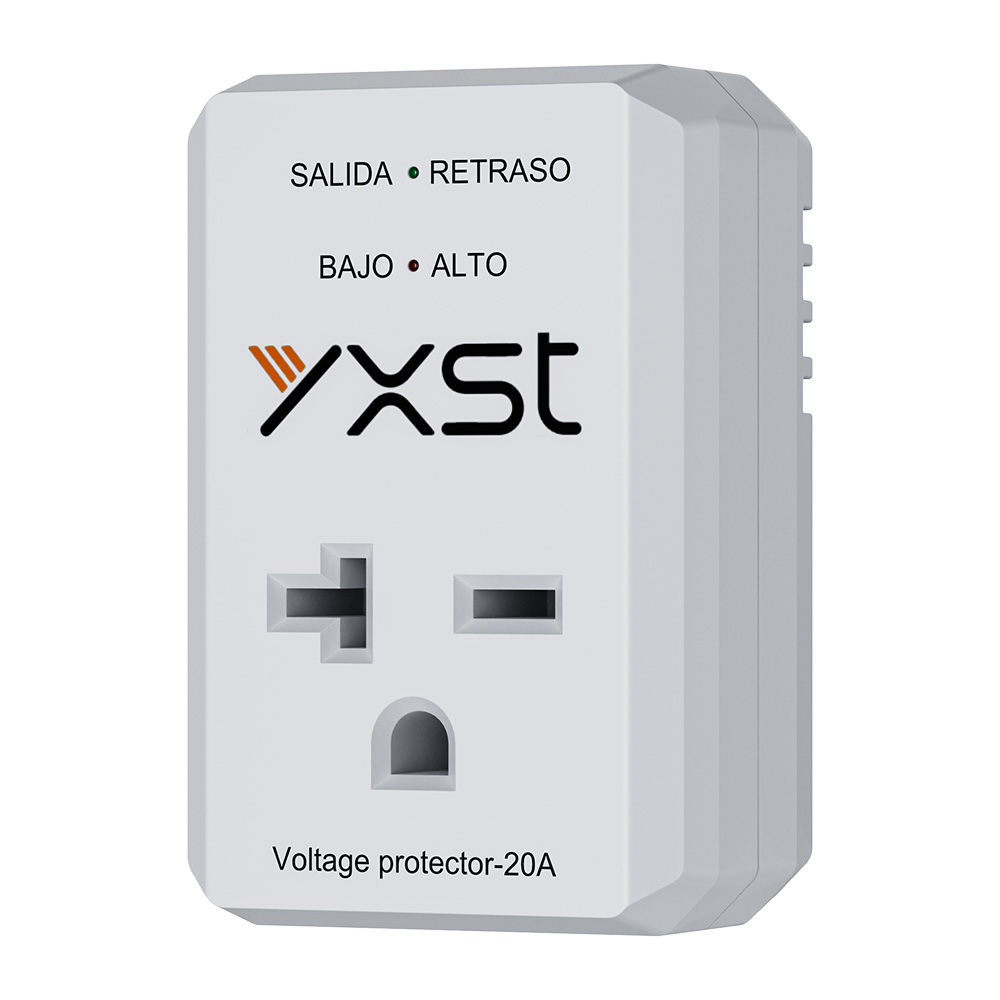
Refrigerator protector
✔️ Designed specifically for refrigerators, quickly cuts off power to prevent instantaneous hazards such as voltage spikes and lightning strikes.
✔️ Prevents frequent start and stop of the compressor to extend its life.
❌ Only protects a single refrigerator and does not adjust the voltage.
Voltage regulator
✔️ Real-time voltage adjustment (160-250V → 220V±5%) to cope with continuous fluctuations.
✔️ Can protect multiple appliances (such as TVs, and air conditioners) at the same time.
❌ Slow response speed and high power consumption.
How to choose refrigerator guard and a voltage stabilizer
Scenarios for choosing a refrigerator protector
◆ Lightning strike/high-instantaneous high voltage areas (such as coastal areas and mountainous areas): Prioritize protection against short-term shocks.
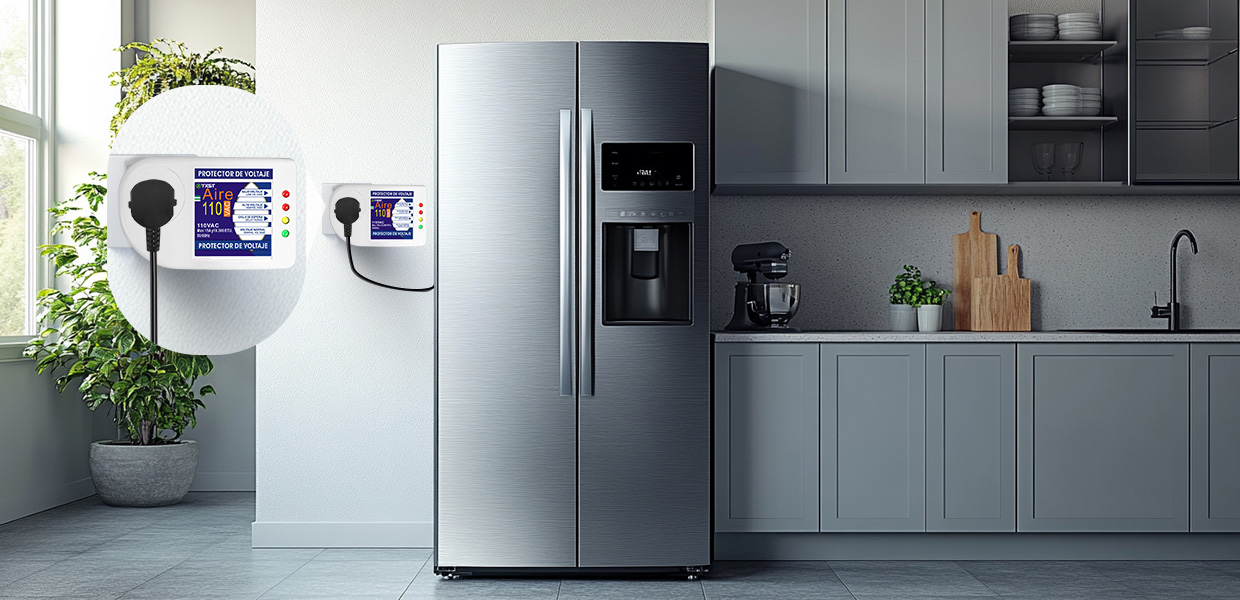
◆ Old refrigerators or frequent power outages: Avoid damage to the compressor due to repeated restarts.
◆ Limited budget and only need to protect the refrigerator: The cost is 40% lower than the voltage stabilizer, and the power consumption is only 3W.
Scenario for choosing a voltage stabilizer
◆ Long-term voltage instability (such as near industrial areas and rural areas): Continuous voltage stabilization to avoid reduced refrigeration efficiency.
◆ Multiple devices need to be protected (such as refrigerators + air conditioners + TVs): It is more cost-effective to use one machine for multiple purposes.
◆ Long-term low voltage (<180V): The boost function ensures normal refrigeration of the refrigerator.
Key decision indicators
Measure voltage fluctuation:
◆ Use a multimeter to measure the voltage at different times:
◆ Instantaneous fluctuation > 15% (such as a lightning strike) → Protector.
◆ Continuous fluctuation > ±10% (such as instability throughout the day) → Voltage stabilizer.
Equipment requirements:
◆ Protect only the refrigerator → Protector.
◆ More than 3 appliances need to be protected → Voltage stabilizer (choose a model with 20% higher power).
Budget and space:
◆ Protector: Affordable price, flexible installation (plug next to the refrigerator).
◆ Voltage stabilizer: The price is higher than the protector, can be plugged into the socket, or installed in the main circuit.
Comprehensive suggestions
◆ New urban areas (relatively stable voltage): Protectors are sufficient.
◆ Rural/old residential areas (voltage is often low): Voltage stabilizers are more practical.
◆ Lightning-prone areas: Protectors + lightning protection sockets for dual protection.
◆ High-value refrigerators (such as imported models): It is recommended to configure both at the same time (stabilizer first, then protector).
Notes
◆ Do not over-configure: The power of the voltage stabilizer only needs to be 20% higher than the rated power of the refrigerator.
◆ Regular maintenance: Clean the heat dissipation port of the equipment every quarter to avoid overheating and failure.
◆ Certification inspection: Look for the national 3C logo and reject “three-no” products.
Through the above analysis, you can make a reasonable choice based on the power situation and equipment needs at home. If you still have questions, it is recommended to consult a professional electrician for on-site voltage testing before making a decision.
Error: Contact form not found.
 English
  Español
  Deutsch
  Français
  Italiano
  Português