
Voltage protector manufacturers share: Is surge protection equivalent to overvoltage protection?
Although surge protection (surge protection) and overvoltage protection (overvoltage protection) both belong to the category of voltage protection, there are significant differences in their working principles, application scenarios and protection targets. The following is a detailed analysis of voltage protector manufacturers:
Surge Protection VS Overvoltage Protection Core differences (tabular form)
| Features | Surge Protection | Overvoltage Protection |
| Protection object | Transient high-voltage pulses (such as lightning strikes, switching surges) | Continuous voltage anomalies (such as power grid failure, neutral line disconnection) |
| Duration | Microsecond to millisecond level (instantaneous) | Seconds to hours (continuous) |
| Typical scenarios | Lightning induction, power system switch operation | Long-term high grid voltage, equipment failure leading to voltage increase |
| Protection device | MOV (varistor), gas discharge tube, TVS diode | Voltage relays, voltage stabilizers, circuit breakers, etc. |
| Response speed | Nanosecond level (extremely fast) | Seconds to seconds (relatively slow) |
| Energy processing | Discharge or absorb instantaneous high energy | Circuit disconnection or voltage stabilization |
Comparison of working principles
Surge protector (SPD)
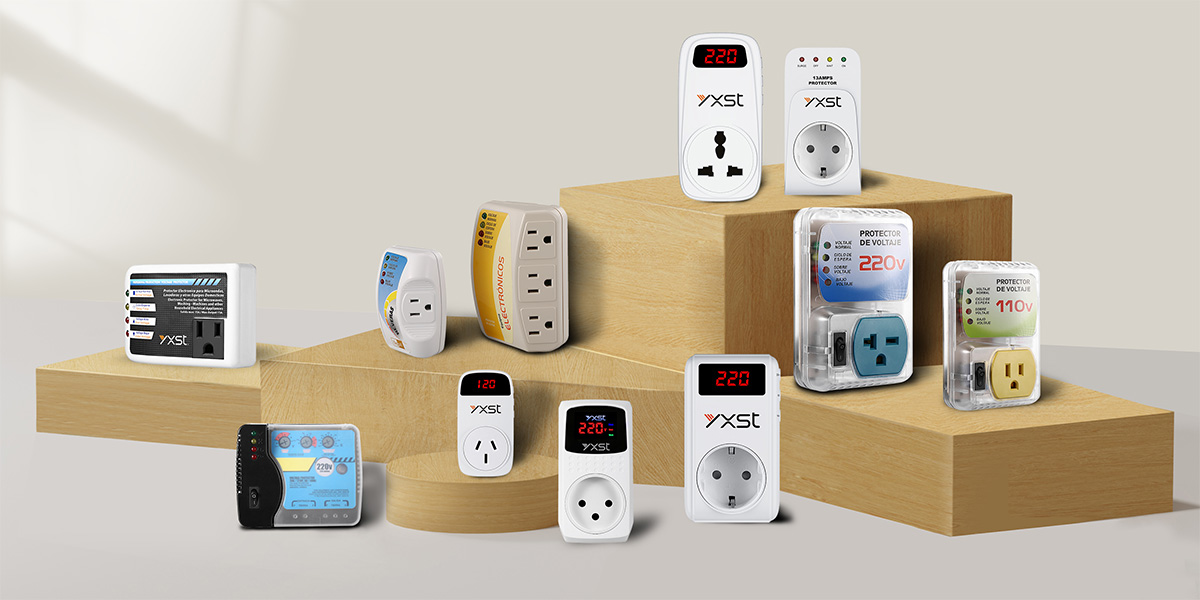
Non-linear elements (such as varistors) are turned on instantly when the voltage suddenly increases, and the surge current is directed to the ground to protect the equipment from transient overvoltage damage. For example, a lightning strike may generate a transient voltage of several thousand volts, and the SPD can clamp it to a safe range in a very short time.
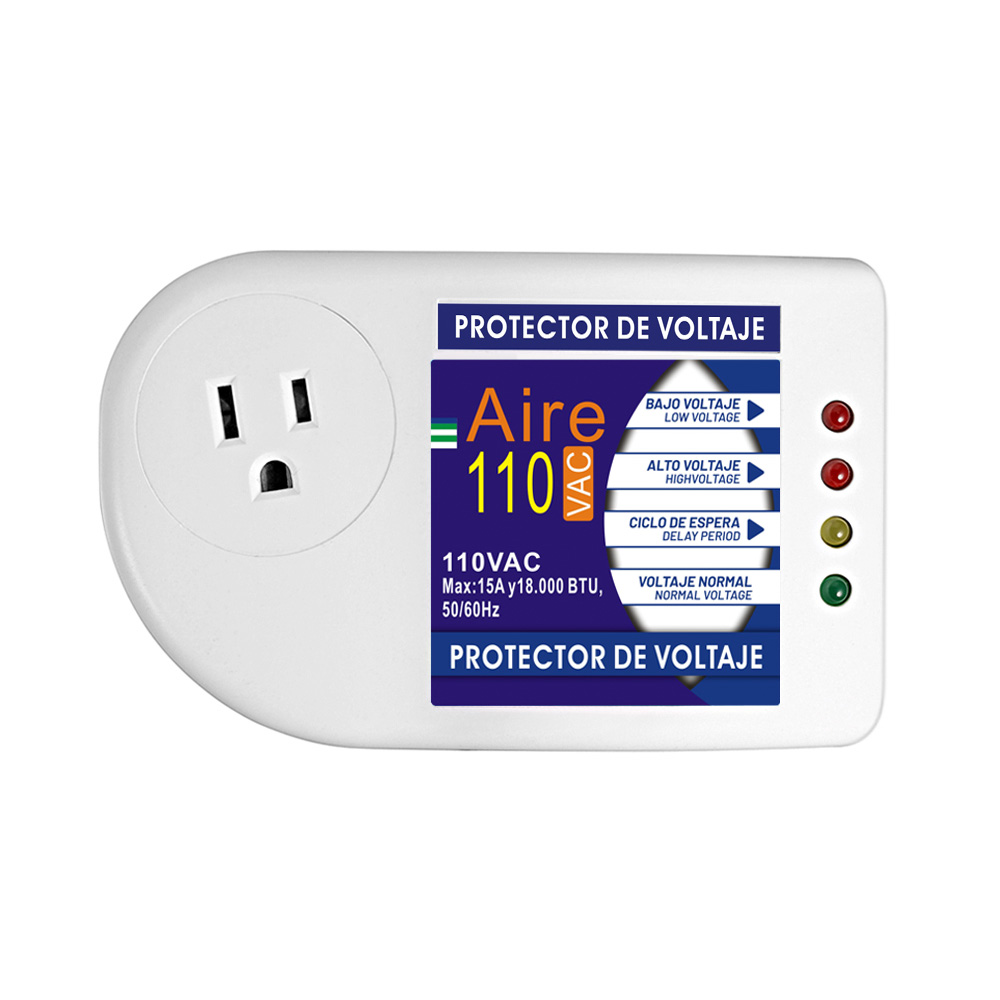
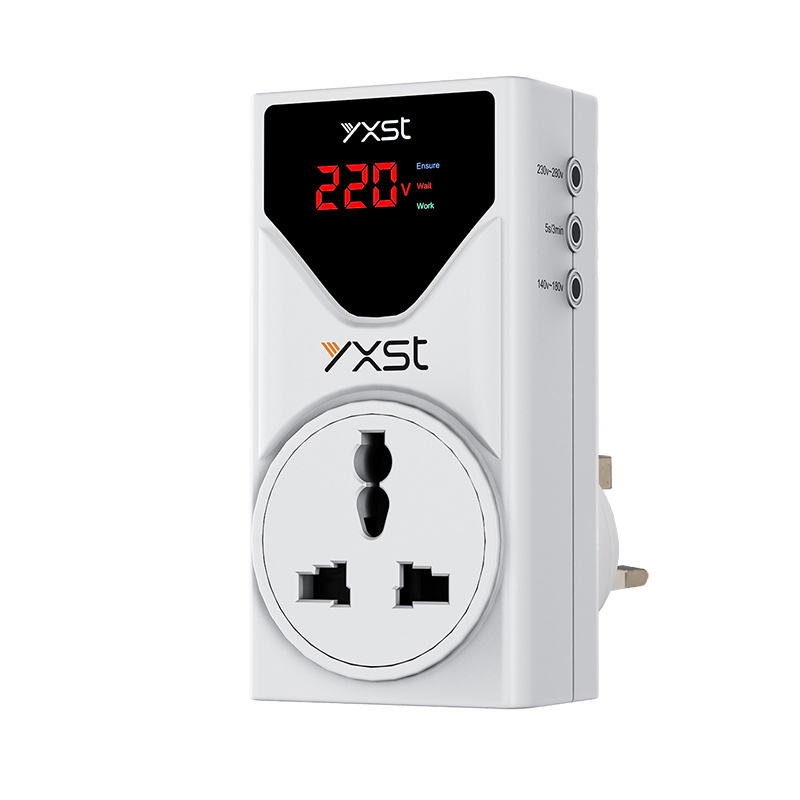
Overvoltage protector
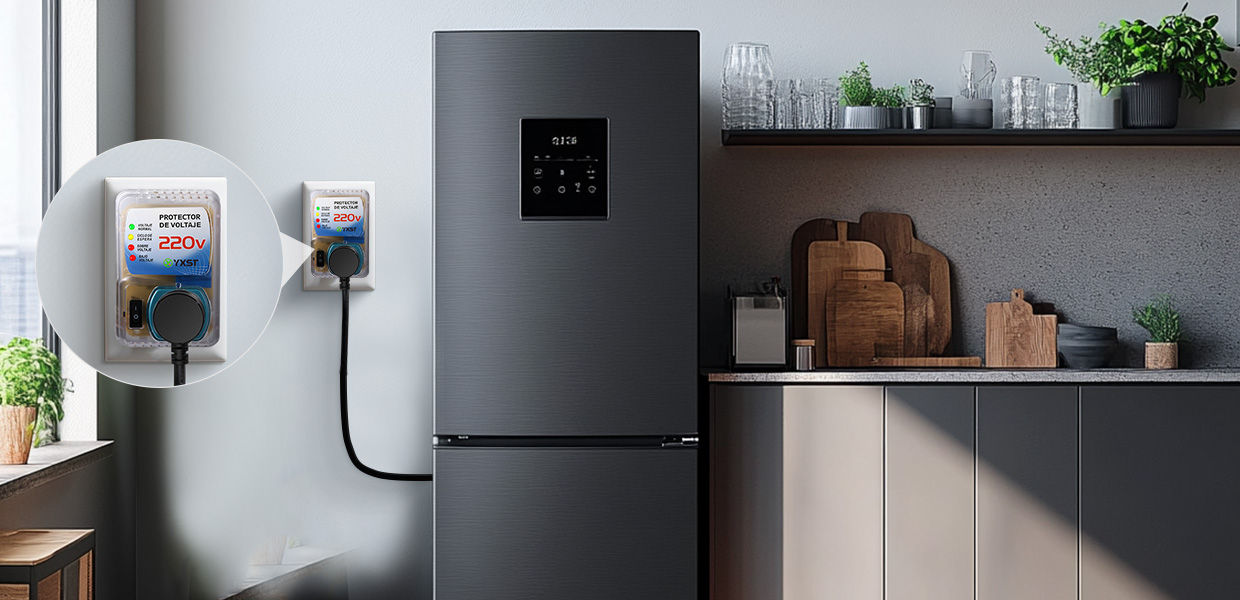
Monitor the continuous voltage in the circuit. When the voltage exceeds the threshold (such as continuously exceeding 275V), the power supply is cut off through a relay or circuit breaker, or the voltage is adjusted through a voltage stabilization circuit. For example, the voltage protector manufacturer said that when the voltage is maintained at 300V for a long time due to a power grid failure, the overvoltage protector will actively cut off the power to avoid burning the equipment.
Correlation in practical applications
Complementarity: In complex power environments (such as areas with frequent thunderstorms and unstable power grids), it is usually necessary to configure surge protection and overvoltage protection simultaneously. For example:
Level 1: Surge protector to deal with lightning surges;
Level 2: Overvoltage protector to prevent continuous overvoltage in the power grid.
Misconception warning: Installing a surge protector alone cannot protect against continuous overvoltage, and vice versa. For example, ordinary lightning protection sockets (including SPD) are ineffective against long-term voltage increases.
User selection suggestions
Home/office:
High risk of lightning strikes: Choose a lightning protection socket or SPD with surge protection.

Unstable power grid (such as in remote areas): Install an overvoltage protector or automatic voltage stabilizer.
Do you need to buy them at the same time?
Complementary needs:
Dual risk areas of lightning and grid fluctuations (such as rural areas and industrial areas): surge protectors (for lightning protection) and overvoltage protectors (for grid failure protection) must be installed at the same time to cover transient and steady-state risks.
Single risk scenario:
Only lightning-prone areas: prioritize surge protectors;
Only unstable grid areas: prioritize overvoltage protectors
Surge protection is transient protection against extreme shocks caused by lightning or operating overvoltage.
Overvoltage protection is steady-state control to solve the problem of long-term voltage anomalies in the power grid.
In practical applications, the two are often used in conjunction to cover all scenarios. For example, areas with frequent lightning strikes need to install surge protectors (for lightning protection) and over- and under-voltage protectors (for power grid fluctuations) at the same time.
Summary
Voltage protector manufacturer tells you that surge protection is a “blitzkrieg” to deal with instantaneous high-voltage pulses, while overvoltage protection is a “protracted-war” to solve continuous voltage anomalies.
The two have their focuses and often work together in the power protection system rather than replacing each other. Only by configuring them reasonably according to actual needs can the safety of the equipment be fully guaranteed.
 English
  Español
  Deutsch
  Français
  Italiano
  Português