
Safe Voltage Levels for Household Appliances
Unstable voltage can silently damage appliances, shorten service life, and increase repair costs. Knowing safe voltage levels and using proper protection can prevent these losses.
Safe voltage depends on an appliance’s rated supply. Most 220–240V appliances should remain close to nominal voltage, while 110–120V appliances require a lower operating range. When voltage exceeds safe limits, a voltage protector disconnects the power and reconnects it only after the supply becomes stable.
Understanding voltage ranges, appliance loads, cutoff settings, and restart delays helps buyers select suitable protection products.
What Is a Safe Voltage Level?
A safe voltage level is the electricity supply range within which a household appliance can operate reliably without excessive heating, component stress, reduced efficiency, or premature failure.
The correct operating range depends on the rated voltage shown on the appliance nameplate.
Common household voltage systems include:
-
110V, 115V, and 120V in parts of North America and Latin America
-
220V, 230V, and 240V in Africa, the Middle East, Asia, Europe, and other regions
The actual supply voltage does not always remain at the exact nominal value. Small fluctuations are normal. However, prolonged high voltage, low voltage, or repeated surges can damage motors, compressors, control boards, relays, power supplies, and other internal components.
Common Safe Voltage Ranges
The following values provide a practical reference for many household appliances.
| Rated Voltage | Recommended Operating Range | Potentially Unsafe Range |
|---|---|---|
| 110V | 99–121V | Below 90V or above 130V |
| 120V | 108–132V | Below 100V or above 140V |
| 220V | 198–242V | Below 180V or above 250V |
| 230V | 207–253V | Below 190V or above 260V |
| 240V | 216–264V | Below 200V or above 270V |
Important: These ranges are general references. The correct limits should always be confirmed according to the appliance manufacturer’s specifications and local power conditions.
Sensitive electronics, high-power equipment, older appliances, and compressor-based products may require narrower protection settings.
Why Low Voltage Is Dangerous
Low voltage is especially harmful to appliances that use motors or compressors, including:
-
Refrigerators
-
Freezers
-
Air conditioners
-
Washing machines
-
Water pumps
When voltage drops, these appliances may draw more current to maintain operation. Higher current can overheat motor windings, relays, wires, plugs, and internal connectors.
A refrigerator or air-conditioner compressor may repeatedly attempt to start without reaching normal operating speed. This condition creates excessive heat and can eventually cause compressor failure.
Low voltage can also make televisions, routers, computers, and electronic devices restart unexpectedly. Repeated interruptions may damage power supplies, affect stored data, and reduce the life of sensitive components.
A properly configured voltage protector automatically cuts off the power when voltage falls below the preset safe limit.
Why High Voltage and Surges Cause Damage
High voltage creates excessive electrical stress on appliance components such as:
-
Capacitors
-
Transformers
-
Circuit boards
-
Insulation materials
-
Display modules
-
Electronic power supplies
An appliance may continue working during moderate overvoltage, but long-term exposure can gradually weaken internal components.
A voltage surge is different from sustained high voltage. It is a short and sudden voltage increase caused by lightning, power-grid switching, electrical faults, or the startup and shutdown of heavy equipment.
High voltage and surges can:
-
Burn control boards
-
Damage displays
-
Destroy power modules
-
Reduce motor life
-
Cause insulation failure
-
Increase warranty claims
For importers, wholesalers, and retailers, these failures can lead to customer complaints, replacement expenses, after-sales pressure, and damage to brand reputation.
Recommended Protection for Common Appliances
Different appliances require different protection capacities, cutoff settings, and restart delays.
| Appliance | Main Electrical Risk | Recommended Protection |
|---|---|---|
| Refrigerator | Low voltage and rapid compressor restart | High/low-voltage cutoff with delay |
| Freezer | Compressor overheating | Voltage protector with 3–5-minute delay |
| Air conditioner | High startup current | Heavy-duty protector with suitable ampere rating |
| Television | Surge and overvoltage | Fast-response voltage and surge protector |
| Computer | Voltage fluctuation and power interruption | Voltage protector combined with UPS |
| Washing machine | Motor and control-board damage | High/low-voltage cutoff protection |
| Microwave oven | High operating current | Correctly rated protector with strong relay |
| Water pump | Low-voltage overheating | Wide-range monitoring and delayed restart |
The protector’s current and power capacity must be higher than the appliance load. A low-capacity protector should never be used with a high-power appliance.
Why Restart Delay Matters
A restart delay prevents an appliance from reconnecting immediately after the voltage returns to normal.
This feature is particularly important for:
-
Refrigerators
-
Freezers
-
Air conditioners
-
Other compressor-based appliances
After a compressor stops, pressure may remain inside the refrigeration system. Restarting too quickly forces the compressor to operate against high internal pressure, creating heavy startup current and mechanical stress.
A delay of approximately three to five minutes allows the pressure to balance before operation resumes.
For televisions, routers, and general electronic devices, a shorter delay may be suitable.
Adjustable-delay protectors are valuable for distributors because one product can serve several appliance categories and different market requirements.
How Importers Should Select Voltage Protectors
Before placing an order, importers should confirm the electrical conditions of their target market.
Key factors include:
1. Nominal Voltage
Confirm whether the market mainly uses:
-
110V
-
120V
-
220V
-
230V
-
240V
2. Plug Standard
Common options include:
-
UK plug
-
EU plug
-
US plug
-
AR plug
3. Appliance Capacity
Check the appliance’s:
-
Rated current
-
Rated power
-
Startup current
-
Maximum load
4. Protection Settings
Review:
-
High-voltage cutoff
-
Low-voltage cutoff
-
Recovery voltage
-
Response time
-
Restart delay
5. Product Quality
Buyers should also verify:
-
Relay capacity
-
PCB quality
-
Housing material
-
Testing procedures
-
Certification
-
Packaging quality
-
OEM and ODM capability
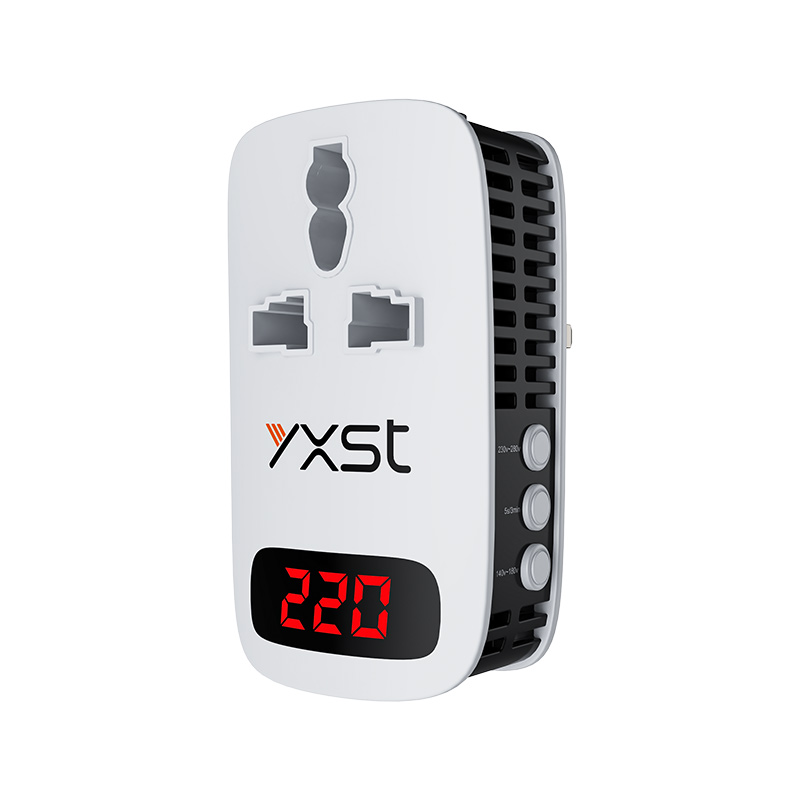
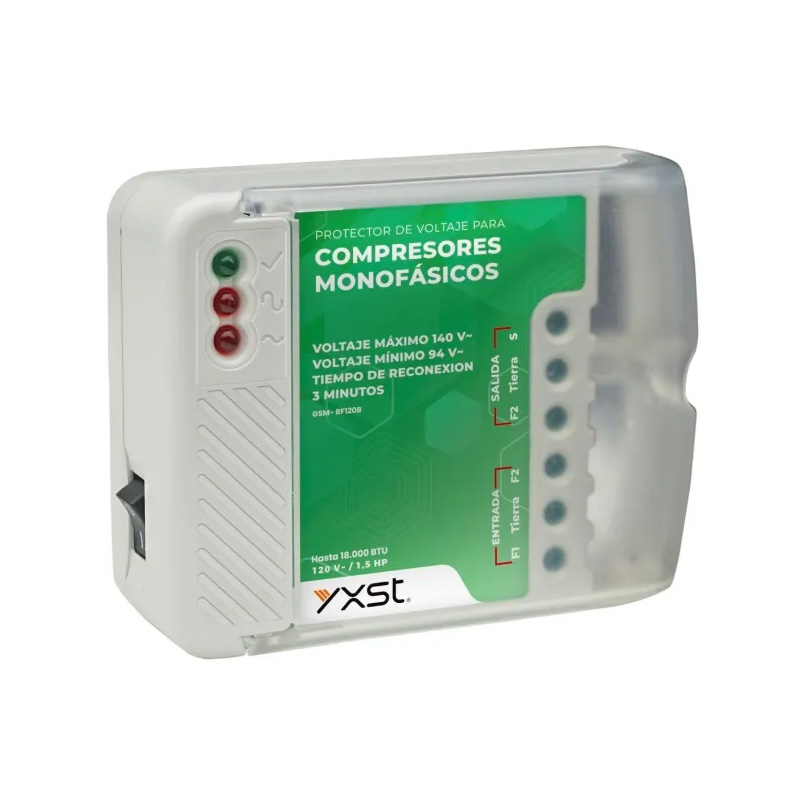
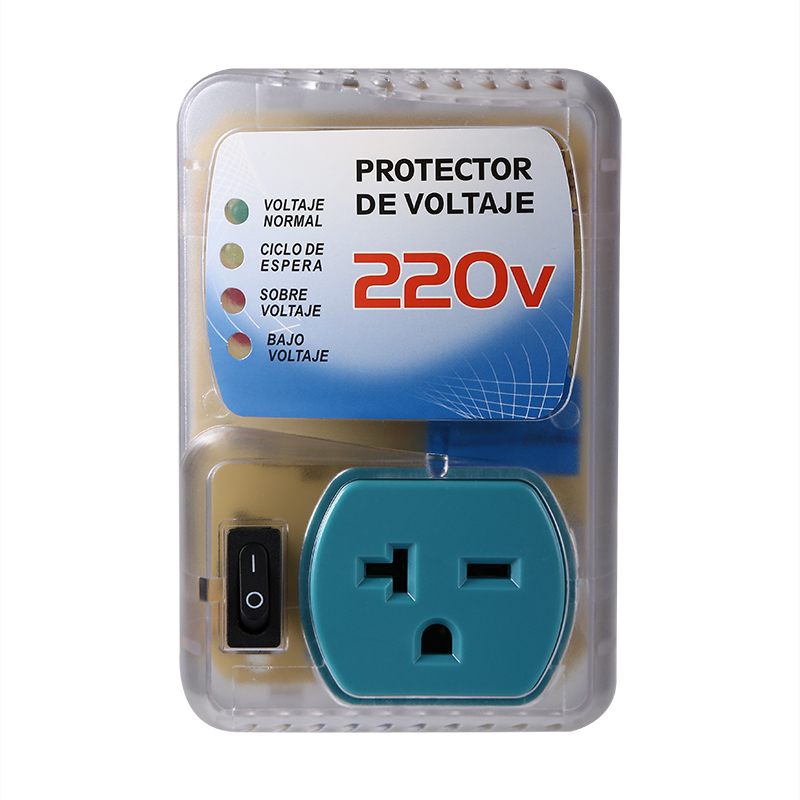
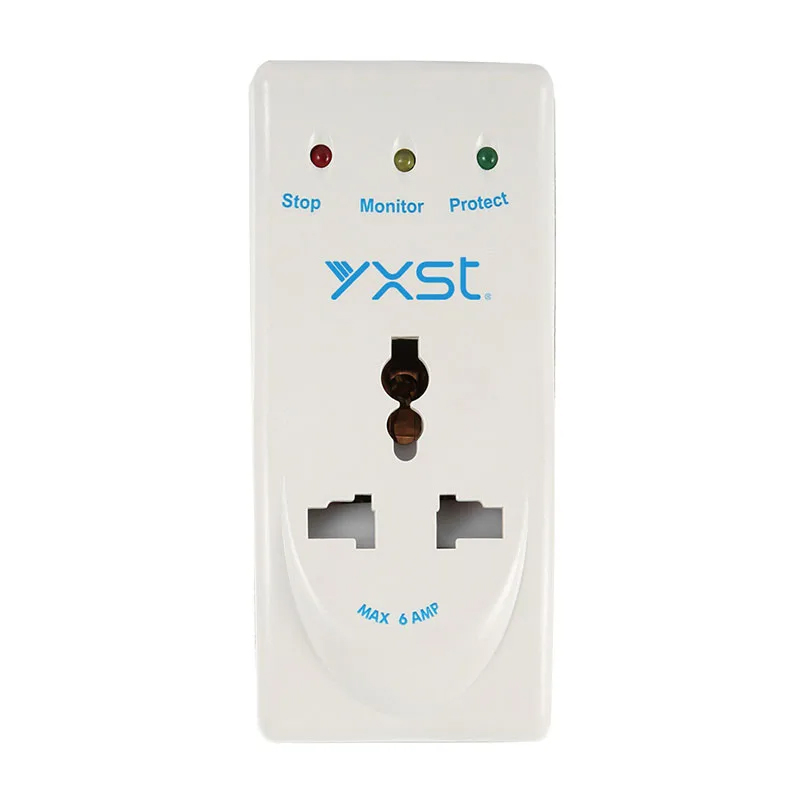
Wenzhou Yixing Electronic Technology Co., Ltd. manufactures voltage protectors, surge protectors, air-conditioner protectors, and automatic voltage regulators. Its in-house production includes SMT mounting, reflow soldering, wave soldering, injection molding, assembly, and quality control. Yixing supports customized voltage settings, plug types, functions, housings, and packaging for OEM and ODM customers.
Voltage Protector or Automatic Voltage Regulator?
A voltage protector and an automatic voltage regulator perform different functions.
A voltage protector disconnects the appliance when the supply becomes dangerously high or low. It is suitable when users need reliable cutoff protection at a competitive cost.
An automatic voltage regulator, also called an AVR or voltage stabilizer, actively adjusts unstable input voltage and provides a more stable output.
An AVR may be more suitable when:
-
Voltage fluctuates frequently
-
The input range is very wide
-
Appliances must continue operating
-
The local grid is highly unstable
In some markets, distributors offer both products to meet different customer budgets and protection requirements.
Final Buying Advice
Do not choose a protector based only on appearance or price. Correct voltage settings, sufficient load capacity, reliable relays, accurate detection, and stable production quality are more important.
For distributors, selecting the right specifications reduces product returns, warranty claims, and customer dissatisfaction. Clear labels and simple operating indicators also help end users understand the product, especially in markets where technical knowledge is limited.
Safe voltage control protects appliances, reduces maintenance costs, and improves reliability in homes affected by unstable electricity.
 English
  Español
  Deutsch
  Français
  Italiano
  Português