
Plug-in vs Wired Type: Electronic surge protector Installation and Maintenance
In modern families, electronic devices and home appliances are becoming increasingly dense, from smart TVs to refrigerators and air conditioners, all of which rely on a stable power supply. However, transient overvoltage (surge) caused by power grid fluctuations, lightning strikes, equipment startup, shutdown, etc. may quietly erode the life of the equipment and even cause fire hazards. According to statistics, about 60% of home appliance damage is related to surges. As a “power firewall”, Electronic surge protector becomes the cornerstone of home power safety by discharging surge energy and limiting voltage peaks.
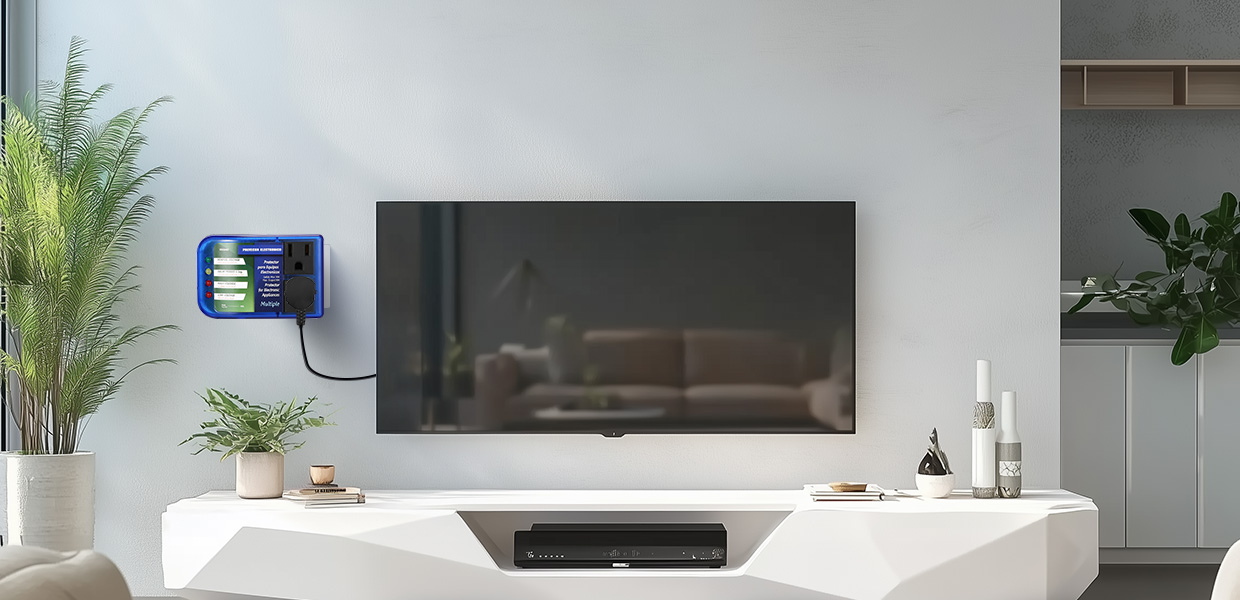
Function and working principle of electronic surge protector
Core function: voltage clamping and energy shunting
Surge protector responds dynamically through nonlinear elements (such as metal oxide varistors MOV or gas discharge tubes GDT). When the voltage exceeds the safety threshold, MOV quickly turns on and conducts the surge current into the grounding system; GDT forms a low-impedance path by ionizing gas to achieve large current shunting. The synergy of the two can limit the transient voltage of thousands of volts to the tolerance range of the equipment.
Technical classification and applicable scenarios
Voltage-limiting type (Type II): Applicable to household low-voltage distribution systems, with short response time, and able to cope with common lightning-induced surges.
Impact of neutral line break on ordinary household appliances and protection suggestions
The harm of neutral line break
In low-voltage power distribution systems, the neutral line is responsible for balancing the three-phase load current. If a line break occurs (such as line aging, or construction errors), it will lead to:
Voltage imbalance: After the line is broken, the phase voltage with higher load impedance rises sharply (up to 380V), causing the household appliances to burn out due to overvoltage.
Equipment damage examples:
Refrigerator/air conditioner: The compressor motor winding breaks down due to overload.
LED lighting: The driver power chip fails due to high-voltage impact.
Smart devices: Precision circuits such as Wi-Fi modules and motherboards are permanently damaged.
Added value of surge protectors
Some high-end surge protectors are designed to be compatible with transient overvoltage (TOV) tolerance, that is, when the power grid is abnormal (such as neutral line break), it can tolerate short-term power frequency overvoltage to buy time for fault repair.

How to scientifically select a surge protector for home use
Analysis of key parameters
Maximum continuous operating voltage (Uc): needs to be higher than the highest steady-state voltage of the power grid (domestic single-phase system).
Voltage protection level (Up): select a model with Up≤1.5kV to ensure that it matches the insulation withstand voltage of home appliances.
Selection strategy for home scenarios
Basic protection: Install a power protector at the household distribution box to cover the lines that need to protect home appliances.
Fine protection: Install it at the front end of devices such as TVs and computers to form hierarchical protection.
Key points for installation and maintenance of surge protectors: comparison between plug-and-play and wiring types
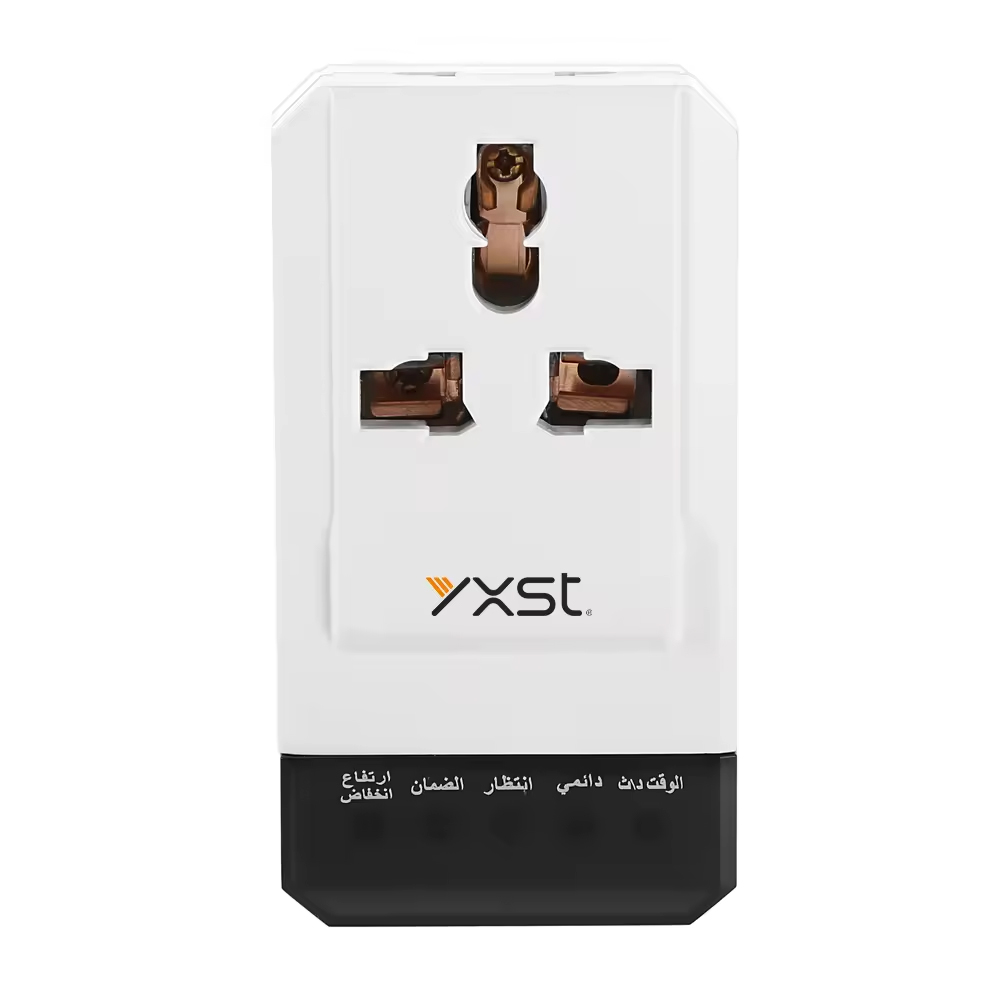
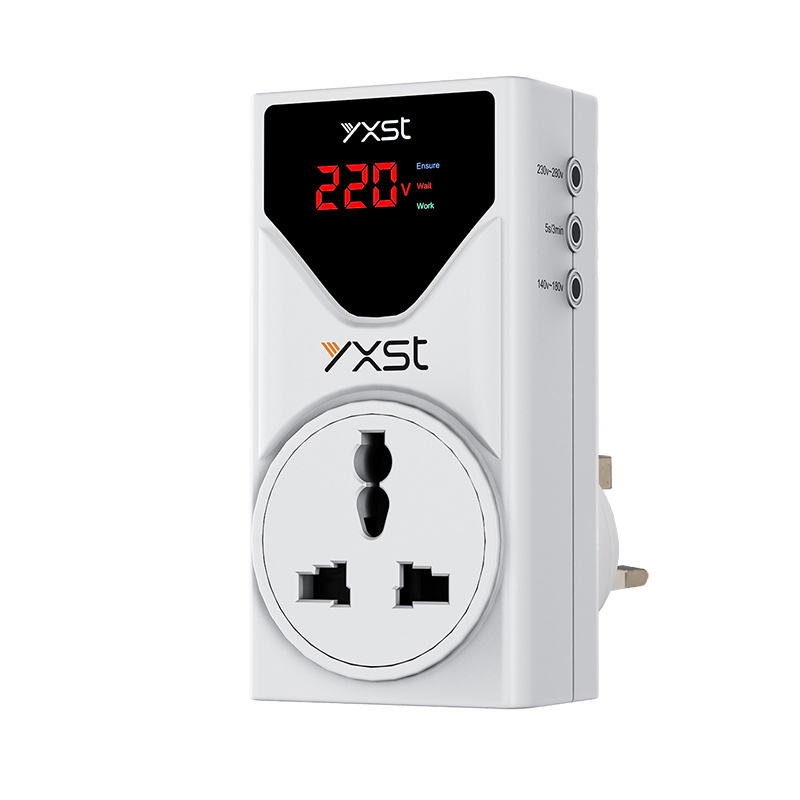
Plug-and-play surge protectors
Key points for installation
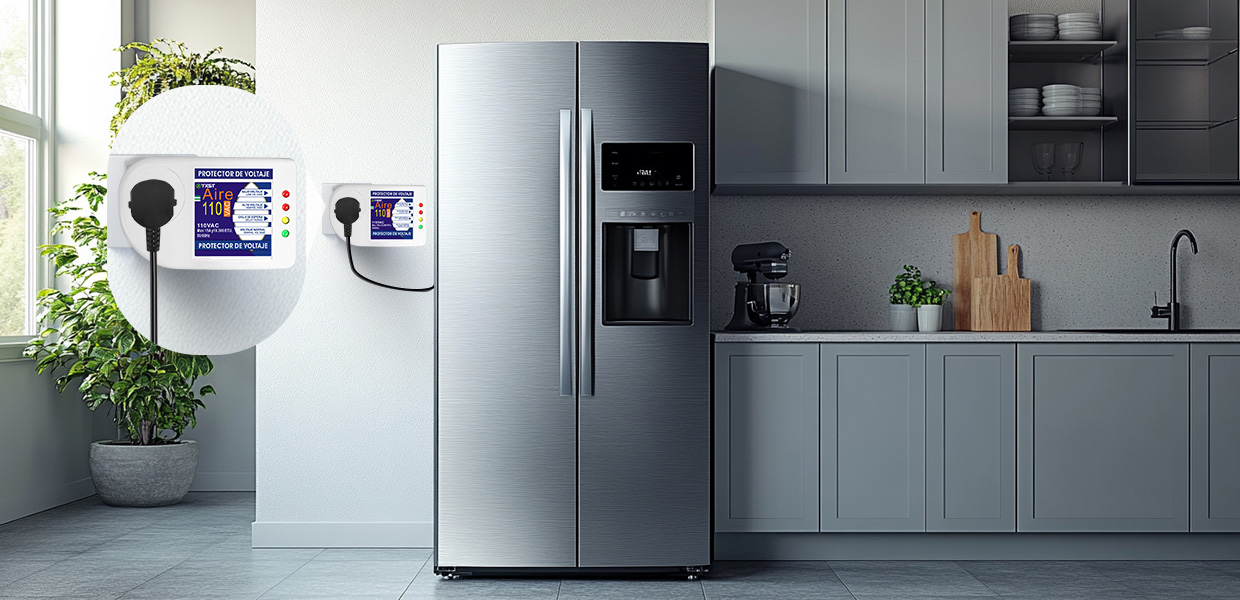
Directly plug into a power socket:
No professional tools or electrician operation is required, to directly plug into a standard household power socket (such as an air conditioner socket, a socket next to a TV, etc.), suitable for local protection of a single device.
Applicable scenarios: small household appliances (such as TVs, computers, routers), temporary power equipment (such as projectors, mobile charging devices).
Protection scope: Only protects a single device at the back end of the socket, and cannot cover the entire house circuit.
Grounding requirements:
Make sure that the socket grounding wire is intact (the three-phase plug must be connected to an effective grounding system), otherwise, the surge current may not be discharged normally.
Advantages and limitations
Advantages:
Easy to install, no need to modify the circuit, suitable for ordinary users to operate by themselves.
Small size, can be flexibly adapted to different devices.
Limitations:
The current capacity is low (usually ≤10kA), the protection ability is limited, and it cannot cope with strong lightning strikes or high-voltage fluctuations in the power grid.
Depending on the grounding quality of the socket, if the grounding is poor, the protection may fail.
Maintenance points
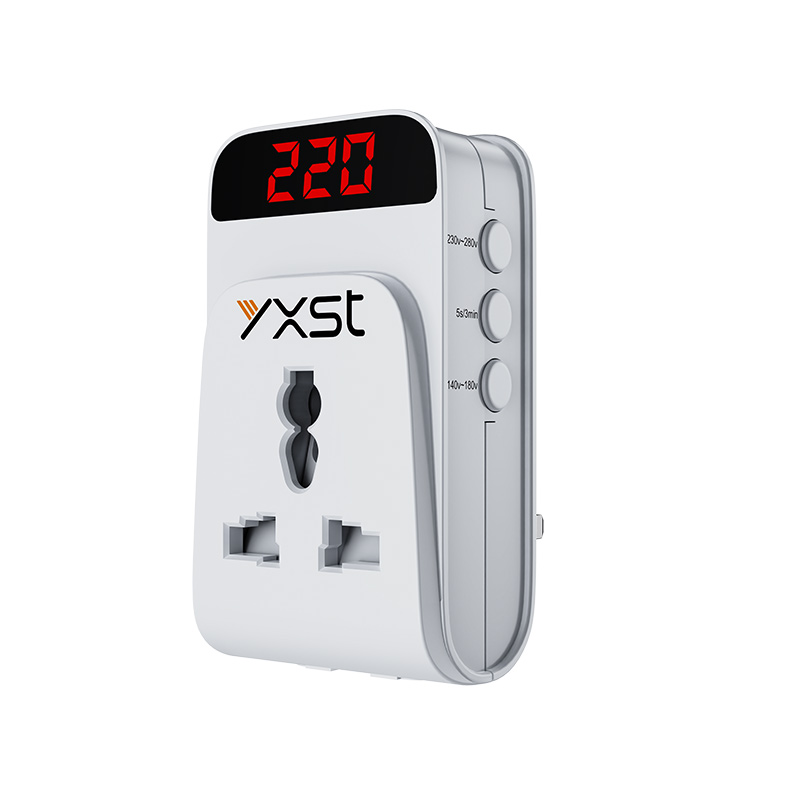
Status monitoring: Some plug-and-play surge protectors have built-in LED indicators. Green indicates normal operation, and red indicates that replacement is required (such as aging of internal components after multiple surge discharges).
Regular replacement: It is recommended to replace it every 2-3 years, or check it immediately after a significant lightning strike.
Wiring-type surge protector
Installation points
Fixed access to the power distribution system:
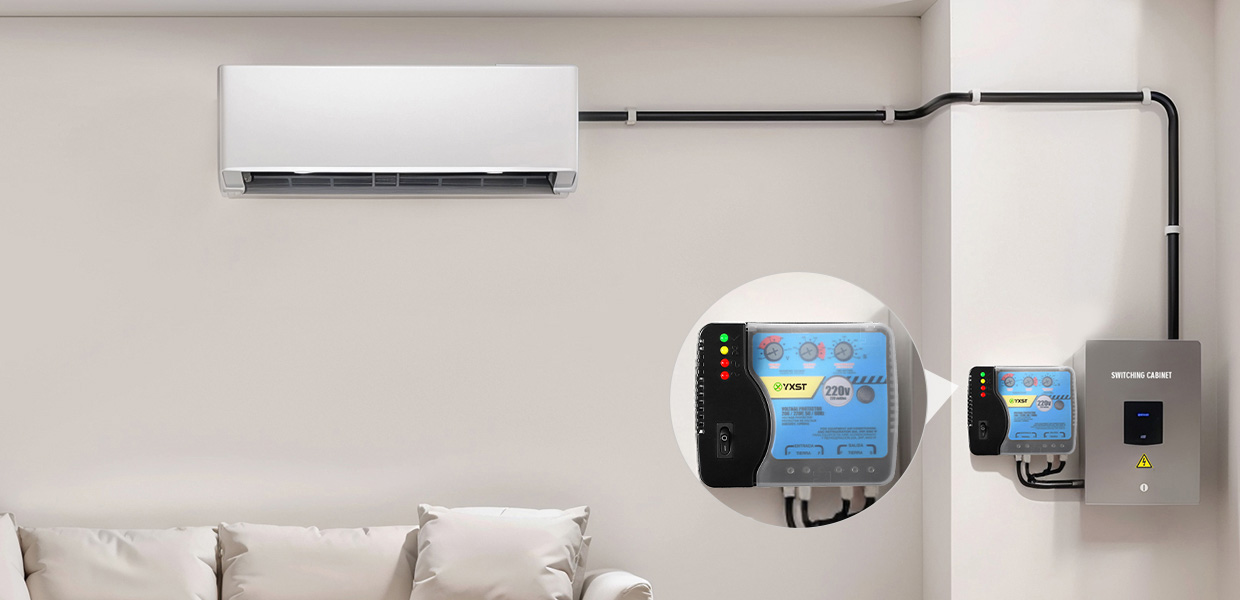
It needs to be operated by a professional electrician, connected to the rear end of the main circuit breaker of the home distribution box through a wire and reliably connected to the grounding system to form the main circuit protection of the whole house.
Applicable scenarios: home main distribution box, front end of large equipment (such as central air conditioning).
Protection range: covers all equipment in the whole house or on a specific line, with stronger protection capabilities.
Advantages:
High current capacity (up to 100kA or more), can withstand strong surge impacts.
Wide protection range, suitable for systematic protection in home and commercial scenarios.
Limitations:
Complex installation requires professional electrician operation and has a high cost.
The wiring status needs to be checked regularly, and the maintenance requirements are more stringent.
Maintenance points
Wiring inspection:
Check the wiring terminals for looseness, oxidation, or corrosion at least once a year to ensure that the surge current discharge path is unobstructed.
Grounding system verification:
Use a ground resistance tester to measure the grounding resistance. The home scene needs to be ≤10Ω. If it exceeds the standard, the grounding electrode needs to be reprocessed.
Deterioration replacement:
The life of the SPD with built-in MOV components is generally 5-8 years, or it can be replaced in time according to the status indicator (such as the window turns red).
Electronic surge protectors are not only technical tools to resist transient overvoltages but also “invisible guardians” of household electricity safety. Through scientific selection, standardized installation, and regular maintenance, the risks of power grid anomalies such as neutral line disconnection can be minimized, the service life of home appliances can be extended, and a solid line of defense can be built for modern smart homes.

 English
  Español
  Deutsch
  Français
  Italiano
  Português