
Output Voltage Explained: What Is Safe for Home Appliances?
Unstable voltage can overheat compressors, damage circuit boards, and shorten appliance life. Understanding safe output voltage and choosing proper protection prevents costly failures.
Safe output voltage should remain close to the rated voltage shown on the appliance nameplate. A 230V appliance commonly operates within approximately 207–253V, while a 120V appliance may tolerate about 108–132V. Refrigerators, freezers, and air conditioners often require narrower limits, sufficient load capacity, and delayed restart protection.
However, voltage numbers alone are not enough. Appliance type, grid conditions, power rating, and protection functions must also be considered.
What Is Output Voltage?
Output voltage is the electrical voltage supplied from a power source or electrical device to connected equipment.
Depending on the system, the output may come from:
-
The local power grid
-
An automatic voltage regulator
-
A voltage stabilizer
-
An inverter
-
A backup power system
-
A voltage protection device
Output voltage is different from input voltage.
Input voltage is the voltage entering a device. Output voltage is the voltage delivered from that device to the appliance.
For example, an automatic voltage regulator may receive an unstable input voltage between 150V and 260V. It then adjusts the voltage and supplies a more stable output near 220V or 230V.
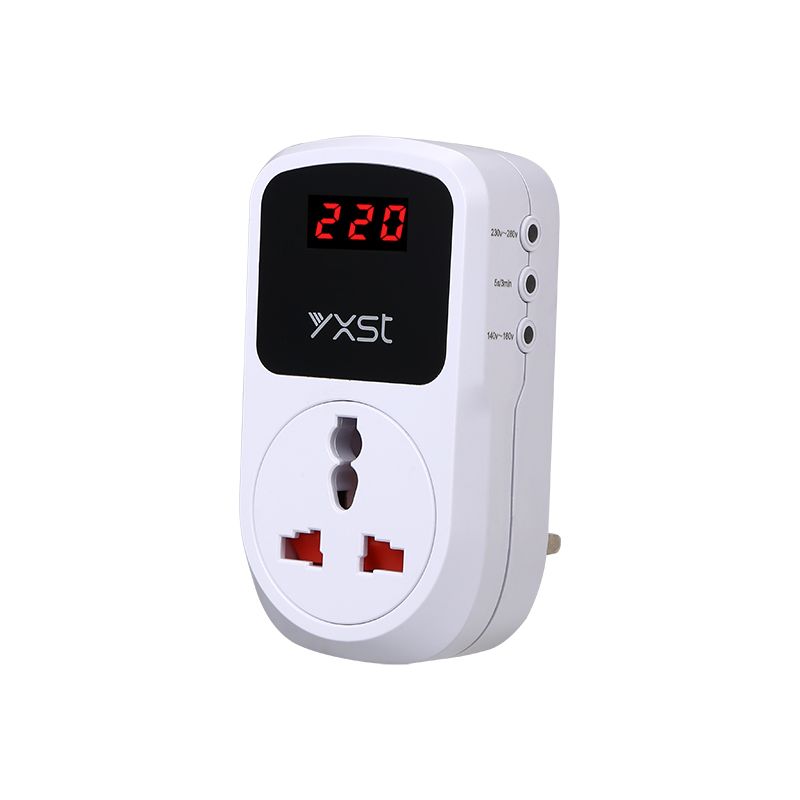
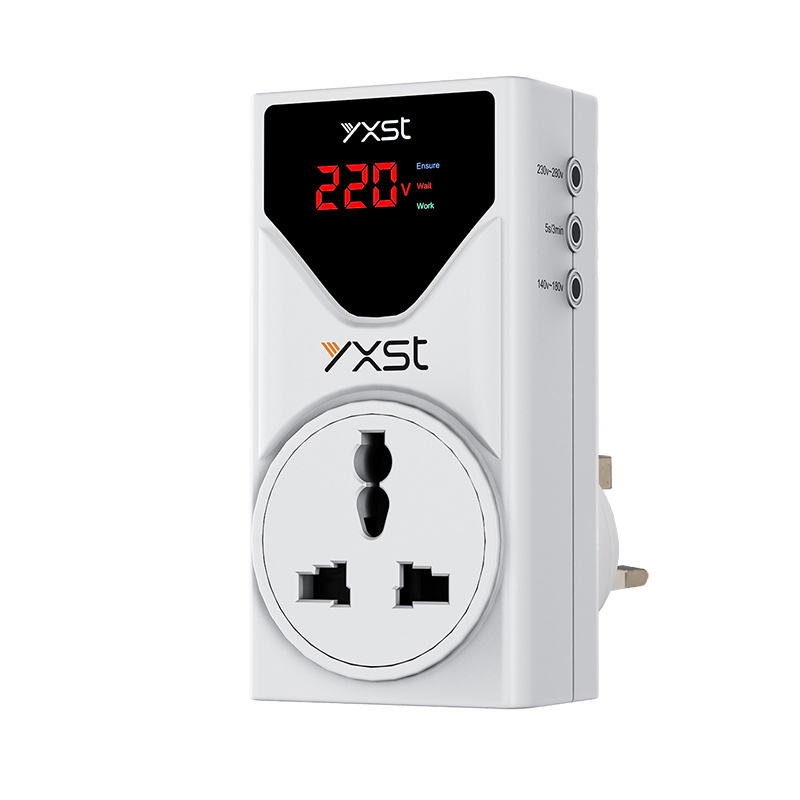
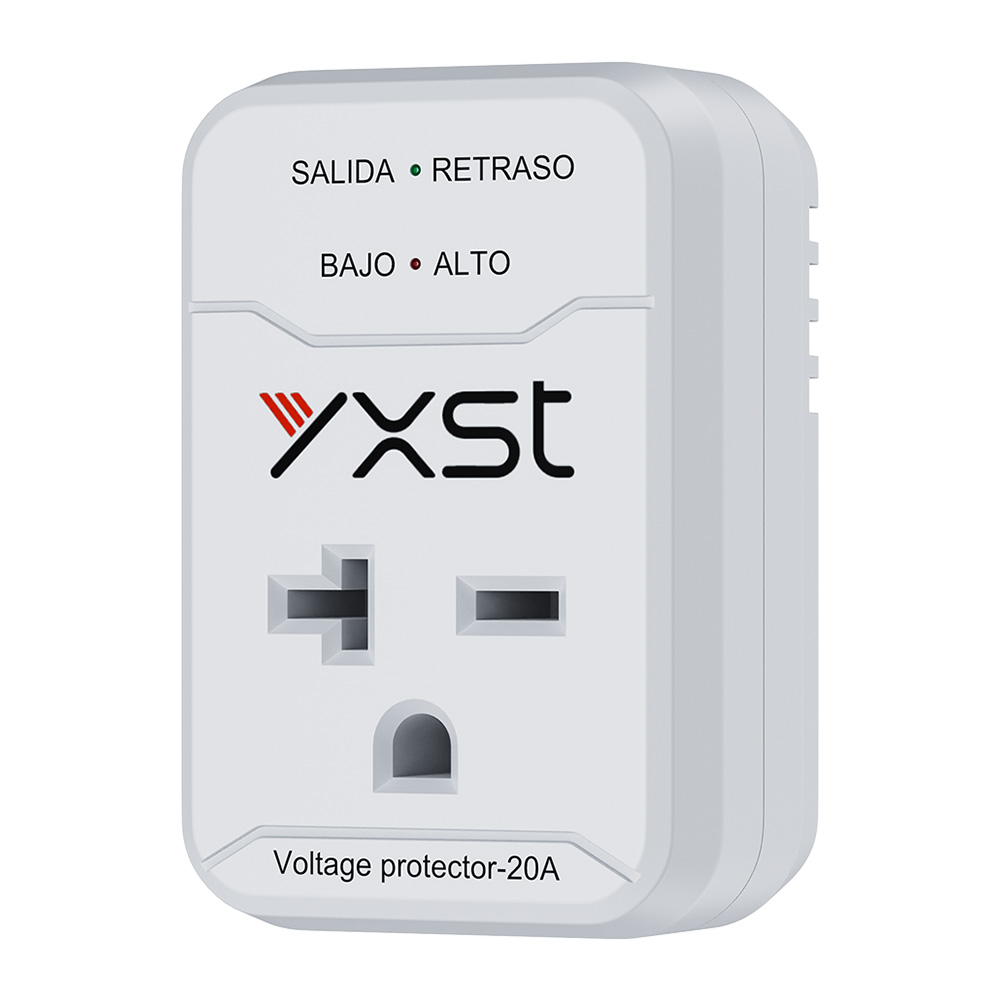
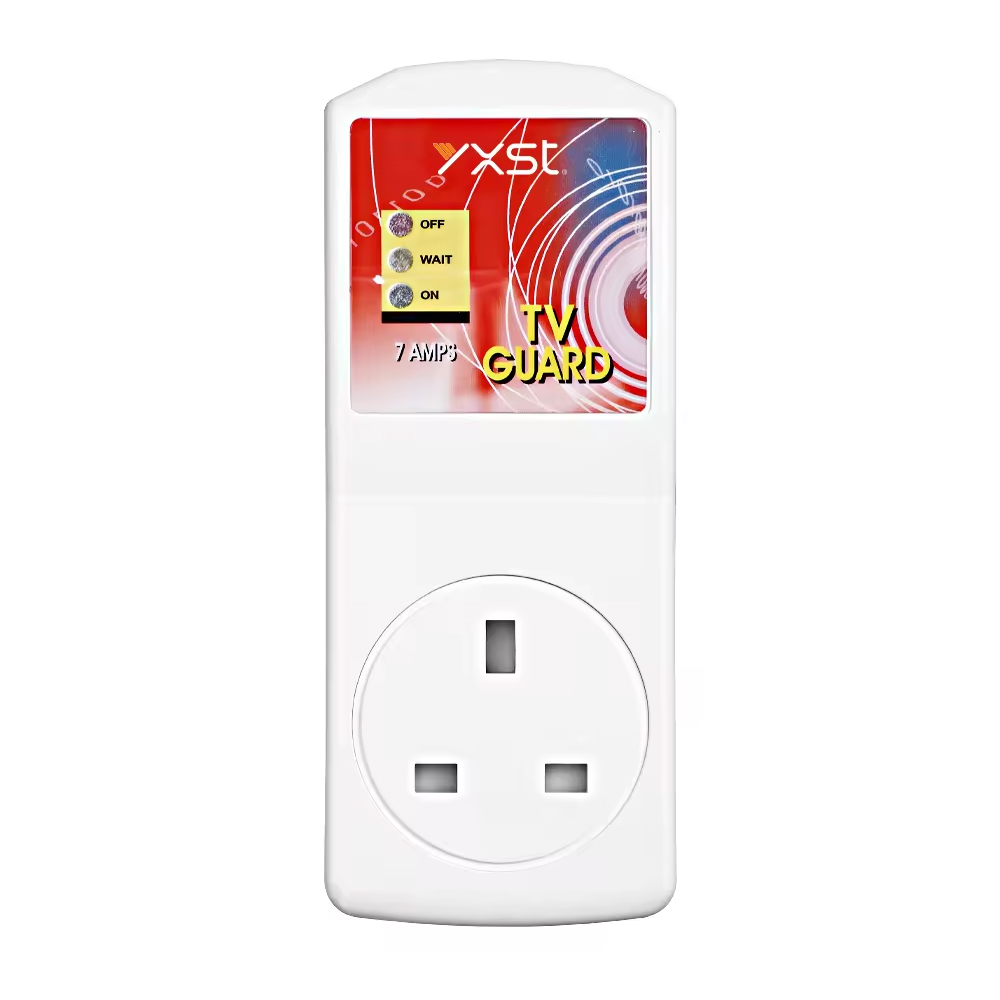
A voltage protector works differently. It normally does not regulate the voltage continuously. Instead, it disconnects the appliance when the voltage becomes too high or too low.
What Is a Safe Output Voltage Range?
The safest reference is always the rated voltage printed on the appliance nameplate or technical label.
Common household voltage ratings include:
| Nominal Voltage | Approximate ±10% Range | Common Markets |
|---|---|---|
| 110V | 99–121V | Selected American and Asian markets |
| 120V | 108–132V | North America and parts of Latin America |
| 220V | 198–242V | Africa, Asia, and other regions |
| 230V | 207–253V | Europe, the Middle East, and many export markets |
| 240V | 216–264V | Selected countries using higher nominal voltage |
These ranges are general references rather than universal safety limits.
Different appliances may have different tolerance levels. Electronic control boards, motors, compressors, heating elements, and power supplies do not react to voltage fluctuations in the same way.
Important: An appliance may continue operating outside its ideal voltage range while suffering gradual internal damage.
For accurate protection settings, buyers should consider the appliance manufacturer’s requirements and local electricity conditions.
What Happens When Output Voltage Is Too High?
High voltage places excessive electrical stress on internal components.
It can affect:
-
Printed circuit boards
-
Capacitors
-
Transformers
-
Power supplies
-
Insulation materials
-
Motors
-
Electronic control modules
A severe overvoltage event may cause immediate failure. Repeated exposure to moderately high voltage may cause gradual overheating, insulation deterioration, or shortened component life.
Sensitive appliances include:
-
Televisions
-
Computers
-
Routers
-
Refrigerators
-
Washing machines
-
Microwave ovens
-
Air conditioners
For importers and distributors, the high-voltage cutoff setting is an important product specification.
The protector should disconnect the appliance before the voltage reaches a dangerous level. The correct cutoff value depends on the nominal voltage, appliance type, product design, and requirements of the target market.
Surge protection should also be considered. Short-duration voltage spikes may reach much higher levels than ordinary grid fluctuations.
Why Is Low Voltage Dangerous?
Low voltage is sometimes ignored because an appliance may still switch on and appear to operate normally.
However, motors and compressors may draw higher current when the supply voltage is insufficient. This can generate additional heat and increase electrical and mechanical stress.
Low voltage is especially dangerous for:
-
Refrigerators
-
Freezers
-
Air conditioners
-
Water pumps
-
Washing machines
-
Other motor-driven appliances
A compressor attempting to start under low voltage may stall or fail to reach normal operating speed. Repeated failed starts can damage the motor windings, relay, capacitor, and compressor system.
A voltage protector prevents this problem by disconnecting the appliance when the voltage falls below the preset limit.
When low voltage occurs frequently and continues for long periods, an automatic voltage regulator may be more suitable. An AVR adjusts the incoming voltage and supplies a more stable output instead of immediately disconnecting the load.
Why Do Compressors Need Restart Delay Protection?
Refrigerators, freezers, and air conditioners contain compressors that should not restart immediately after a power interruption.
When a compressor stops, pressure may remain inside the refrigeration system. An immediate restart forces the motor to operate against this pressure, increasing the starting current and mechanical load.
A restart delay allows the internal pressure to balance before power is restored.
This function helps reduce:
-
Compressor overheating
-
Repeated starting attempts
-
Excessive starting current
-
Relay and capacitor damage
-
Premature compressor failure
Delay requirements depend on the appliance and product design.
General electronics may use a short delay, while compressor-based appliances usually require a longer delay. Therefore, buyers should not select a protector based only on plug type, product appearance, or current rating.
The following specifications should be evaluated together:
-
High-voltage cutoff
-
Low-voltage cutoff
-
Restart delay time
-
Maximum current
-
Maximum power
-
Relay capacity
-
Appliance application
Voltage Protector vs. Automatic Voltage Regulator
Voltage protectors and automatic voltage regulators solve different problems.
| Feature | Voltage Protector | Automatic Voltage Regulator |
|---|---|---|
| Main Function | Disconnects unsafe voltage | Corrects unstable voltage |
| High-Voltage Protection | Yes | Usually included |
| Low-Voltage Protection | Yes | Usually included |
| Voltage Regulation | No | Yes |
| Restart Delay | Commonly available | Depends on the model |
| Typical Cost | Lower | Higher |
| Best Application | Unsafe voltage events | Frequent voltage fluctuation |
A voltage protector is suitable when the main purpose is to disconnect appliances during high voltage, low voltage, surges, or unstable power recovery.
An AVR is more suitable when voltage frequently rises or falls but the appliance must continue operating.
In severely unstable electricity markets, both devices may be used. An AVR stabilizes the voltage, while an individual appliance protector provides additional cutoff, surge, or restart-delay protection.
How to Choose the Correct Protection Device
1. Check the Rated Voltage
Confirm whether the appliance is designed for 110V, 120V, 220V, 230V, or 240V.
The protector must match the nominal voltage of the target market.
2. Calculate the Required Load Capacity
Check the appliance’s wattage and current.
The protector’s maximum capacity must be higher than the appliance’s normal operating load. Motor-driven appliances also require additional capacity for startup current.
3. Match the Appliance Type
A television protector may not be suitable for a large air conditioner.
High-power equipment requires:
-
Higher current capacity
-
Heavy-duty relays
-
Heat-resistant components
-
Reliable terminals
-
Stronger internal construction
4. Select the Correct Plug Standard
International markets may require different plug and socket configurations, including:
-
UK standard
-
EU standard
-
US standard
-
AR standard
5. Verify Protection Settings
Ask the supplier to confirm:
-
High-voltage cutoff value
-
Low-voltage cutoff value
-
Restart delay
-
Surge protection function
-
Maximum current
-
Maximum power
-
Operating frequency
6. Evaluate the Manufacturer
Reliable production depends on more than the product specification sheet.
Buyers should evaluate whether the supplier provides:
-
In-house PCB production
-
SMT mounting
-
Reflow soldering
-
Wave soldering
-
Injection molding
-
Product assembly
-
Finished-product testing
-
OEM and ODM services
-
Stable production capacity
-
Export packaging support
Wenzhou Yixing Electronic Technology Co., Ltd. manufactures voltage protectors, surge protectors, air conditioner protectors, and automatic voltage regulators for global B2B markets.
Customization options include voltage settings, plug standards, shell designs, packaging, colors, and protection functions.
Practical Purchasing Checklist
Before placing an order, confirm the following information with the manufacturer:
-
Target country
-
Local nominal voltage
-
Plug and socket standard
-
Appliance category
-
Maximum appliance power
-
Required current rating
-
High- and low-voltage limits
-
Restart delay requirements
-
Certification requirements
-
Packaging design
-
OEM branding
-
Testing procedure
-
Production lead time
Providing complete application information helps the manufacturer recommend a safer and more suitable product.
Safe output voltage, correct load capacity, suitable cutoff settings, and restart delay protection help appliances operate reliably and last longer.
 English
  Español
  Deutsch
  Français
  Italiano
  Português