
Comparative analysis of voltage protector and voltage fluctuation protector
Voltage protectors and voltage fluctuation protectors are not the same, although both aim to protect electrical systems from voltage-related issues. Here’s a detailed comparison based on their functions, mechanisms, and applications:
Definitions and Core Functions
Voltage Protector (Overvoltage Protector, OVP):
Primarily designed to protect against instantaneous high-voltage surges caused by lightning strikes, switching operations, or electrostatic discharge. These surges are transient (lasting microseconds to milliseconds) but carry high energy.
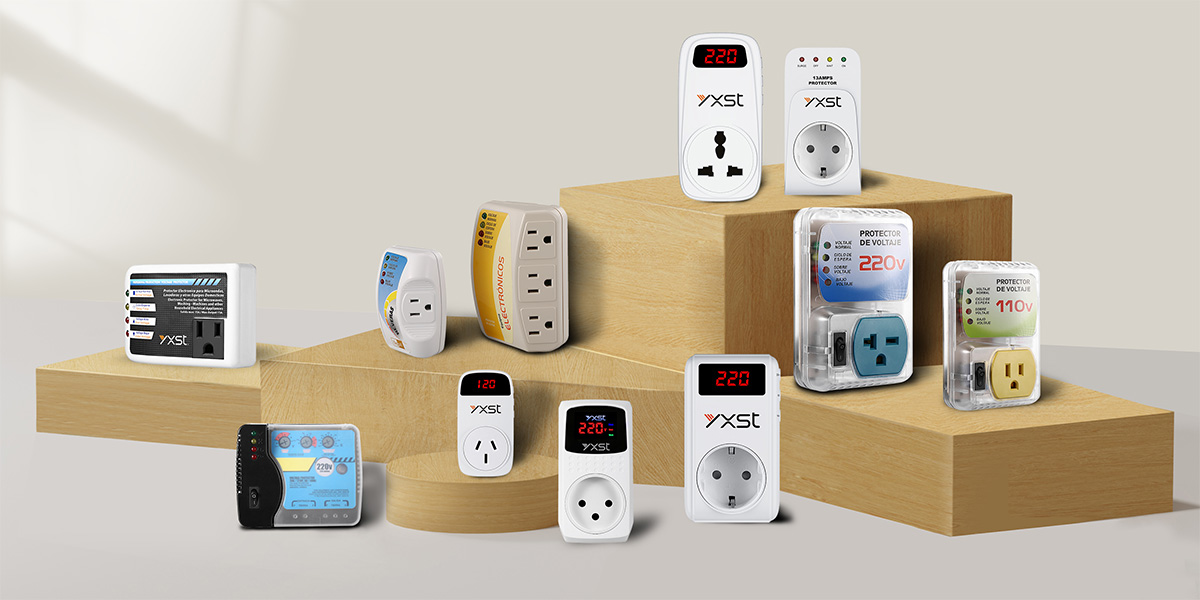
● Example: A lightning strike inducing a voltage spike in power lines.
● Key components: Metal Oxide Varistors (MOVs), Transient Voltage Suppression Diodes (TVS), and gas discharge tubes.
Voltage Fluctuation Protector:
Addresses sustained or periodic voltage deviations such as overvoltage (e.g., grid instability), Undervoltage (brownouts), or harmonic distortions. These fluctuations last longer (seconds to minutes) and may damage equipment over time.
● Example: Prolonged high voltage due to grid instability.
● Key components: Voltage monitoring relays, automatic circuit breakers, and stabilizers.
Working Principles
Voltage Protector:
● Uses nonlinear components (e.g., MOVs) to clamp transient surges by diverting excess energy to the ground. For instance, MOVs act as insulators under normal voltage but become conductive during surges, absorbing energy.

● Designed for rapid response but does not address sustained voltage issues.
Voltage Fluctuation Protector:
● Monitors voltage continuously and disconnects the circuit if deviations exceed safe thresholds. For example, an under-voltage relay cuts power when voltage drops below 70% of the nominal value to prevent motor burnout.
● May include time-delay features to avoid nuisance tripping during brief fluctuations.
Applications
Voltage Protector:
● Critical in environments prone to lightning or switching surges:
● home appliances: Laptops, Cookers and induction cookers, Dryers, Audio equipment, etc.
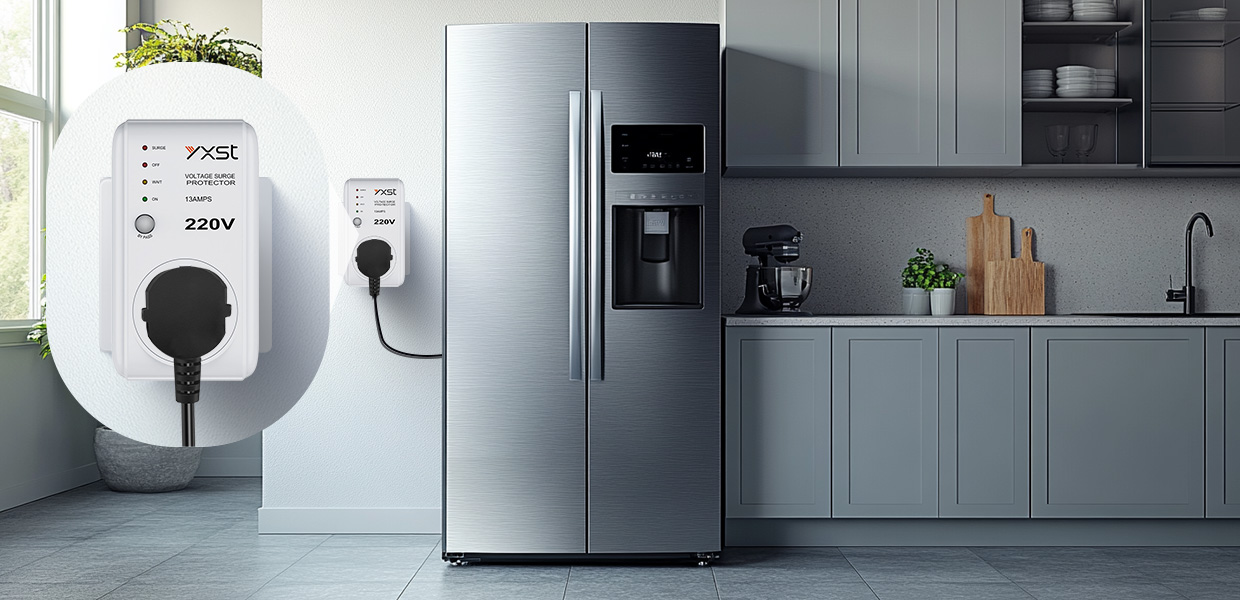
● Protects sensitive electronics like servers, computers, and washing machines.
Voltage Fluctuation Protector:
Essential for grids with unstable power supply:
● Residential buildings (to safeguard appliances from brownouts or overvoltage).
● Renewable energy systems (solar/wind installations with variable output).
● Factories using heavy machinery sensitive to voltage harmonics.
Key Differences
| Aspects | Voltage protector | Voltage fluctuation protector |
| Main threats | Transient surges (such as lightning strikes) | Sustained overvoltage/undervoltage |
| Components | MOV, TVS diodes, gas discharge tubes | Voltage relays, circuit breakers, voltage stabilizers |
| Energy handling | High energy transient absorption | Low energy, long-term voltage regulation |
| Typical examples | Lightning protection, industrial equipment | Grid stability, household appliances |
Overlap and Integration
Although different, these devices are often used together in multi-layered protection systems. For example:
● Voltage protectors handle surges caused by lightning strikes
● Voltage surge protectors monitor the grid and disconnect if overvoltage persists
● In advanced systems, backup protectors may be added to increase reliability
Conclusion
Voltage protectors and surge protectors have complementary roles but target different threats. The former focus on instantaneous, high-energy surges, while the latter address long-term voltage instability. For comprehensive protection, both types are often integrated into electrical systems.
 English
  Español
  Deutsch
  Français
  Italiano
  Português