
What Is the Safe Voltage Range for 220V Appliances?
Voltage fluctuations can damage refrigerators, air conditioners, and other appliances. Continuous abnormal voltage increases failure risks. Using proper voltage protection helps prevent costly equipment damage.
For most 220V appliances, 198V to 242V is a practical reference range based on a ±10% voltage tolerance. However, the actual safe operating range depends on the appliance design and manufacturer specifications. In unstable power grids, a voltage protector or AVR can help prevent damage caused by excessive high or low voltage.
Knowing the correct voltage limits helps you select safer protection solutions for different appliances and electrical markets.
What Does 220V Mean for an Appliance?
A 220V appliance is designed to operate around a nominal supply voltage of 220 volts.
However, the actual voltage supplied by the electrical grid does not remain exactly at 220V all the time. It may rise or fall because of:
-
Changes in electricity demand
-
Transformer conditions
-
Long distribution distances
-
Grid overload
-
Power restoration after outages
-
Unstable local electrical infrastructure
Because normal voltage variation is unavoidable, appliances are usually designed to tolerate a certain range.
Using a ±10% reference tolerance, the approximate range for a 220V supply is:
| Voltage Condition | Reference Voltage |
|---|---|
| Low limit | 198V |
| Nominal voltage | 220V |
| High limit | 242V |
Therefore, 198V–242V can be used as a general reference range for 220V appliances.
However, this does not mean every appliance will fail immediately below 198V or above 242V. The appliance nameplate and manufacturer specifications should always be checked first.
What Happens If Voltage Is Too Low?
Low voltage can be particularly harmful to appliances containing motors or compressors.
Typical examples include:
-
Refrigerators
-
Freezers
-
Air conditioners
-
Washing machines
-
Water pumps
When the supply voltage becomes too low, motors may struggle to start or operate normally.
This may result in:
-
Increased current
-
Motor overheating
-
Compressor starting problems
-
Reduced appliance performance
-
Frequent restart attempts
-
Shortened component life
For example, an air conditioner operating under severe undervoltage may repeatedly try to start its compressor.
Over time, this can place additional stress on the compressor, relay, and internal electrical components.
In areas where low voltage occurs frequently, an automatic voltage protector can disconnect the appliance when voltage drops below a preset safety level.
What Happens If Voltage Is Too High?
High voltage creates a different type of electrical risk.
When the incoming voltage rises significantly above the designed operating range, internal components may experience excessive electrical stress.
Components that may be affected include:
-
PCB power supplies
-
Capacitors
-
Relays
-
Electronic control boards
-
Compressors
-
Display circuits
Very high voltage or sudden surges may cause immediate damage.
Repeated overvoltage may also gradually reduce the operating life of an appliance.
This problem is especially common in markets where electricity becomes unstable after power outages or where voltage regulation in the local grid is poor.
A voltage protector can monitor incoming power and automatically disconnect the appliance when voltage becomes dangerously high.
Is 180V Safe for a 220V Appliance?
180V is generally below the normal ±10% reference range for a 220V appliance.
Compared with 220V, 180V is approximately 18% lower than the nominal voltage.
Some electronic appliances with wide-range power supplies may still operate at this voltage.
However, motor-driven appliances require greater caution.
For example:
| Appliance | Main Low-Voltage Risk |
|---|---|
| Refrigerator | Compressor starting difficulty |
| Air conditioner | Compressor overheating |
| Freezer | Poor cooling and compressor stress |
| Water pump | Motor overheating |
| Washing machine | Motor performance problems |
Therefore, buyers should not assume that every 220V appliance can safely operate continuously at 180V.
The manufacturer’s rated input range should always be used as the primary reference.
Is 250V Too High for a 220V Appliance?
For a nominal 220V appliance, 250V is approximately 13.6% above 220V.
This is already outside a ±10% reference range.
Whether an appliance can tolerate 250V depends on its rated input specifications.
Some appliances may be marked 220–240V, but continuous operation above their recommended voltage can still increase electrical stress.
If the local grid regularly reaches 250V or higher, using a protector with high-voltage cutoff protection can provide an additional layer of safety.
Why Is Restart Delay Important?
Cutting off abnormal voltage is only one part of appliance protection.
When electricity returns after an outage, the voltage may remain unstable for several seconds or minutes.
Immediate restarting can be particularly harmful to appliances using compressors.
Examples include:
-
Air conditioners
-
Refrigerators
-
Freezers
A restart delay function keeps the appliance disconnected temporarily after normal voltage returns.
This allows the electrical supply to stabilize before the equipment switches back on.
It can also give compressor pressure time to equalize before restarting.
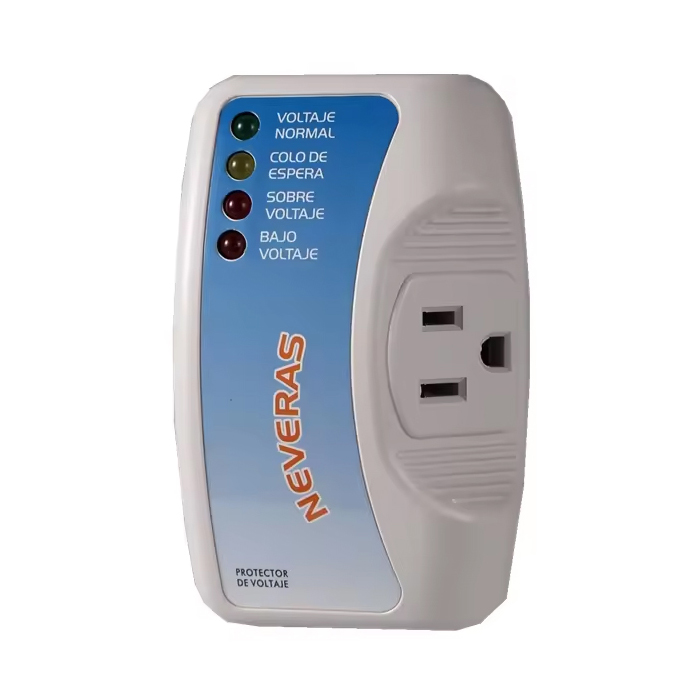
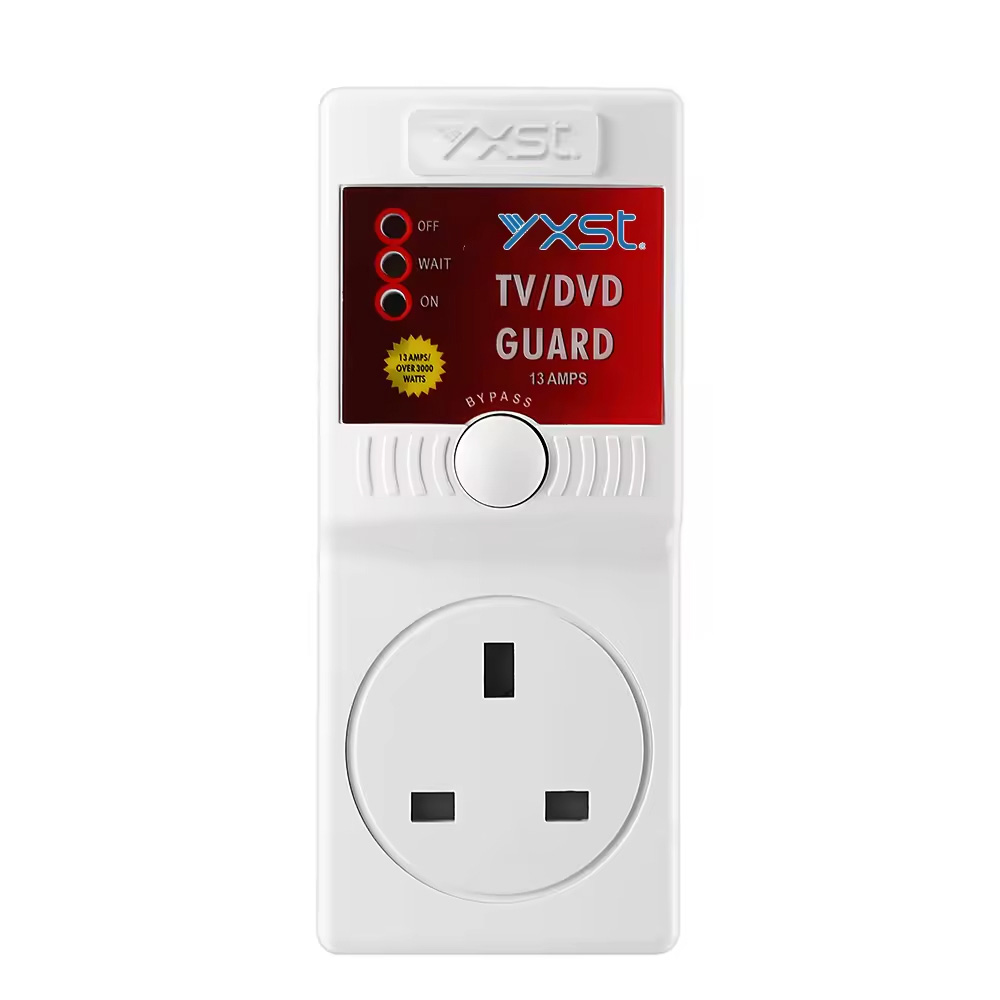
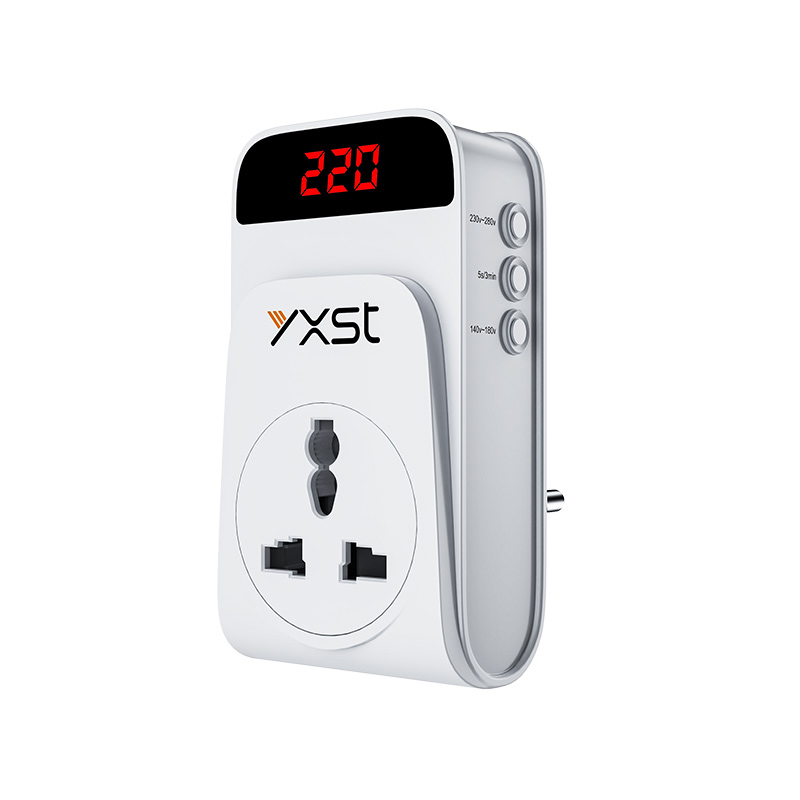
Yixing voltage protectors are designed with functions such as high-voltage cutoff, low-voltage cutoff, and delay restart protection for refrigerators, TVs, freezers, washing machines, computers, and air conditioners.
Voltage Protector vs. AVR: Which One Should You Choose?
A voltage protector and an automatic voltage regulator (AVR) solve different power problems.
| Product | Main Function | Suitable Situation |
|---|---|---|
| Voltage Protector | Disconnects power during abnormal voltage | Occasional high or low voltage |
| AVR / Stabilizer | Regulates unstable input voltage | Frequent or continuous voltage fluctuation |
Voltage Protector
A voltage protector continuously monitors the incoming voltage.
When the voltage becomes too high or too low, it disconnects the connected appliance.
After the voltage returns to an acceptable level, the protector reconnects the appliance after a delay period.
Automatic Voltage Regulator
An AVR does more than disconnect the load.
It actively regulates unstable input voltage and provides a more stable output voltage to connected appliances.
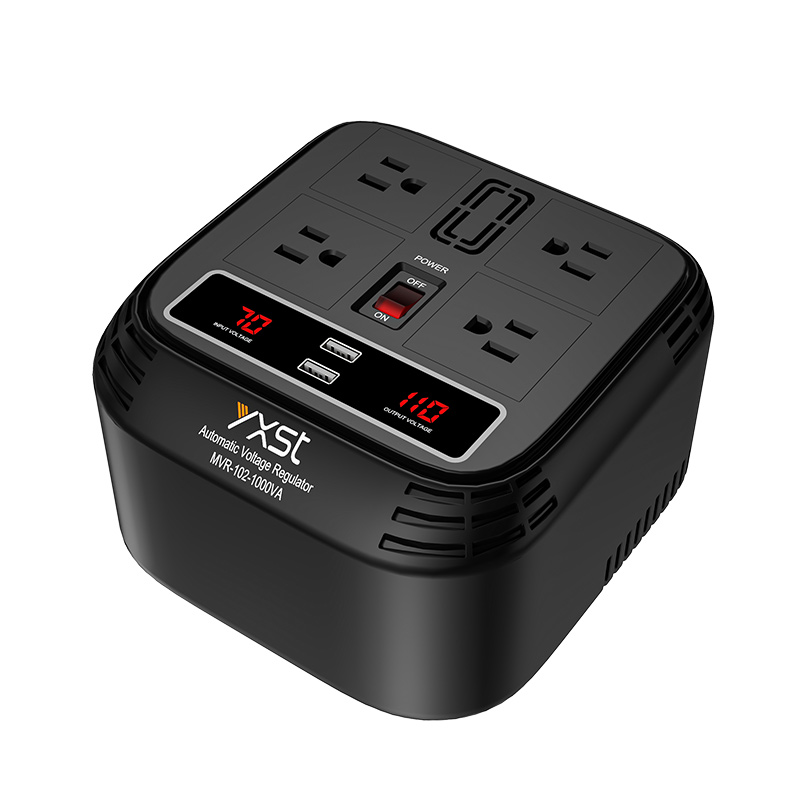
Yixing supplies automatic voltage regulators with wide input ranges for markets where unstable electricity is common.
Therefore, the correct solution should depend on the severity and frequency of local voltage problems.
How Should Importers Choose a Voltage Protection Product?
For distributors, wholesalers, and electrical product importers, choosing a protector should involve more than checking whether the product is labeled “220V.”
Important specifications include:
-
Nominal operating voltage
-
Low-voltage cutoff value
-
High-voltage cutoff value
-
Maximum current
-
Maximum load power
-
Restart delay time
-
Plug and socket standard
-
Application type
-
Certification requirements
Different markets may also require different plug standards, including:
-
UK plug
-
EU plug
-
US plug
-
AR plug
Wenzhou Yixing Electronic Technology Co., Ltd. supports OEM/ODM customization for voltage levels, plug standards, product appearance, packaging, and functions.
Its in-house manufacturing processes include SMT mounting, reflow soldering, wave soldering, injection molding, assembly, and quality control, supporting stable production for international distributors and wholesalers.
What Is the Best Protection for 220V Appliances?
For most applications, the first step is to identify the appliance’s rated voltage and the actual voltage conditions in the local market.
If voltage occasionally exceeds safe limits, a voltage protector with automatic cutoff and restart delay may be sufficient.
If the voltage remains unstable for extended periods, an AVR or voltage stabilizer may provide a more suitable solution.
For high-power equipment such as air conditioners, buyers should also pay close attention to the protector’s current capacity, relay rating, and maximum load.
Selecting the correct protection device can help reduce appliance failures, warranty claims, repair costs, and customer complaints.
For 220V appliances, 198V–242V is a useful reference range; always match protection settings to appliance specifications and local grid conditions.
 English
  Español
  Deutsch
  Français
  Italiano
  Português