
Voltage Safety Device VS Voltage Protector Socket
The following is a comparative analysis of “Voltage Safety Device” and “Voltage Protector Socket“, combining their functions, design differences and application scenarios:
Core functions and working principles
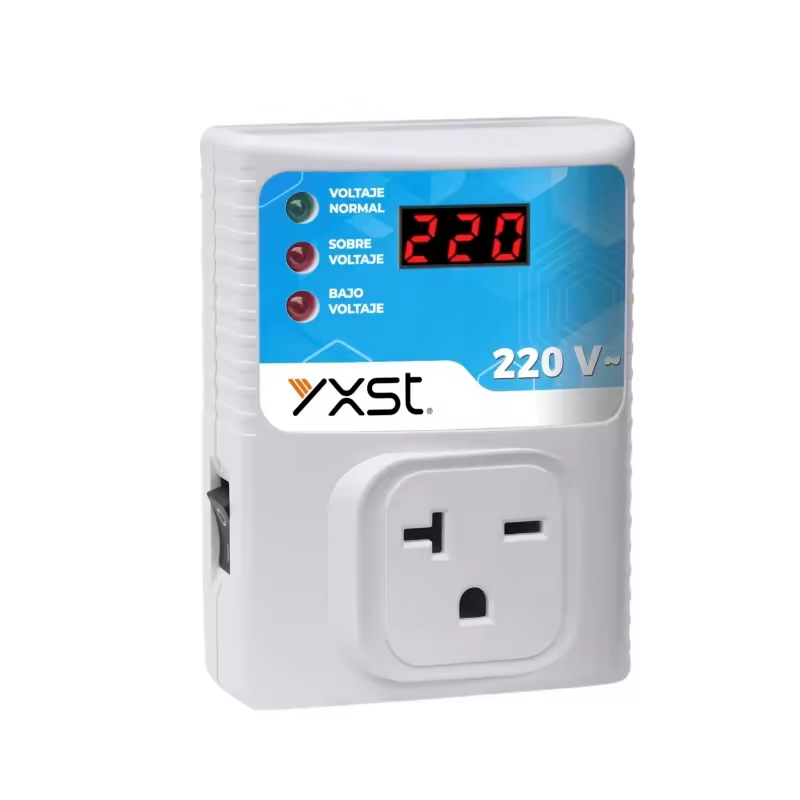
Voltage Safety Device
★ Function:
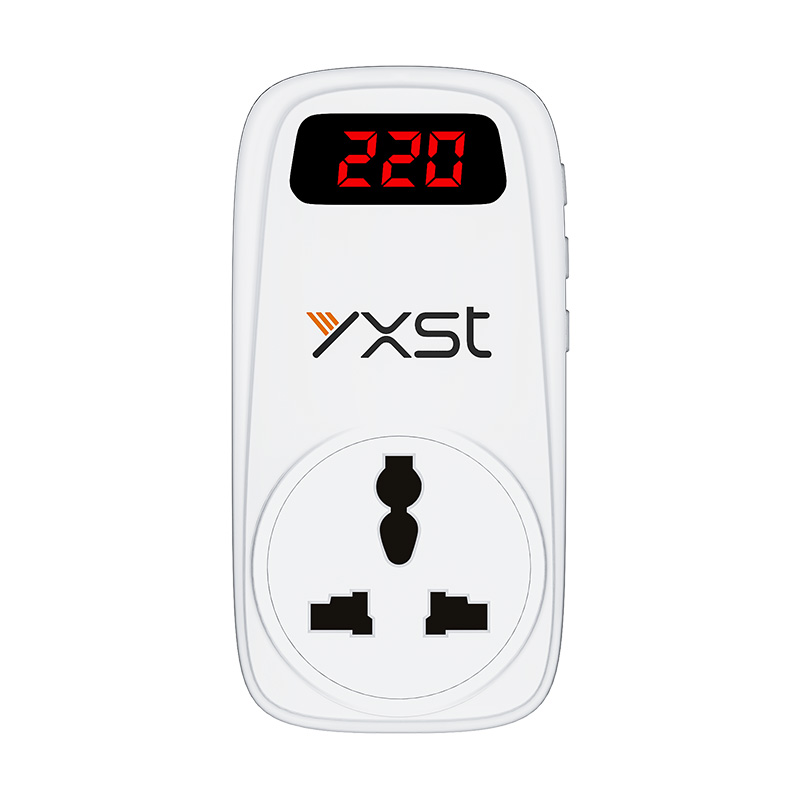
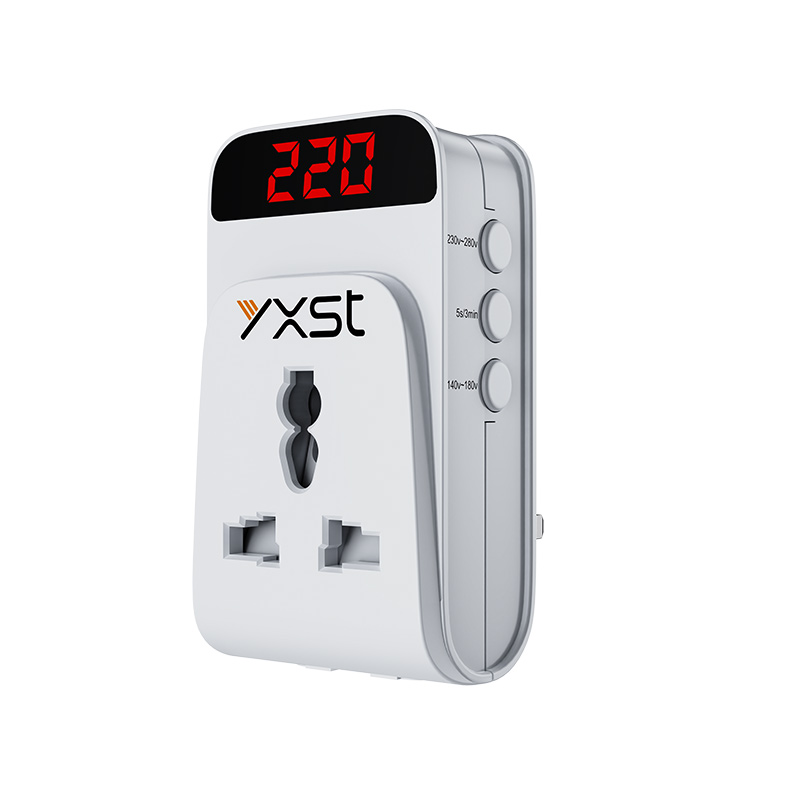
Mainly for continuous voltage anomalies (such as overvoltage and Undervoltage), it protects the equipment by real-time voltage monitoring and power cut-off. For example, when the grid voltage is high or low for a long time, the device will disconnect the circuit to prevent equipment damage.
★ Working principle:
Connected in series in the circuit, the voltage fluctuation is detected by electronic components (such as relays). When the voltage exceeds the set range, the power is automatically cut off and the power is re-supplied after the voltage returns to normal.
Voltage Protector Socket
★ Function:
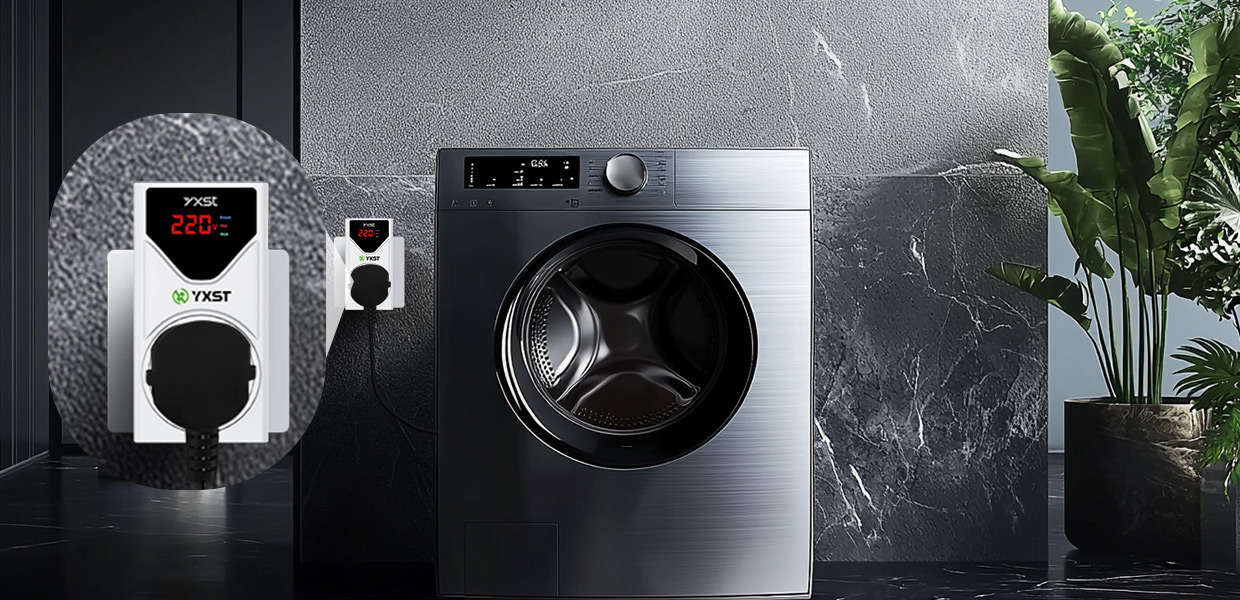
Usually refers to a socket with a surge protection function (such as Surge Protector), focusing on suppressing instantaneous voltage spikes (such as transient overvoltage caused by lightning strikes and electrical switches). For example, Belkin’s socket directs excess current to the ground wire through a metal oxide varistor (MOV).
★ Working principle:
Connected in parallel in the circuit, using components such as MOV or discharge tubes to quickly conduct when a high-voltage pulse occurs, directing energy to the ground wire instead of cutting off the power supply.
Design and application differences
| Comparison Dimensions | Voltage Safety Device | Voltage Protector Socket |
|---|---|---|
| Typical design | Integrated in distribution box or equipment, with digital screen and voltage regulation function | Socket strip with multiple protection sockets and indicator lights |
| Scope of protection | Covers all connected devices, suitable for whole-house voltage fluctuation protection | Only protect the devices connected to the socket, and additional protection is required for multi-line devices (such as computers) |
| Types of Problems | Long-term voltage anomalies (such as power grid fluctuations) | Transient voltage spikes (such as lightning strikes, electrical switching) |
| Grounding requirements | Stable grounding system required | Rely on socket grounding, older buildings may need additional grounding |
| Typical scenarios | Industrial areas with unstable voltage or areas with frequent power outages | Home, office, to protect computers, TVs, etc. |
Complementarity in practical applications
Comprehensive protection needs:
★ In areas prone to lightning or industrial areas, it is recommended to install voltage safety devices (to deal with continuous fluctuations) and surge protection sockets (to deal with instantaneous spikes).
★ For example: install a total voltage protection device at the distribution box, and use surge protection sockets for key equipment (such as computers and TVs).
Limitations:
★ Voltage protection sockets cannot solve long-term voltage anomalies, and voltage safety devices respond slowly to instantaneous surges.
★ Some home appliances (such as 240V ovens) require special protection devices, and ordinary sockets may not be suitable.
Purchase and use suggestions
Voltage safety device:
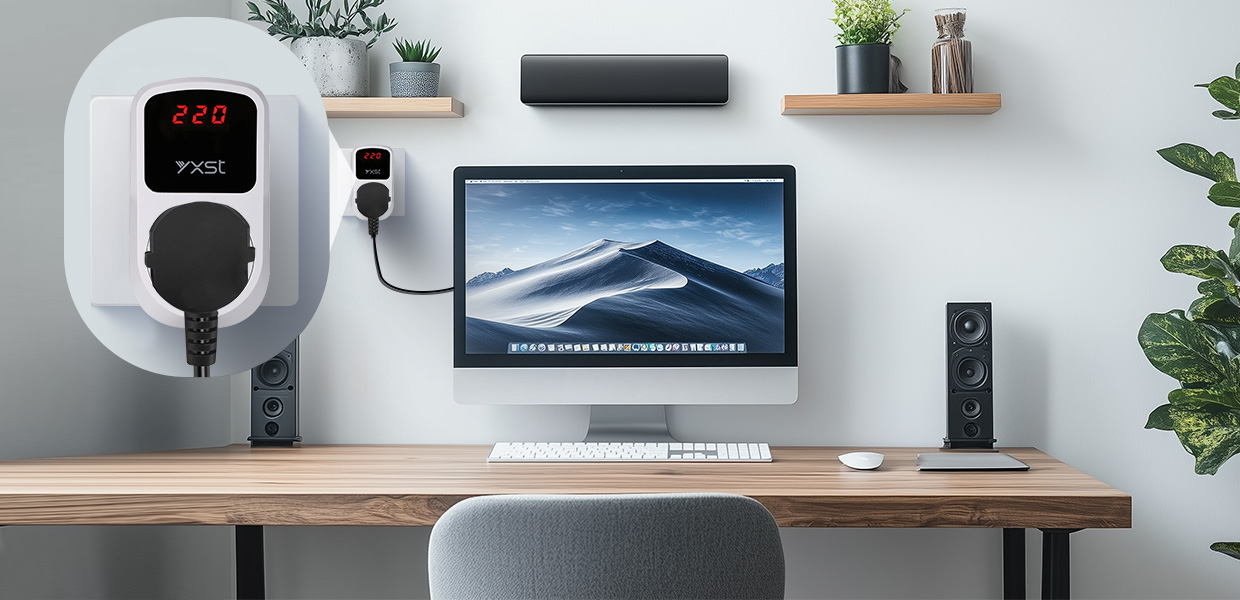
★ Pay attention to the voltage adjustment range and response time, and choose products suitable for the frequency of grid fluctuations.
Voltage protection socket:
★ Check the surge energy absorption capacity (such as joules) and whether it contains multi-line protection (such as telephone lines).
★ Give priority to models with fault indicator lights and check the grounding status regularly.
Voltage Safety Device VS Voltage Protector Socket Price
There are significant differences in price between voltage safety devices (such as smart power distribution systems) and voltage protection sockets (such as surge protection sockets), which are mainly affected by functional complexity, application scenarios and technical parameters.
Price range comparison
| Type | Typical price range | Application Scenario | Core functional differences |
| Voltage Safety Device | $30~ $226.80 | Industry, commerce, public facilities | Integrated power distribution protection, remote monitoring, and multi-level fault handling |
| Voltage Protector Socket | $1.20~ $26 | Home, small office, home appliances | Transient surge suppression, overvoltage/undervoltage cutoff, portability |
Voltage safety devices are expensive due to their technical complexity and industrial-grade protection requirements, while voltage protection sockets are priced appropriately for homes and small devices. The price difference between the two reflects the differences in functional depth, capacity, and applicable scenarios. Users need to weigh their choices based on actual needs (e.g., whole-house protection vs. single-device protection).
Summary
Voltage safety device: suitable for solving long-term voltage abnormality problems caused by power grid fluctuations, requires professional installation, and has a wide protection range.
Voltage protection socket: focuses on suppressing instantaneous surges, is easy to use but has a limited protection range, and needs to be combined with other equipment to achieve comprehensive protection.
The two are complementary in function and can be used in combination according to the actual power usage environment.

 English
  Español
  Deutsch
  Français
  Italiano
  Português