
Role, principle, and application of automatic voltage regulator
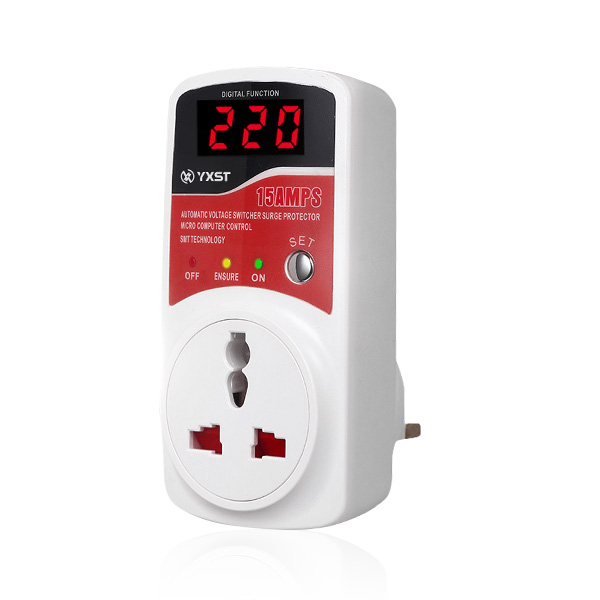
In this era full of various electronic devices, our lives cannot do without a stable voltage supply. Automatic voltage regulator is a device that can stabilize the input voltage. It can help us keep electrical equipment working normally under various circumstances. So, what is the role, working principle and application scenario of the automatic voltage regulator (AVP)? This article will give you a detailed answer.
The role of automatic voltage regulator
(1) Protect electrical equipment
The fully automatic AC voltage regulator can protect electrical equipment from damage caused by voltage fluctuations or power quality problems. It can stabilize the output voltage to ensure the normal operation of electrical equipment.
(2) Stabilize voltage
The fully automatic voltage regulator can automatically adjust the current and voltage to maintain the voltage within a certain range to protect the normal operation of electrical equipment. When the power supply is unstable, the fully automatic voltage regulator can ensure the stable operation of electrical equipment and extend the service life of the equipment by controlling the voltage output.
(3) Improve power quality
Some giant electrical equipment requires the power supply to maintain a continuous and stable voltage, otherwise it will greatly affect its working efficiency. The fully automatic voltage regulator can make the power quality more stable and can filter out frequent power fluctuations to provide high-quality power.
(4) Improve the efficiency and reliability of equipment
By adjusting the voltage to stabilize the output voltage, the fully automatic AC voltage regulator can improve the efficiency and reliability of electrical equipment. Under the condition of stable voltage, the operation of electrical equipment is more stable and less prone to failure, thereby improving the efficiency and operation time of the equipment.
(5) Save energy
The fully automatic AC voltage regulator can automatically adjust the output voltage so that the equipment only consumes the necessary power. It can effectively save electricity, reduce energy waste, and reduce electricity costs.
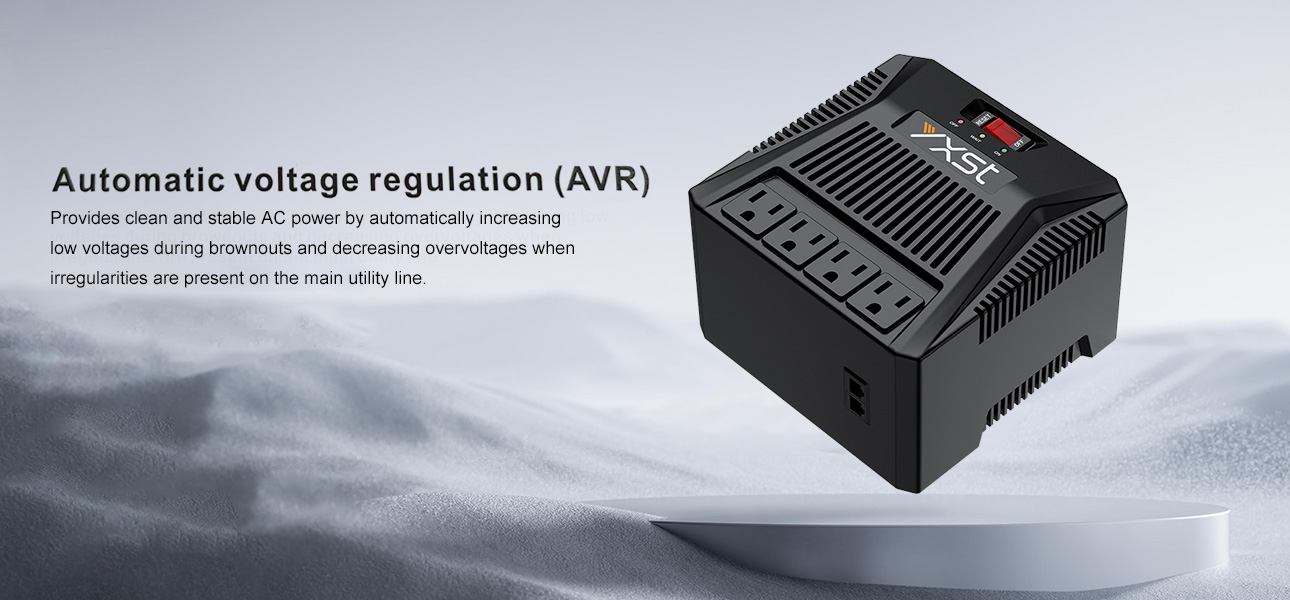
Working principle of AC voltage regulator
The working principle of the AC voltage regulator is mainly to adjust the supply voltage level by compensating for the fluctuation of input voltage to stabilize the voltage level during the fluctuation of power demand. The AC voltage regulator, also commonly known as the automatic voltage regulator (AVR), controls the position of the tap by utilizing a feedback mechanism and switches the appropriate relay to adjust the output voltage, thereby ensuring the stability of the power supply system. AC voltage regulator usually consists of two units: a sensing unit and a regulating unit. The sensing unit is responsible for monitoring the input voltage. In contrast, the regulating unit adjusts the output voltage based on the information provided by the sensing unit to ensure that it is within an acceptable range.
Application scenarios of AC automatic voltage regulators
Fully automatic AC voltage regulators are widely used in various fields. For example, home appliances such as air conditioners and televisions, industrial equipment such as machine tools and welding machines in factories, transformers and power regulation devices in commerce, etc.
Related Questions Answered
Difference between Automatic Voltage Regulator (AVR) and Manual Voltage Regulator
There are significant differences between automatic voltage regulators (AVRs) and manual voltage regulators in terms of functions and control methods. The following are the core differences and specific analysis of the two:
Control principle and adjustment method
Manual voltage regulator
Principle: It is essentially an adjustable transformer (such as an autotransformer) that adjusts the output voltage by manually changing the ratio of the number of turns of the input coil. For example, the user turns a knob or slides a contact to change the coil contact point to adjust the output.
Adjustment method: It relies on manual intervention and needs to be manually adjusted in real-time according to load requirements, and cannot dynamically respond to voltage fluctuations. For example, the knob voltage adjustment of old stereos is a typical application.
Automatic voltage regulator (AVR)
Principle: Based on negative feedback closed-loop control, the voltage deviation is detected in real-time by a microcomputer or electronic module (such as voltage transformer sampling), and the excitation current or the conduction angle of the power device is automatically adjusted to maintain the output voltage stable.
Adjustment method: Fully automatic response, no manual intervention required. For example, when the load of a ship generator changes suddenly, the AVR can adjust the excitation current within milliseconds to offset the voltage drop caused by the armature reaction.
Response speed and accuracy
Manual regulator
Slow response speed and adjustment accuracy depend on operator experience, and cannot cope with rapid fluctuations (such as voltage sag at the moment of motor startup).
Large error range, suitable for scenarios with low voltage stability requirements (such as temporary debugging of laboratory equipment).
AVR
Extremely fast response speed (such as AVC fast voltage regulator response time <3 milliseconds), can handle transient disturbances such as voltage sag and surge.
High accuracy (within ±0.5%), suitable for voltage-sensitive loads of precision equipment (such as medical MRI, and semiconductor manufacturing machines).
Summary
Manual voltage regulators are suitable for low-cost, low-complexity scenarios, while AVRs have become core components of modern power systems due to their automation, high precision, and fast response.
Error: Contact form not found.
 English
  Español
  Deutsch
  Français
  Italiano
  Português