
Home Appliance Safety Guide: How To Choose Fridge Surge Protector Plug
Many families mistakenly believe that ordinary power strips or basic lightning protection devices are sufficient to solve the problem, but ignore the particularity of the continuous operation of the refrigerator: frequent voltage fluctuations will corrode the equipment like a chronic poison, and traditional surge protectors often lack intelligent protection mechanisms for the start and stop of the compressor. How to build a precise protection system in a home scenario? What is the essential difference between a protective device designed specifically for refrigerators (Fridge Surge Protector) and universal surge protector plug (surge protector plug)? This article will deeply analyze the technical characteristics of the two, and through the comparison of scientific test data and actual usage scenarios, help you master the key points of selection, installation and maintenance, so that home power protection can be upgraded from “vague experience” to “precise protection.”
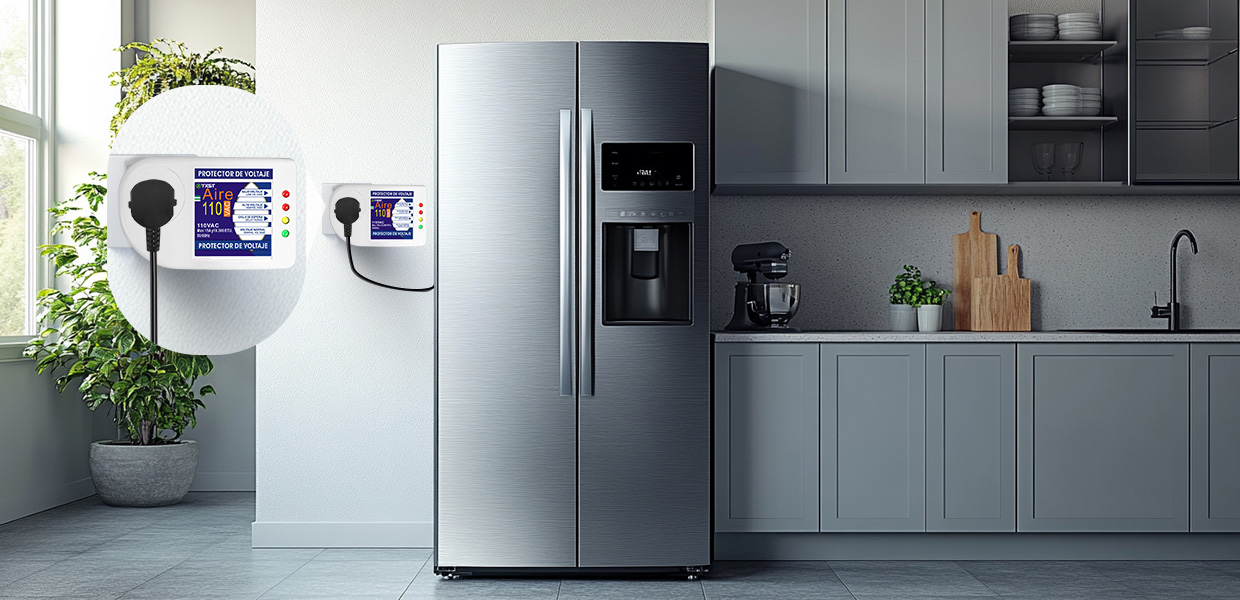
Importance and potential risks of refrigerator protection
Among household appliances, refrigerators are one of the core devices that maintain the quality of family life. They need to run 24 hours a day to preserve food, but voltage fluctuations, power failures, and other problems can cause damage to them. When the internal components of the refrigerator are damaged due to power surges, not only will it cost a lot to repair, but it may also cause food spoilage due to downtime, which may cause health risks. Therefore, it is crucial to equip the refrigerator with appropriate protection equipment.
What is a surge?
A surge is a phenomenon in which the voltage in a circuit suddenly rises in a very short period and exceeds the rated value of the device. Its causes include lightning, grid switching, or the start-up of high-power appliances. In ordinary households, the start-up and stop of equipment such as air conditioners and microwave ovens may cause small surges. Although such fluctuations usually do not destroy appliances immediately, long-term accumulation will shorten the life of the equipment.
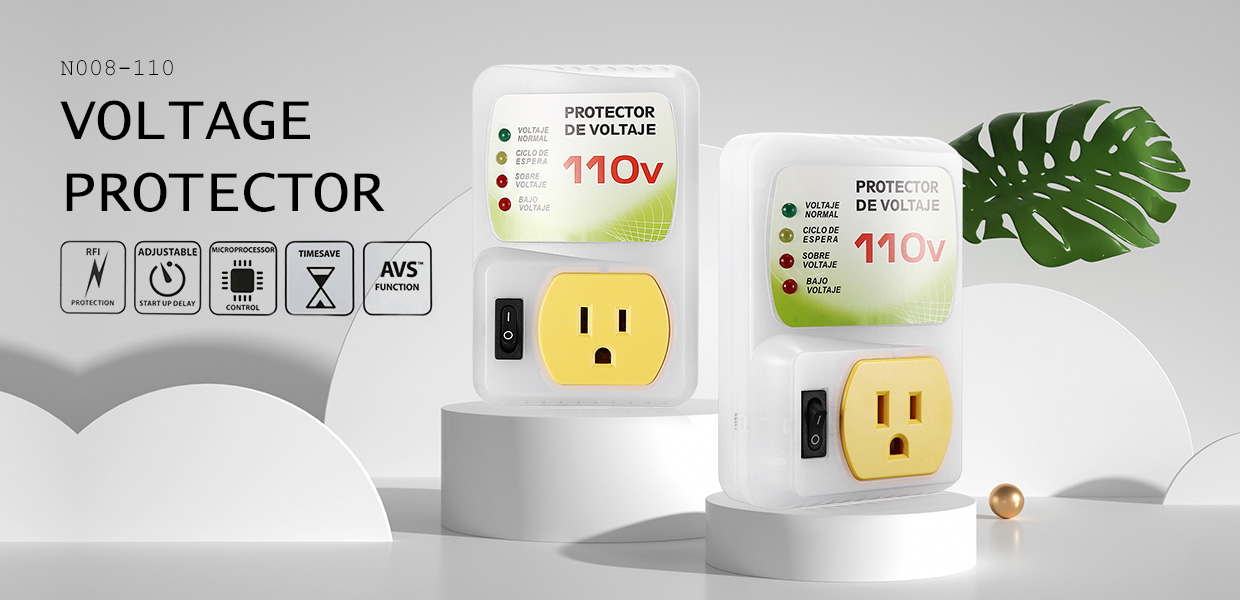
Why are refrigerators susceptible to power surges?
The refrigerator compressor requires a higher current when starting. If the grid voltage is unstable at this time, it may cause the control board or motor to overload. In addition, modern refrigerators are generally equipped with electronic temperature control systems and display screens, and these precision components are more sensitive to voltage changes. If the protection is insufficient, it may cause problems such as fault code errors and reduced cooling efficiency.
Difference between Fridge surge protector plug and Surge Protector
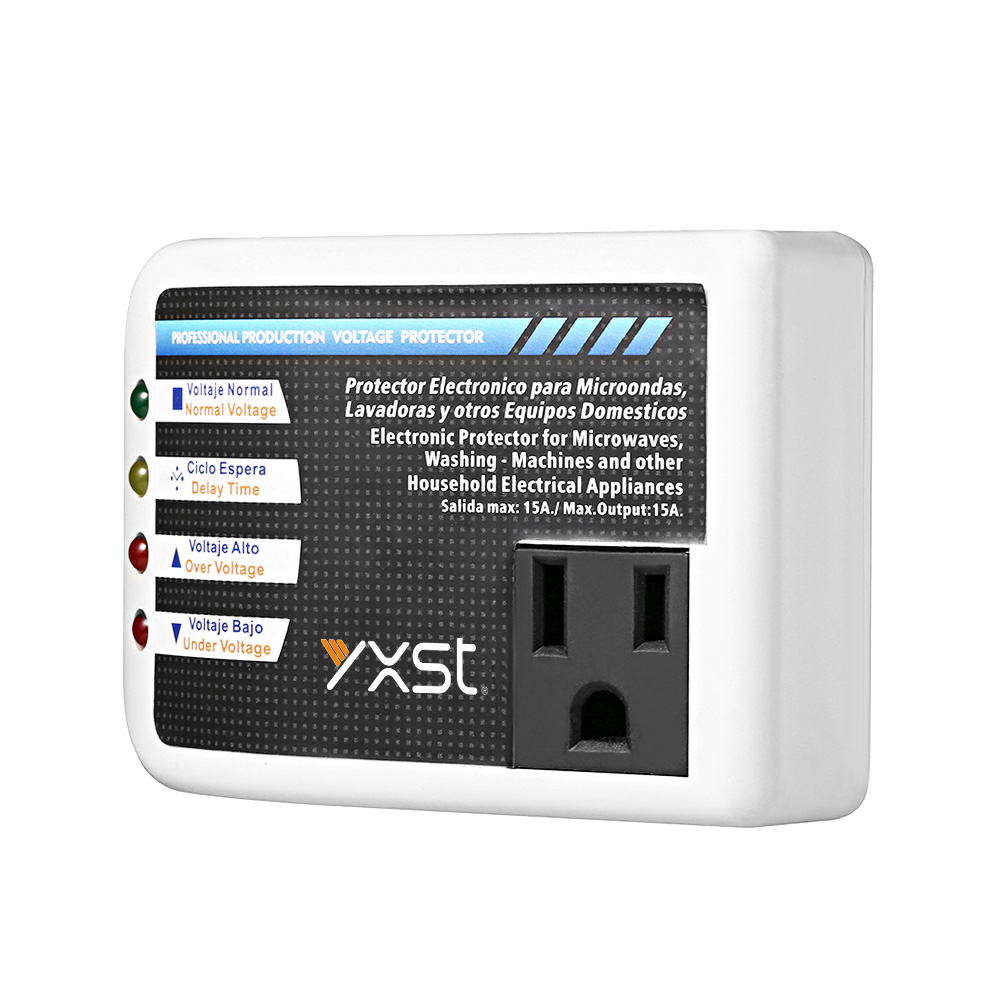
Common refrigerator protection devices on the market are divided into two categories: “fridge guard” designed specifically for refrigerators and universal “surge protector plug”. Understanding the difference between the two will help home users make a reasonable choice.
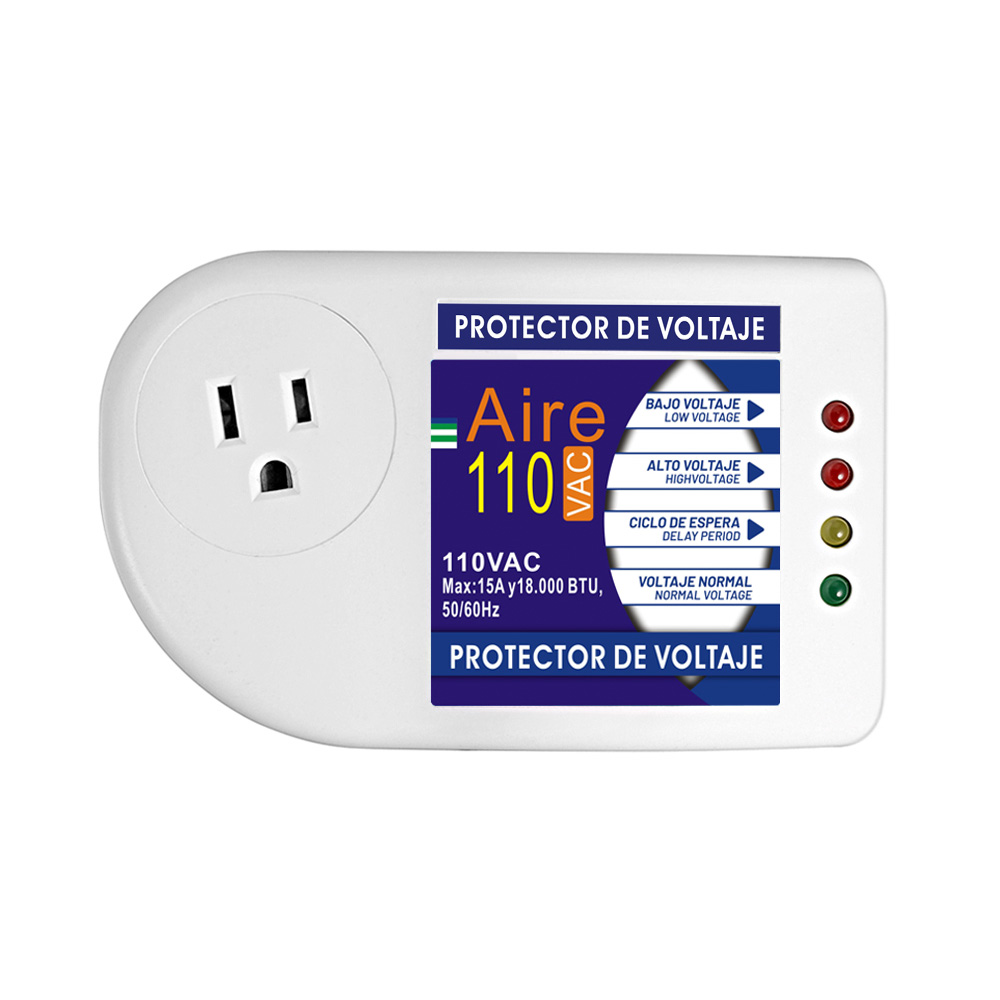
Features of Fridge Guard
This type of device is optimized for refrigerator operation characteristics and usually has the following functions:
- Voltage monitoring and automatic power off: When the voltage is detected to exceed the safe range (such as less than 170V or more than 250V), the power is automatically cut off and the power is turned on again after the voltage returns to stability.
- Delayed restart protection: Avoid the impact of powering on the compressor immediately after a power outage, usually set a buffer time of 3-5 minutes.
- Overload and short circuit protection: Built-in fuse or circuit breaker to prevent line faults from causing fire risks.
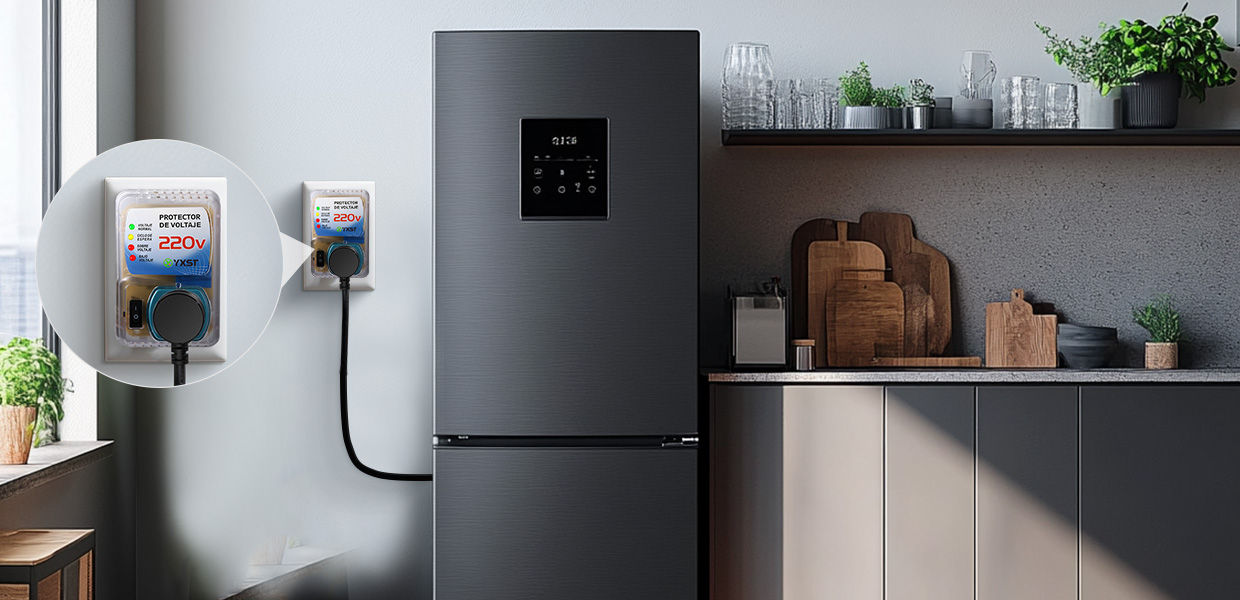
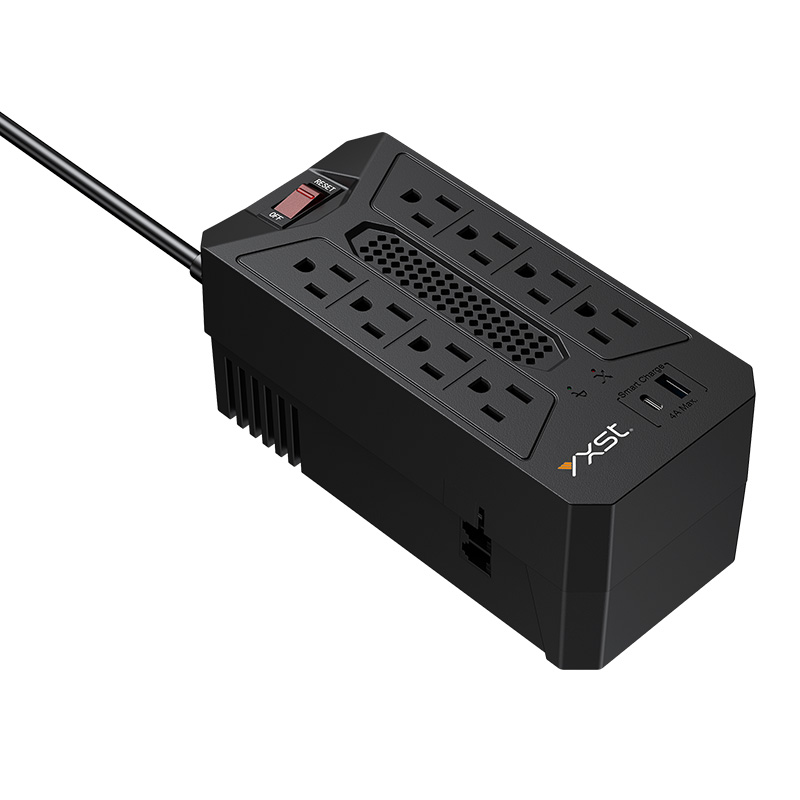
The basic principle of Surge Protector Plug
Universal surge protection plugs mainly absorb abnormal voltages through metal oxide varistors (MOVs). Its advantages are low price and compatibility with a variety of electrical appliances, but there are limitations:
- Slow response speed: MOV requires microseconds to start and cannot completely intercept instantaneous high-voltage pulses.
- Limited life: Each time it absorbs a surge, the internal material will be damaged and needs to be replaced regularly.
- Lack of voltage regulation function: It only targets instantaneous high voltage and cannot solve the problem of continuous low voltage or overvoltage.
Fridge Guard vs Surge Protector
| Function | Fridge Guard | Surge Protector |
| Voltage range protection | ✔️ Full-time monitoring | ❌ Only responds to transient high voltage |
| Compressor delay protection | ✔️ Built-in timer | ❌ None |
| Multi-device compatibility | ❌ Designed specifically for refrigerators | ✔️ Can be connected to other electrical appliances |
| Installation complexity | ✔️ Plug and play | ✔️ Plug and play |
How to choose a suitable protection plan for your home
Depending on the household power environment and refrigerator model, you can refer to the following standards for decision-making:
Evaluate the power environment
Voltage stability test: Use a multimeter to measure the socket voltage at different times and record the fluctuation range. If the voltage is frequently lower than 200V or higher than 240V, it is recommended to choose fridge surge protector with a voltage stabilization function.
Lightning frequency: Families living in lightning-prone areas need to use a combination of lightning protection sockets and special protectors.
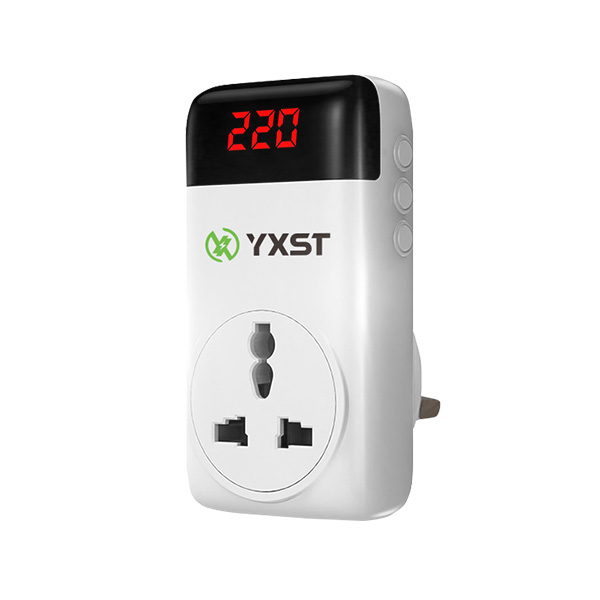
Advantages of mini devices
For kitchen environments with limited space, compact (mini) protection plugs are easier to install behind the refrigerator. Things to pay attention to when choosing:
- Whether the plug and the socket are in close contact to avoid arcing due to looseness
- Whether the shell is made of flame-retardant material (UL94 V-0 certification is preferred)
- Whether the cable length is suitable for the refrigerator position (it is recommended to reserve a 10cm margin)
Correct Installation and Usage Guide
Incorrect installation may render the protective device ineffective. Follow the steps below to ensure safety:
Step-by-step instructions
- Power-off preparation: Turn off the refrigerator circuit breaker in the home distribution box.
- Clean the socket: Wipe the inside of the socket with a dry cloth to remove dust or oxides.
- Connect the device: Insert the protective plug firmly into the socket to ensure that there is no looseness.
- Power-on test: Turn on the circuit breaker and observe whether the device indicator light is normal.
- Function verification: Test whether the delayed restart is effective by simulating a power outage (unplugging the plug).
Common errors and workarounds
Error 1: Connect multiple protective plugs in a series
Risk: The protective effect may be affected by impedance superposition.
Solution: Connect a single device directly to the wall plug.
Error 2: Ignore the grounding requirement
Risk: Ungrounded sockets cannot conduct excess current.
Solution: Use a three-prong plug and ensure that the home circuit is properly grounded.
Equipment maintenance and troubleshooting
Regular maintenance can extend the life of protective equipment and maintain optimal performance:
Monthly inspection checklist
- Observe the indicator light status (green means normal, red needs to be replaced immediately).
- Gently shake the plug to confirm that there are no loose internal parts or abnormal noises.
- Use a soft brush to clean the vents to prevent dust accumulation from affecting heat dissipation.
Abnormal situation handling suggestions
Scenario 1: The refrigerator cannot be started but the indicator light is on
Possible cause: The protective equipment mistakenly triggers the overvoltage protection.
Countermeasures: Measure the current-voltage and reset the device if it is normal.
Scenario 2: The plug is hot
Possible cause: Poor contact or aging of internal components.
Countermeasures: Immediately disconnect the power and replace the device.
Extended suggestions for safe electricity use
In addition to using protective equipment, the following measures can further improve the safety of home appliances:
- Separate line power supply: Avoid sharing the circuit with high-power consumption equipment such as refrigerators and microwave ovens.
- Humidity control: Keep the area around the socket dry to prevent the risk of electric leakage.
- Child protection: Choose a socket with a safety door, or install a protective cover on the plug.
By properly selecting and using protective equipment, home users can significantly reduce the probability of refrigerator failure, ensure food storage safety, and reduce unexpected repair expenses. The habit of regular inspection and maintenance will help these devices continue to play a protective role.
 English
  Español
  Deutsch
  Français
  Italiano
  Português