
Does AVR Really Protect a PC from a Power Outage?
⚠️ Power cuts can stop work instantly, damage files, and shorten PC lifespan. An AVR helps stabilize voltage, but outage protection needs the right solution.
✅ An AVR protects a PC from voltage fluctuations, high voltage, and low voltage, but it does not keep the computer running during a complete power outage. For PC users in unstable power areas, the best protection is often an AVR for stable voltage plus a UPS for backup power.
To choose correctly, importers and distributors must understand what an AVR can and cannot do.
What Does an AVR Actually Do?
An AVR, or Automatic Voltage Regulator, is designed to stabilize incoming voltage before it reaches connected electrical equipment. In many countries, especially regions with unstable grid supply, voltage is not always fixed at a safe level. It may rise too high, drop too low, or fluctuate repeatedly during the day.
For a PC, these voltage changes can cause:
-
⚡ Sudden shutdowns
-
⚡ Screen flickering
-
⚡ Power supply stress
-
⚡ Data errors
-
⚡ Hardware aging
The AVR works by adjusting the input voltage and delivering a more stable output voltage to the connected device. This helps reduce the risk caused by unstable electricity.
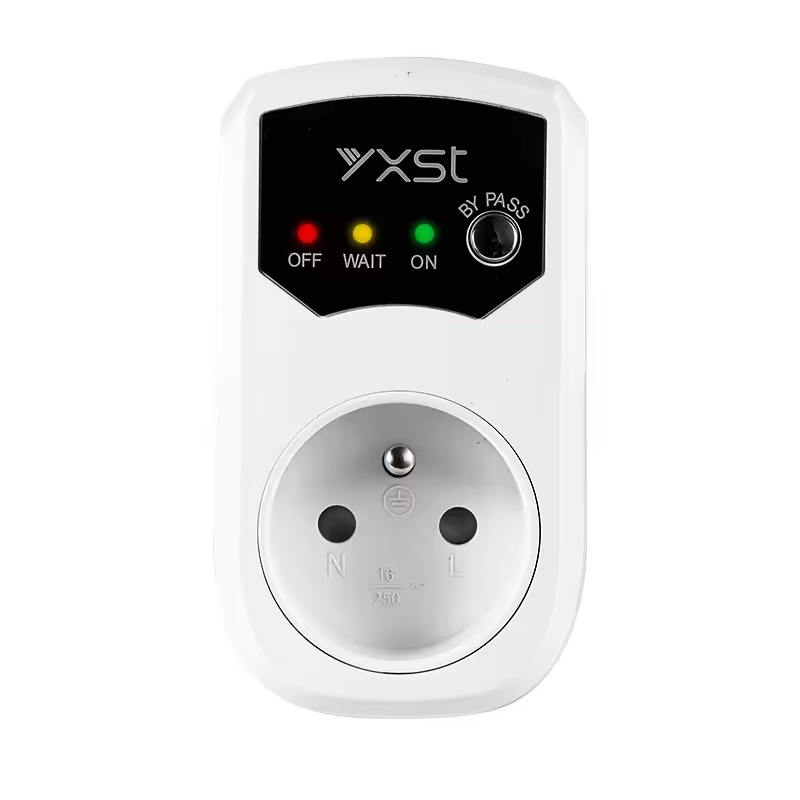
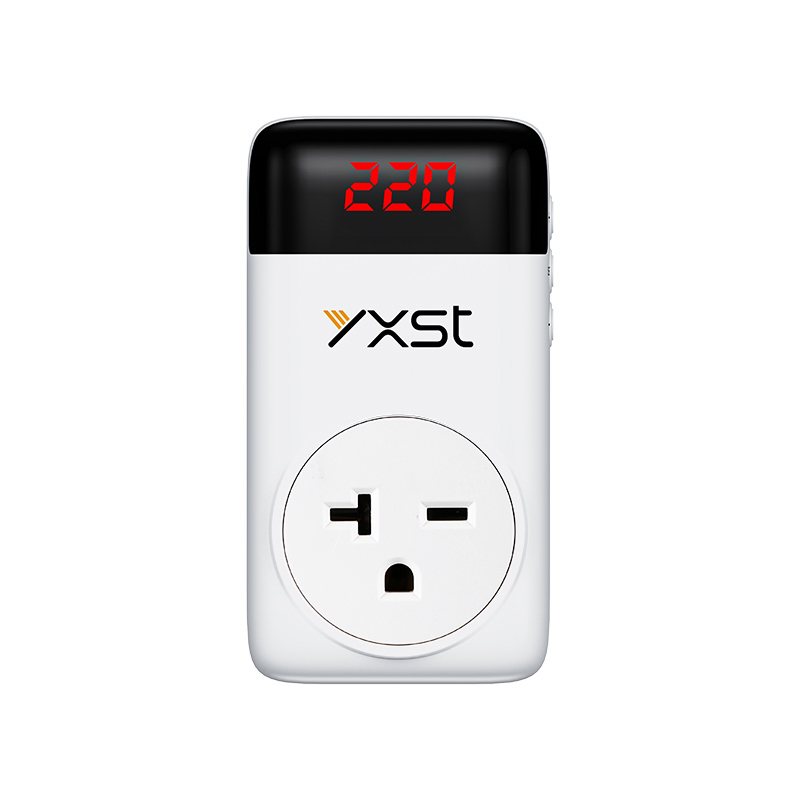
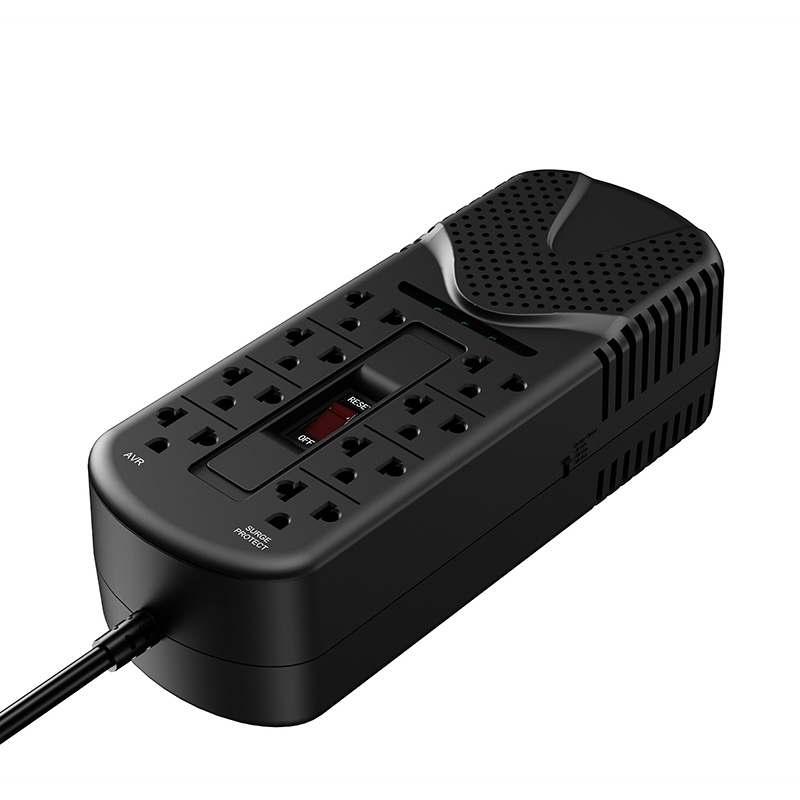
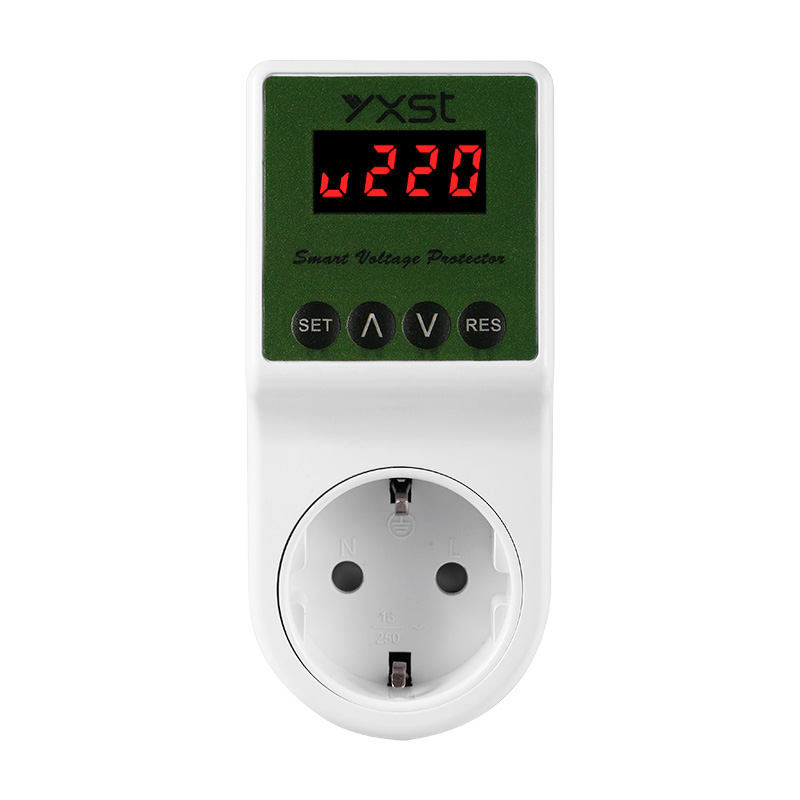
Yixing AVR products are designed for areas where grid voltage is unstable and can support wide input ranges such as 90–260V, with stable output voltage for household appliances and electronics. They are suitable for single-appliance use or broader electrical protection, depending on power capacity.
Can an AVR Protect a PC from a Power Outage?
The direct answer is: not completely.
An AVR can protect a PC from voltage problems before or after an outage, but it cannot provide electricity when the power supply is fully cut off. When there is a complete blackout, the AVR has no stored energy to continue powering the PC. The computer will shut down unless another backup device is connected.
This is the key difference between an AVR and a UPS.
-
✅ AVR: Regulates voltage
-
✅ UPS: Provides temporary battery backup power
If the user wants time to save files, shut down the PC safely, or keep a router and computer working for several minutes, a UPS is required.
However, this does not mean the AVR is useless during power outage situations. In many unstable power areas, the dangerous moment is not only the blackout itself. It is also the voltage drop before the outage, the surge when power returns, and the unstable voltage after restoration. These are exactly the conditions where an AVR becomes valuable.
Why PCs Need Voltage Protection
A PC is more sensitive than many common household appliances. It contains a power supply unit, motherboard, hard drive or SSD, memory, graphics card, and connected accessories. Sudden voltage instability may not destroy the PC immediately, but repeated exposure can reduce reliability.
For office users, internet cafés, electronics shops, schools, and home users, PC failure can cause:
-
❌ Lost data
-
❌ Delayed work
-
❌ Repair costs
-
❌ Customer complaints
-
❌ Shorter equipment lifespan
In markets such as Africa, Latin America, the Middle East, and Southeast Asia, many customers experience unstable electricity regularly. This creates strong demand for practical protection devices that are easy to sell and easy for end users to understand.
For distributors, this is an important selling point. Customers may ask, “Will this protect my computer when power goes off?”
A professional answer should be clear:
“The AVR protects your PC from unstable voltage, but for backup power during a blackout, you also need a UPS.”
This honest explanation builds trust and reduces after-sales disputes.
AVR vs UPS: What Is the Difference?
An AVR and a UPS are often confused because both are used for power protection. But their functions are different.
| Device | Main Function | Best For |
|---|---|---|
| AVR | Stabilizes voltage | High voltage, low voltage, voltage fluctuation |
| UPS | Provides backup power | Complete blackout, safe shutdown, short runtime backup |
In simple terms, the AVR protects the quality of electricity, while the UPS protects against the absence of electricity.
For many PC users, the best solution is to use both. The AVR helps manage voltage instability, while the UPS gives enough time to save work and shut down safely.
For customers who cannot afford both, the decision depends on the main local problem:
-
🔹 If blackouts are frequent and long, a UPS is more important.
-
🔹 If voltage fluctuation is frequent, an AVR is highly necessary.
-
🔹 If both problems exist, AVR + UPS is the stronger solution.
When Is an AVR Enough for a PC?
An AVR may be enough when the customer mainly faces low voltage, high voltage, or frequent voltage fluctuation, but not long blackouts.
For example, if the PC shuts down because the voltage suddenly drops, or if the power supply becomes unstable when many appliances are used at the same time, an AVR can help.
It is also useful for:
-
🏠 Homes
-
🏢 Small offices
-
🛒 Electronics shops
-
🛠️ Repair counters
-
🌐 Internet cafés
-
🖥️ Computer users in unstable power areas
For importers and wholesalers, AVR products are attractive because they match real market demand. They are easier to explain than many technical devices, suitable for unstable power areas, and can be sold through electronics shops, hardware channels, supermarket chains, and electrical distributors.
What Should Buyers Consider When Choosing an AVR?
First, buyers should check the power rating. The AVR capacity must match the total load of the PC and connected devices. A desktop computer, monitor, printer, router, and speaker may require a higher capacity than a single PC alone.
Second, buyers should check the input voltage range. In unstable power countries, wide input range is important because voltage may drop very low or rise suddenly.
Third, buyers should consider plug type and local voltage standards. Different markets may require UK, EU, US, or AR plug types. OEM customization is important for importers serving multiple countries.
Fourth, product quality matters. Poor-quality AVRs may fail quickly, overheat, or provide unstable output.
A reliable AVR supplier should offer:
-
✅ Stable voltage regulation
-
✅ Wide input voltage range
-
✅ Reliable components
-
✅ Strict quality control
-
✅ Correct plug customization
-
✅ Professional OEM/ODM support
-
✅ Safe packaging for export
Yixing supports in-house production processes including SMT mounting, reflow soldering, wave soldering, injection molding, assembly, and quality control. The company also supports OEM/ODM customization for voltage, plug standards, packaging, shell design, and functions.
Why Yixing AVR Is Suitable for Export Buyers
For B2B buyers, choosing an AVR supplier is not only about unit price. It is also about stable quality, delivery capacity, certification, packaging, and long-term cooperation.
Wenzhou Yixing Electronic Technology Co., Ltd. specializes in voltage protectors, surge protectors, AVRs, and household electrical safety devices. The company serves export markets including Africa, Latin America, the Middle East, Southeast Asia, and Europe.
Yixing’s main advantages include:
-
⭐ CE and ISO9001 support
-
⭐ 100+ appearance patents
-
⭐ Complete in-house production
-
⭐ OEM/ODM customization
-
⭐ Multiple plug options
-
⭐ Export experience for unstable power markets
-
⭐ 100% product testing from PCB to finished device
For distributors selling to PC users, appliance shops, office suppliers, and electrical retailers, these advantages help reduce risk. Stable supply and professional customization also help buyers build their own brands through OEM packaging and market-specific models.
Final Answer for Customers
So, does an AVR really protect a PC from a power outage?
The correct answer is: an AVR protects the PC from voltage instability related to power problems, but it does not supply backup power during a full blackout.
For complete PC protection, customers should use:
-
✅ AVR for voltage regulation
-
✅ UPS for temporary power backup
This combination gives users better protection against both unstable voltage and sudden power loss.
An AVR protects PC voltage stability, while a UPS protects runtime during blackouts. Together, they offer stronger PC power protection.
 English
  Español
  Deutsch
  Français
  Italiano
  Português