
Difference between air conditioner surge protector and other protectors
Air conditioner surge protector (SPD) is a device specially used to protect air conditioner equipment from transient overvoltage (such as lightning strikes, power grid fluctuations), while other common protectors (such as circuit breakers, leakage protectors, over-voltage and under-voltage protectors, etc.) have significant differences in functions, principles and application scenarios. The following is a specific comparison:
Differences in protection objects and core functions
→ Air conditioner surge protector
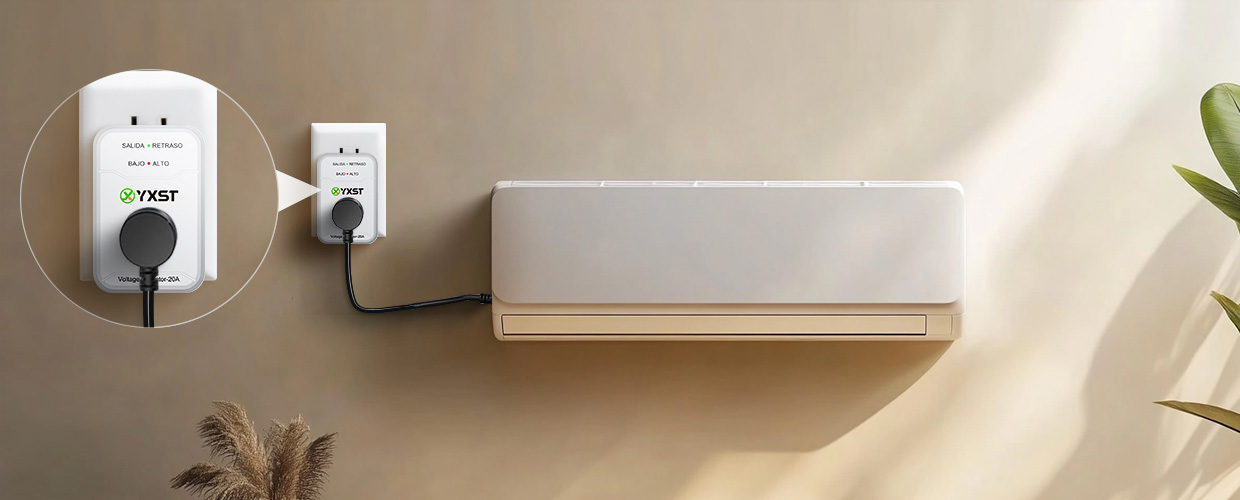
※ Core function: Suppress transient overvoltage (such as lightning, operating overvoltage), clamp the voltage within a safe range by discharging surge current, and protect the electronic components of the air conditioner (such as the main control board, compressor) from transient high voltage shocks.
※ Protection object: Air conditioner circuits and equipment, focusing on the protection of transient interference such as lightning induction and power grid switching.
→ Circuit breaker (CB)
※ Core function: Prevent line damage caused by overload or short-circuit current, and achieve protection by cutting off the circuit.
※ Object of protection: The integrity of the air conditioner power supply circuit, such as the circuit breaker (air switch) commonly used for air conditioner circuit control.
→ Residual current protector (RCD)
※ Core function: Detect leakage current (current difference between live wire and neutral wire), cut off the power supply when it exceeds the threshold (such as 30mA) to prevent electric shock or leakage fire.
※ Object of protection: Personal safety and air conditioner leakage risk, not related to surge.
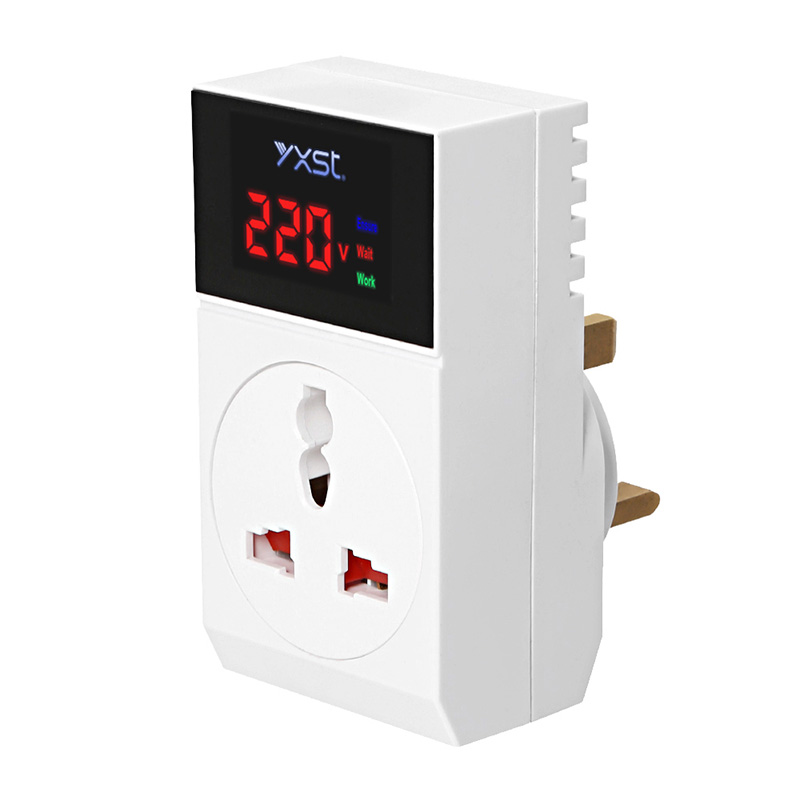
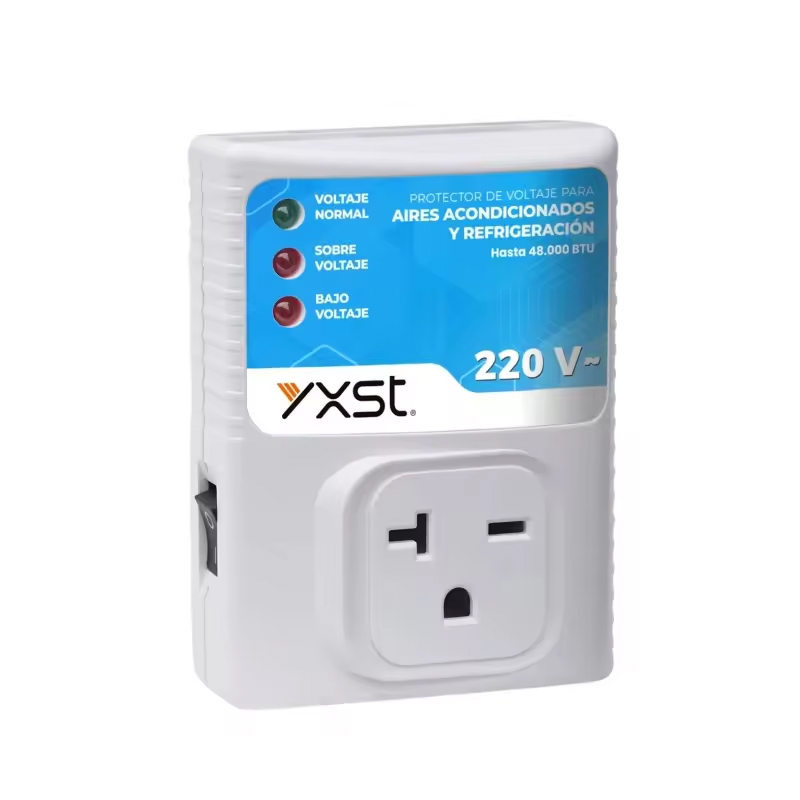
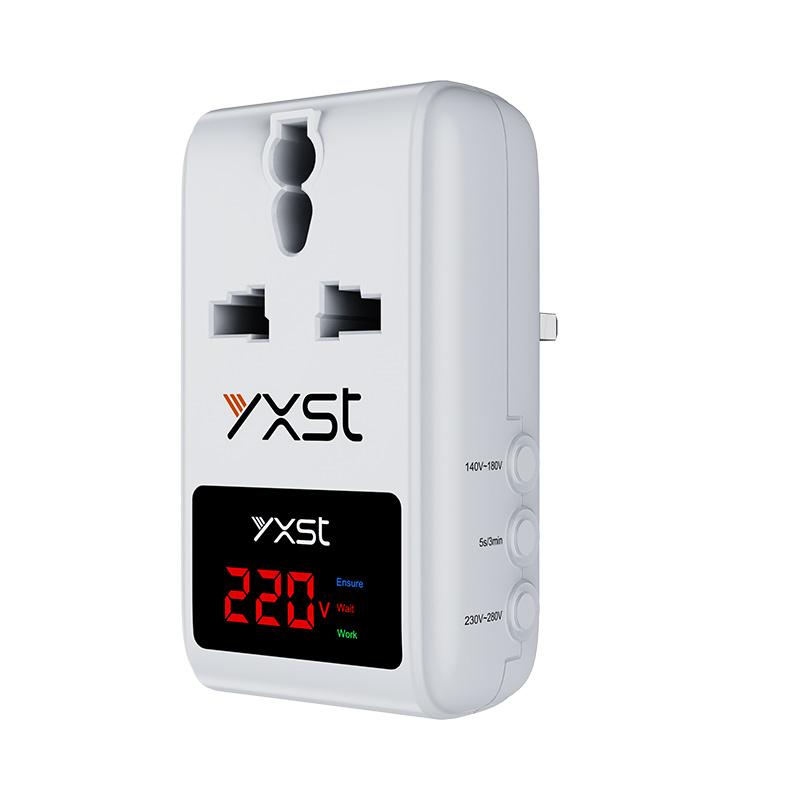
→ Overvoltage and undervoltage protector (OVP)
※ Core function: Detect continuous voltage anomalies (such as grid voltage is too high or too low), cut off the power supply to protect the equipment.
※ Object of protection: Long-term power supply stability of air conditioners, suitable for areas with large voltage fluctuations.
Comparison of working principle and triggering conditions
→ Air conditioner surge protector
※ Principle: Based on nonlinear elements (such as MOV varistors, and gas discharge tubes), it quickly conducts and discharges when the voltage exceeds the threshold, and the response time is nanoseconds
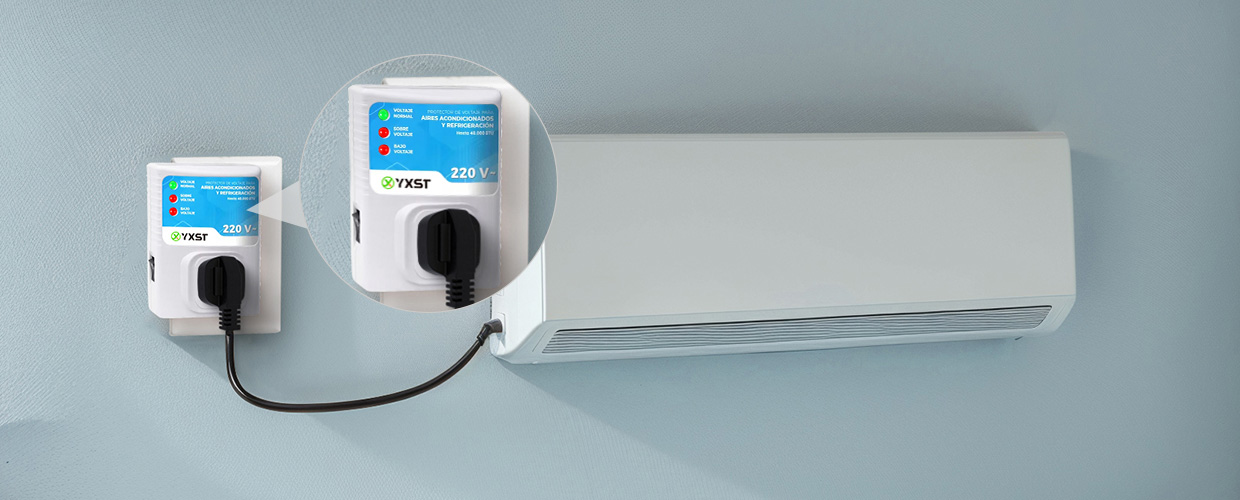
※ Triggering conditions: transient overvoltage (such as lightning strikes that produce 10/350μs or 8/20μs waveforms).
→ Circuit breaker (CB)
※ Principle: Detect current abnormalities through bimetallic strips or electromagnetic tripping mechanisms, trigger mechanical switches to disconnect the circuit, and the response time is milliseconds.
※ Triggering conditions: overload current (such as excessive air conditioner startup current) or short-circuit current.
→ Residual current protector (RCD)
※ Principle: Detect the current difference between the live wire and the neutral wire, and trigger the electromagnetic tripping device to cut off the power supply.
※ Triggering conditions: leakage current (≥15mA) or short circuit to ground.
→ Overvoltage and undervoltage protector (OVP)
※ Principle: Detect grid voltage through voltage-sensitive elements (such as voltage sensors), and trigger tripping when it exceeds the threshold.
※ Triggering conditions: Continuous voltage abnormality (such as voltage > 270V or < 170V).
Differences in application scenarios and installation methods
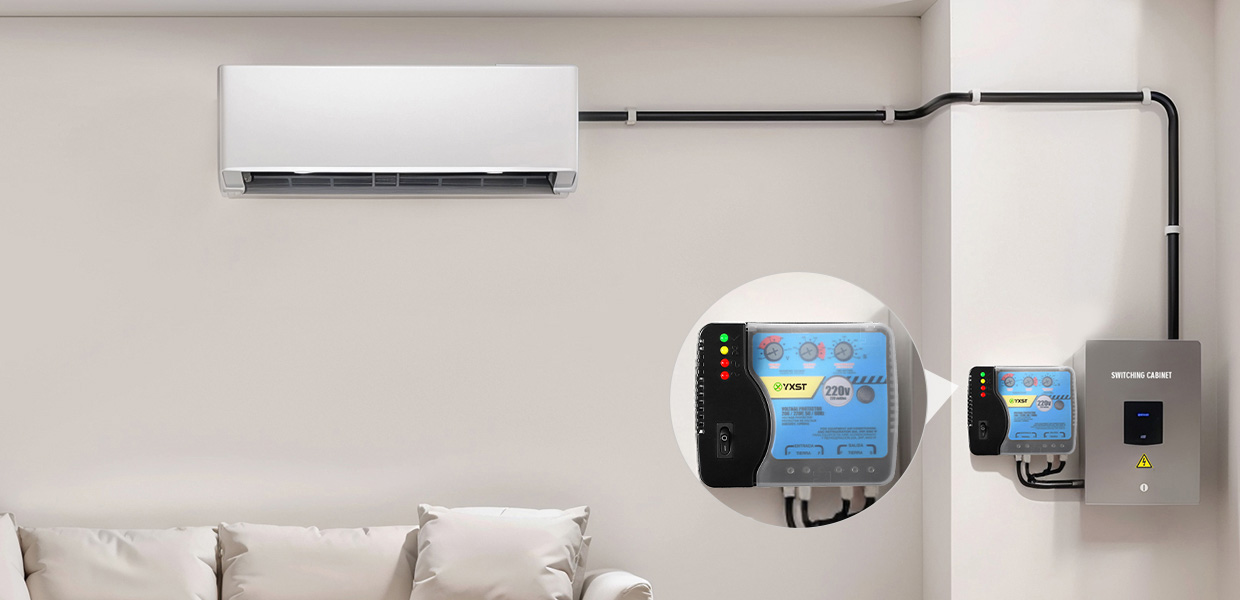
※ Air conditioner surge protector
※ Installation location: connected in parallel to the air conditioner power input end, usually used in series with the backup protector (SCB) to prevent short circuits after SPD failure.
※ Scenario: Protection of air conditioner outdoor or indoor units in areas prone to lightning and unstable power grids.
※ Circuit breaker (CB)
※ Installation location: connected in series in the air conditioner power circuit (such as in the distribution box) to control the circuit on and off.
※ Scenario: used for overload or short circuit protection in conventional air conditioner circuits.
※ Residual current protector (RCD)
※ Installation location: installed in the distribution box in combination with the air switch to protect the entire air conditioner branch.
※ Scenario: humid environment (such as when air conditioner condensation water may contact the circuit).
→ Overvoltage and undervoltage protector (OVP)
※ Installation location: connected in parallel to the air conditioner power line, independent or integrated in the distribution box.
※ Scenario: In areas with frequent voltage fluctuations, to protect the air conditioner compressor from long-term operation.
Collaborative work and selection recommendations
→ Complementarity: Air conditioner surge protectors need to be used in conjunction with circuit breakers, leakage protection devices, etc. For example:
※ SPD+SCB+circuit breaker: SPD discharges surges, SCB prevents SPD fault short circuits, and the circuit breaker provides overload protection.
※ SPD+OVP: SPD responds to transient overvoltage, and OVP handles continuous voltage anomalies, forming comprehensive protection.
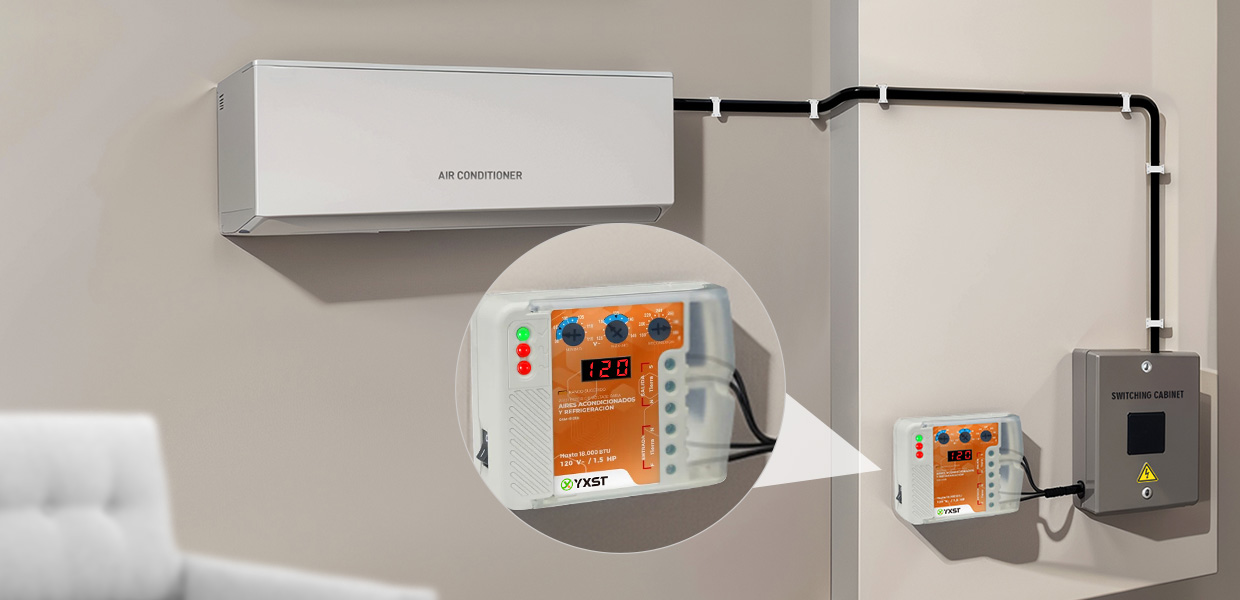
→ Selection points:
※ SPD needs to match the rated voltage and discharge capacity of the air conditioner (such as nominal current In≥10kA).
※ It is recommended to select 30mA (personal safety) or higher (equipment fire protection) for the leakage protection action current.
Maintenance and failure performance
→ Air conditioner surge protector:
※ Lifespan: MOV components may age and fail due to the number of lightning strikes, and the status indicator light needs to be checked regularly.
※ Failure performance: The module becomes hot, the leakage current increases, or it cannot be clamped when the overvoltage occurs.
→ Other protectors:
※ Circuit breaker/leakage protection: After tripping, the fault needs to be eliminated and manually reset.
※ Over- and under-voltage protector: Automatically or manually reset after voltage recovery.
Summary
Air conditioner surge protectors specialize in transient overvoltage suppression, while other protectors focus on current, leakage, or continuous voltage anomaly protection. In actual applications, they need to be configured in combination according to needs. For example, lightning protection requires SPD and SCB, humid environments require leakage protection support, and areas with unstable voltage require OVP. Scientific selection and collaborative design can maximize the life of air conditioners and ensure safety.

 English
  Español
  Deutsch
  Français
  Italiano
  Português